News & Features
Keep up to date on the latest news from the Freshwater Biological Association, on our mission to drive positive action and make measurable impact on the ground through our science-based projects, species recovery programmes and citizen science activities.
Fancy news direct to your inbox?
FBA Voice is the monthly newsletter of the Freshwater Biological Association
Latest FBA News
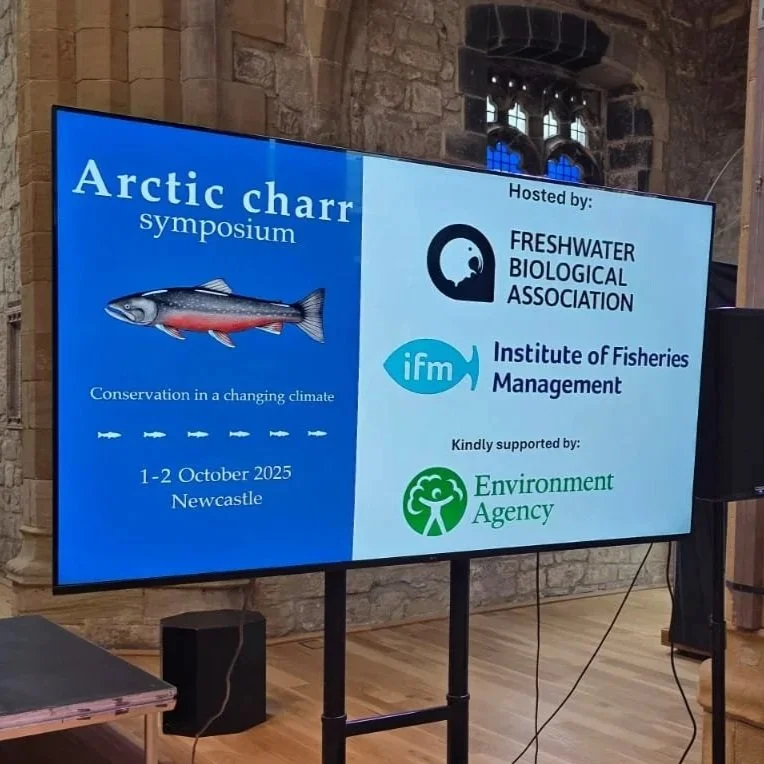
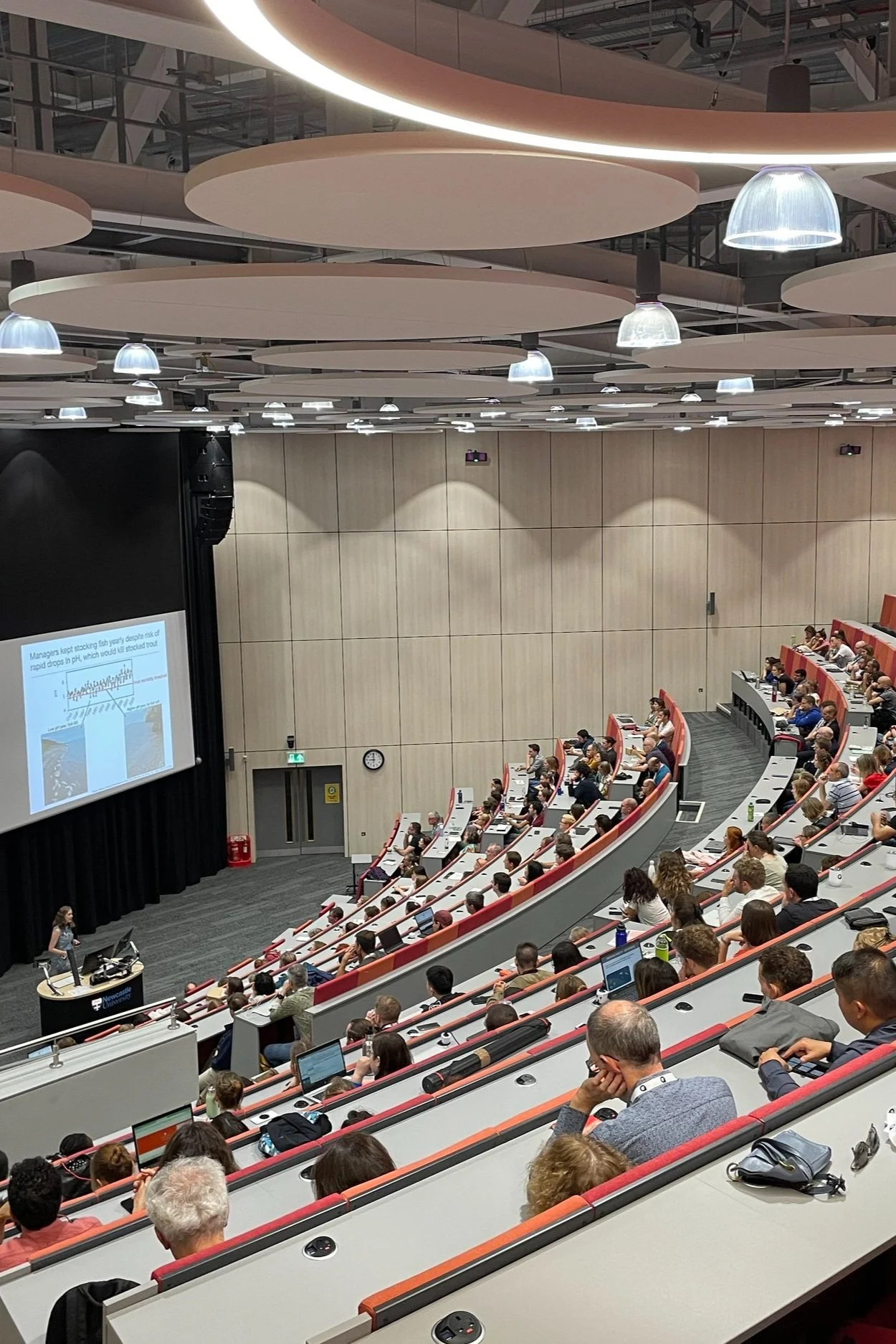
The FBA, together with the Institute of Fisheries Management, and supported by the Environment Agency, convened the Arctic Charr Symposium in Newcastle on 1–2 October 2025. The event brought together freshwater scientists, conservation practitioners and local stakeholders to examine the current status of Arctic charr (Salvelinus alpinus) in the UK and to identify priority research and conservation actions.
Carl Sayer is Professor of Limnology and Freshwater Ecology at UCL. We were delighted that Carl was able to attend the FBA ASM to deliver a keynote talk on ghost ponds. These pond resurrections are an incredible example of ecological restoration in rapid response times. Here we have the pleasure of sharing a deep dive with Carl into the fascinating world of ghost ponds, and their potent power for ecological and palaeoecological regeneration.
Arctic charr are of global ecological importance and Windermere charr populations have been studied since the 1940s, but their cultural significance in the Lake District dates back hundreds of years. We're thrilled to present a new film by Dave George about this iconic species, and we had the enormous pleasure of catching up with Dave to find out about his inspiration and motivation for the film, which explores the threats facing Arctic charr and their cultural importance in England, Scotland, Ireland and Wales.
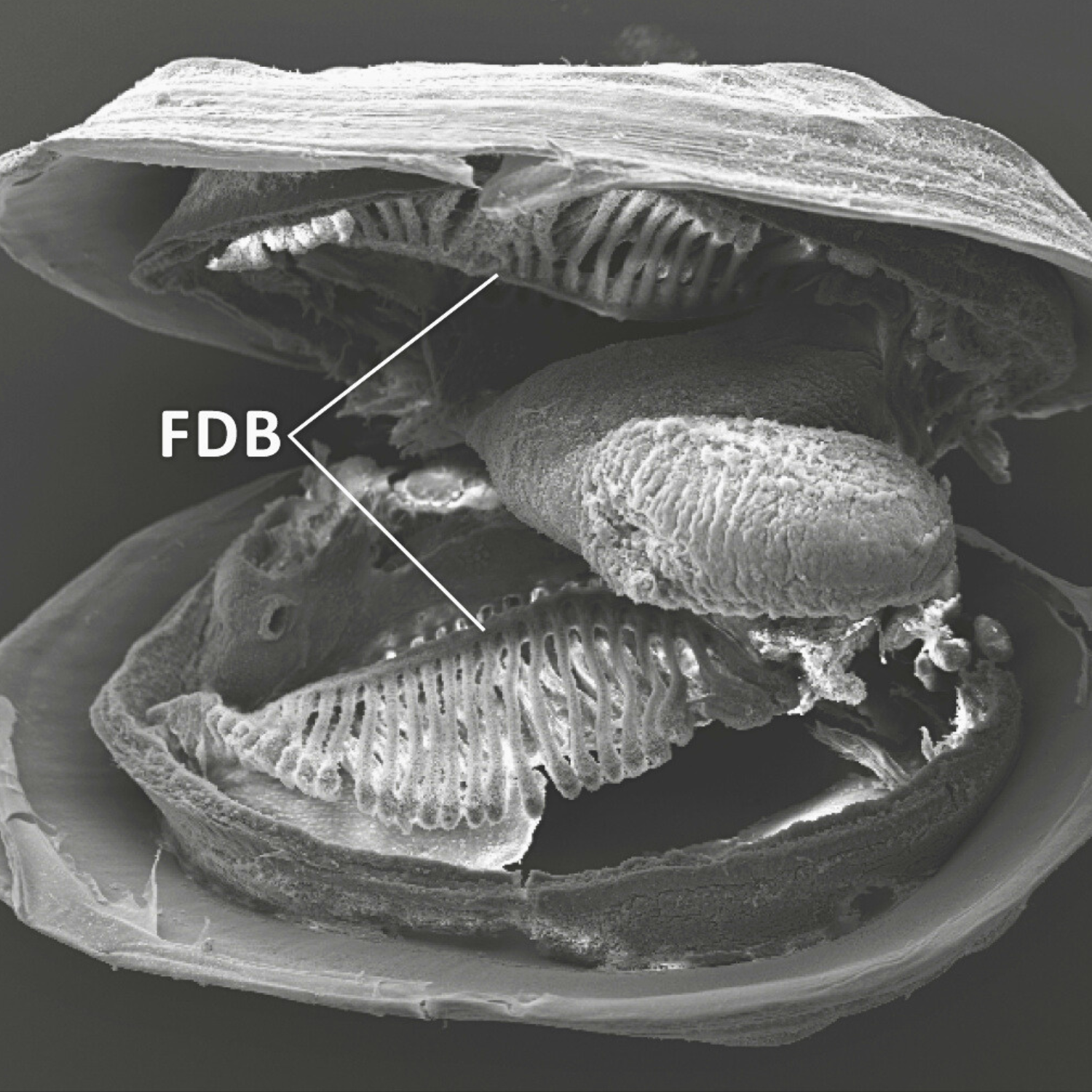
In October, FBA staff visited the Cynrig and Clywedog hatcheries operated by Natural Resources Wales (NRW), the locations of two out of the four breeding programmes for freshwater pearl mussels in the UK. The trip was an invaluable opportunity for knowledge exchange and cooperation between the FBA and NRW, to continuously learn and improve the success of freshwater pearl mussel propagation.
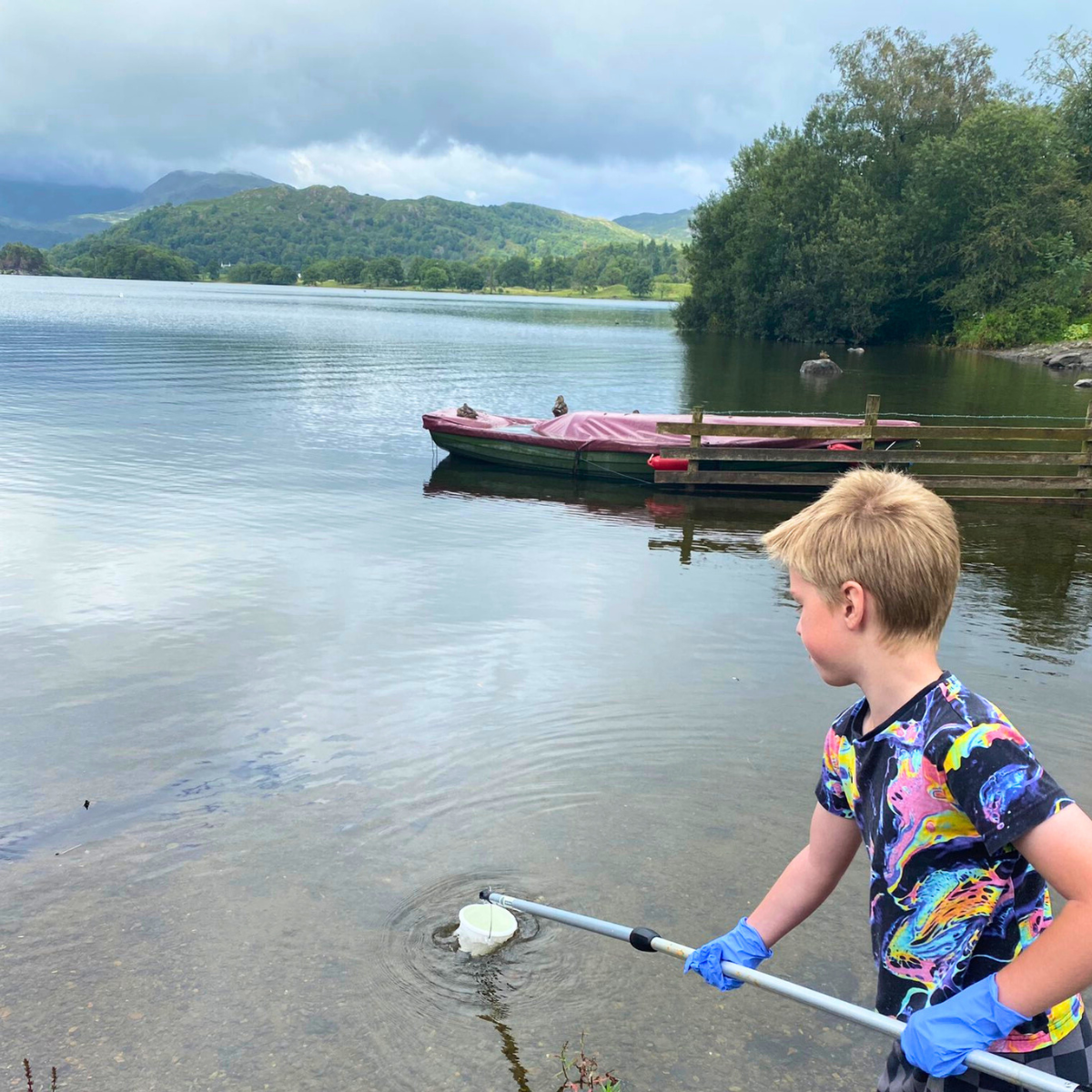
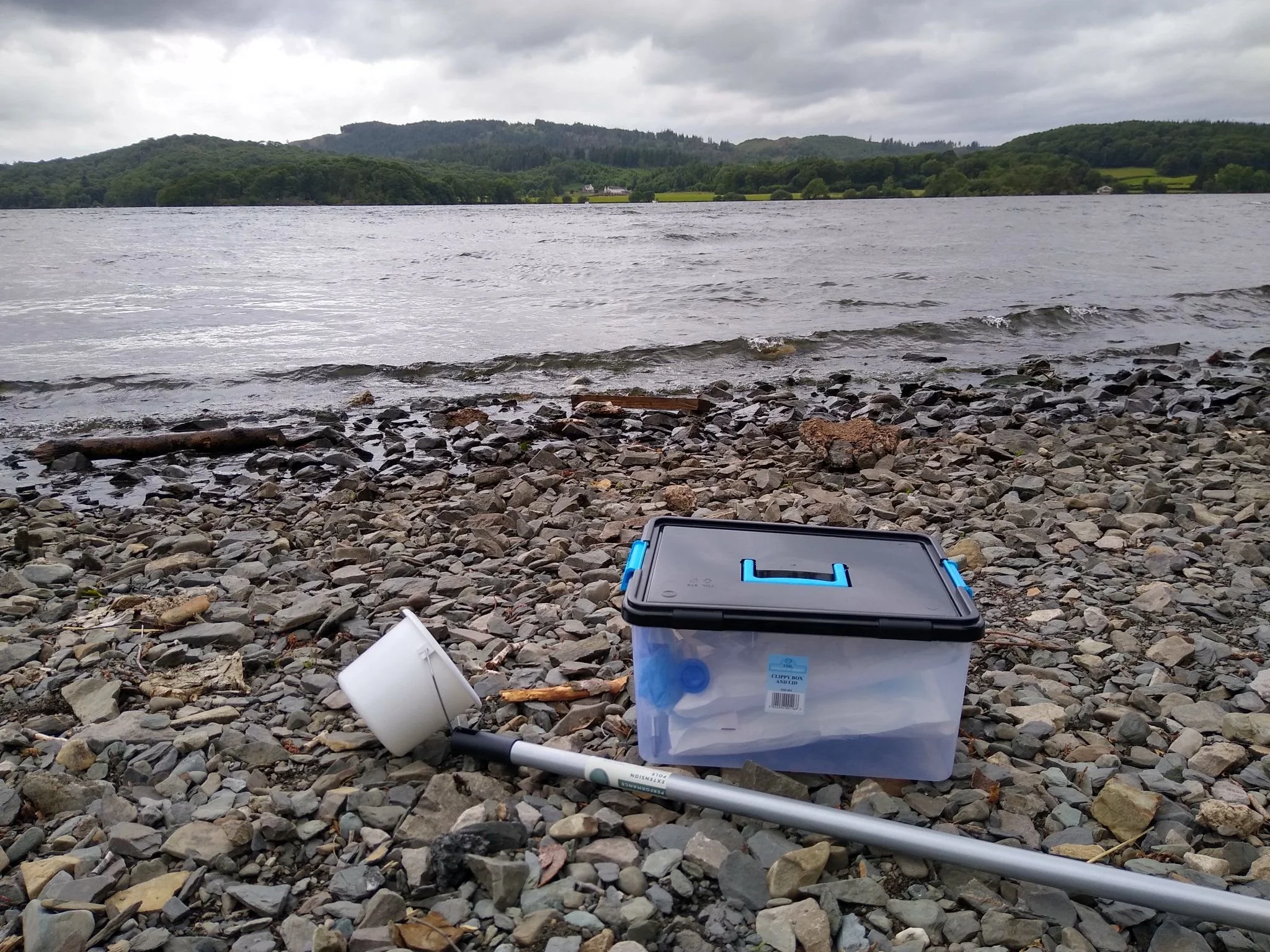
Led by the Freshwater Biological Association in partnership with Natural England, and funded through Defra’s Natural Capital and Ecosystem Assessment (NCEA) programme, Lakefly empowers volunteers to survey freshwater invertebrates, tiny creatures that live in the shallow margins of lakes and provide important clues about water quality. Using a simple sampling method and easy-to-learn identification guide, Lakefly volunteers collect valuable data that can help detect pollution, track ecological changes, and support better management of our freshwater ecosystems.
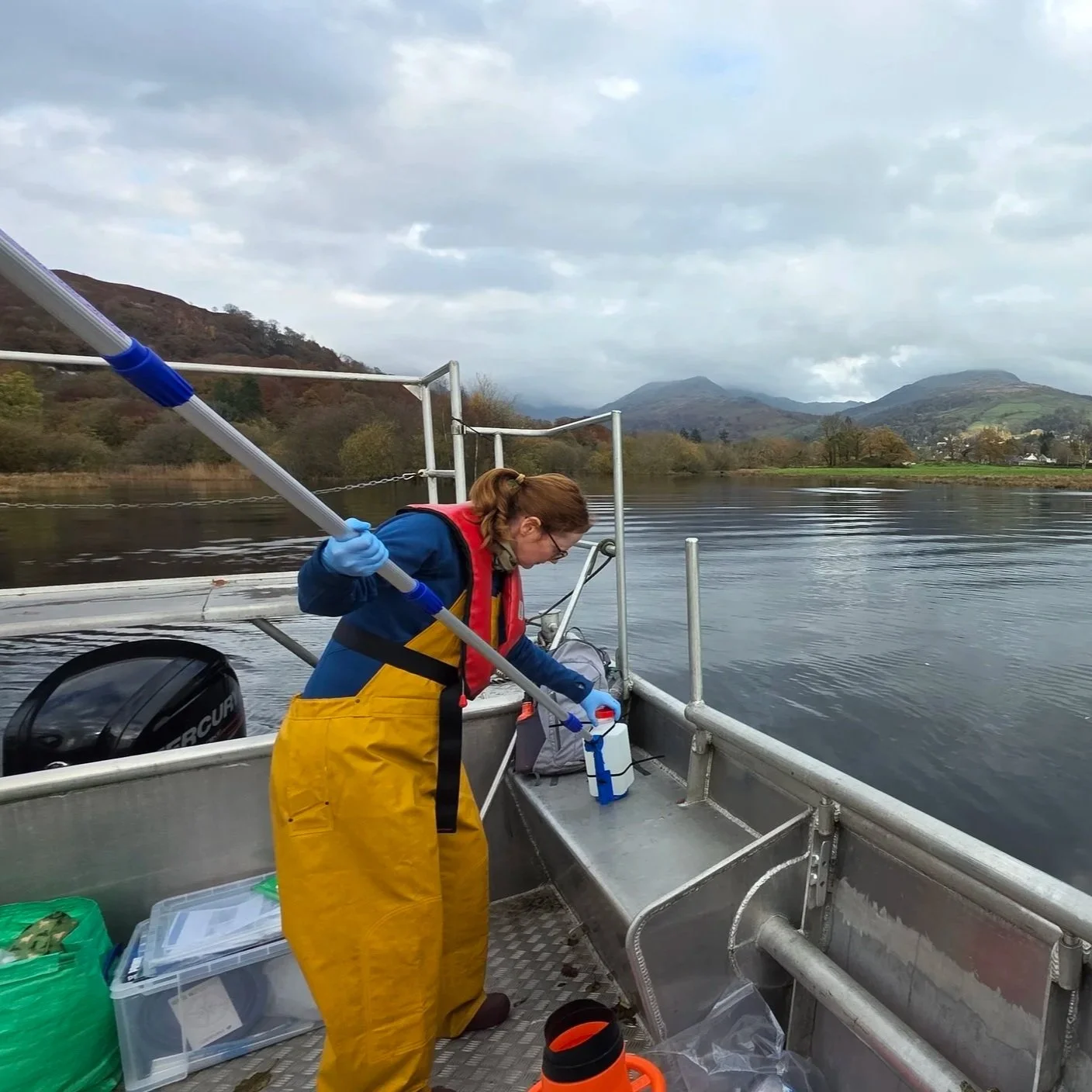
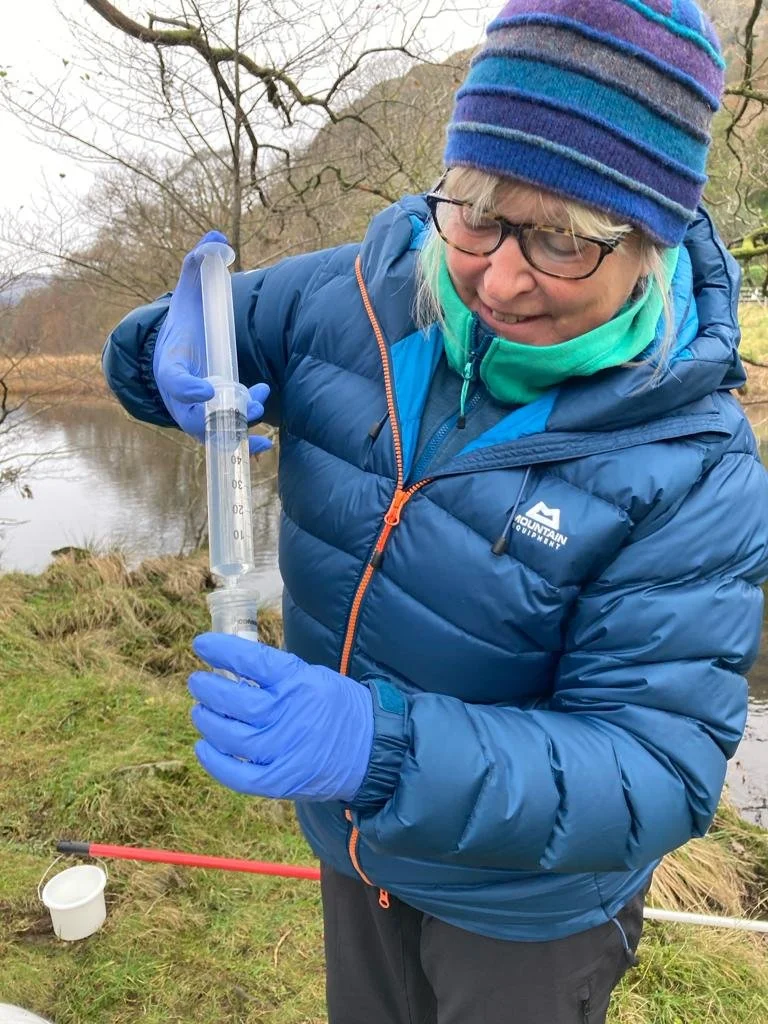
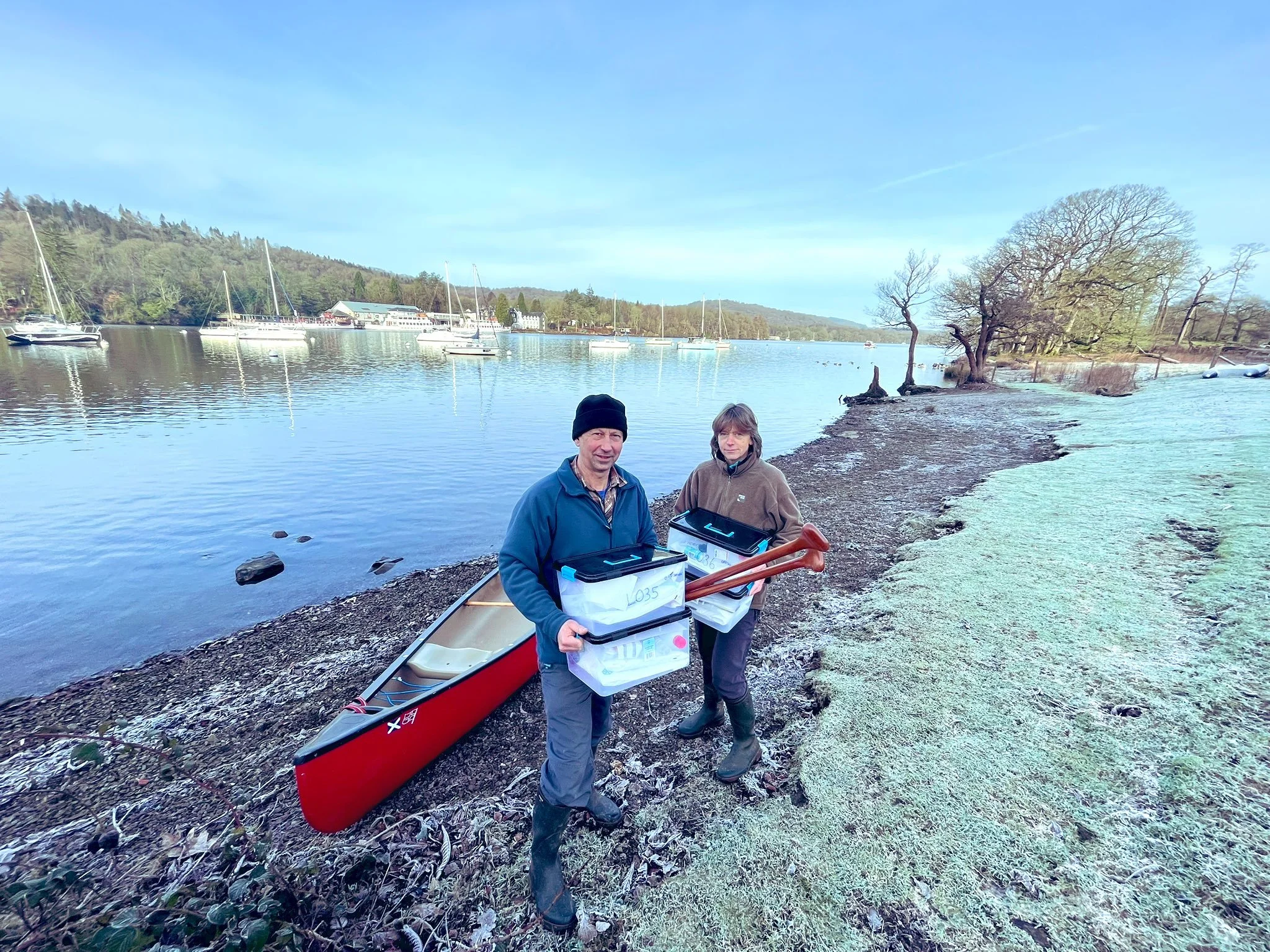
Launched in June 2022, the BWS engaged trained volunteers in a coordinated programme of field sampling, supported by professional laboratory analysis. Over 2.5 years, volunteers collected water samples at more than 100 sites across the Leven catchment. The scale of this participatory effort has revealed spatial and temporal patterns of nutrient enrichment and bacterial hotspots that place Windermere under significant ecological stress.
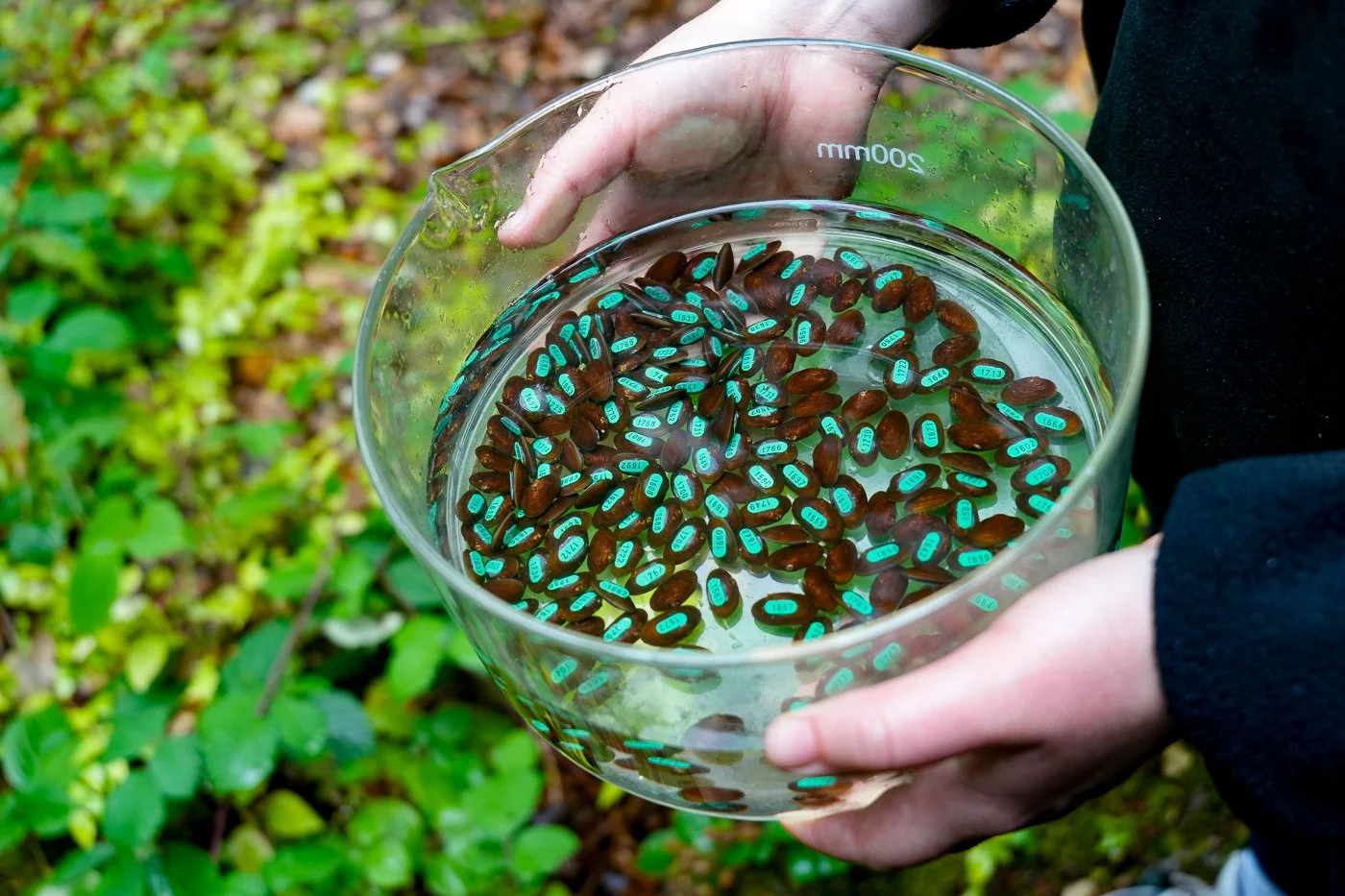
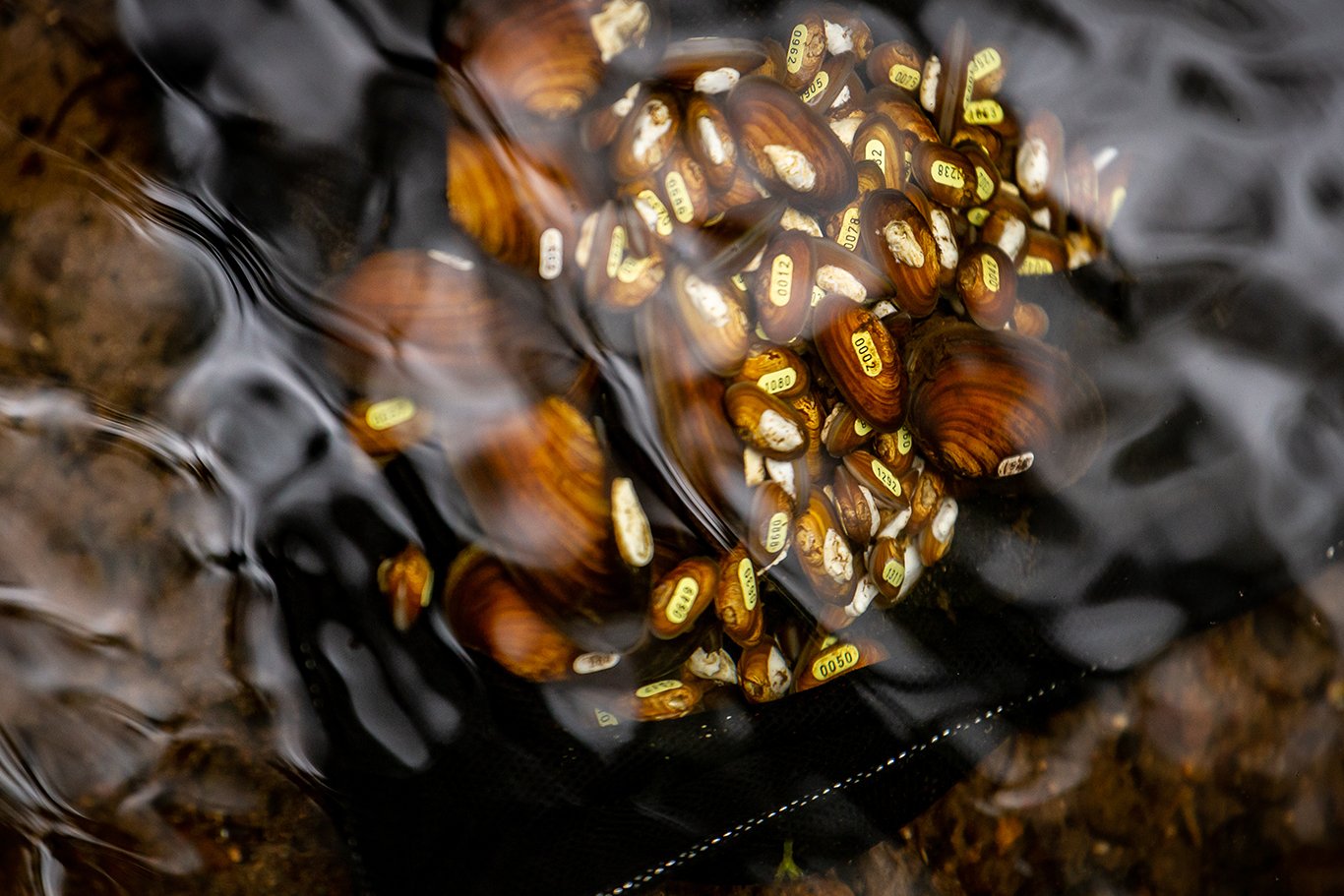
Here at the FBA Ark tagging freshwater pearl mussels is an important activity as part of our species recovery programme. The tagging allows us to assign a unique identification number to each of our mussels, so we can monitor their individual growth over time. Here we catch up with Jodie Warren, Assistant Kent Project Officer & Assistant Pearl Mussel Officer, and Samantha Bonny, River Kent Project Officer, to find out more about the freshwater pearl mussel tagging process.
We had the great pleasure of Professor Julia Martin-Ortega presenting the final Keynote at the FBA Annual Scientific Meeting in June. Rounding off the day with an intensely poignant and memorable deep dive into Riverkin, an approach hoping to help people remake vital relationships with rivers and freshwaters. Here we catch up with Julia Martin-Ortega and Dr Josh Cohen from water@leeds, at the University of Leeds, for a Q&A to find out more about Riverkin.
We are pleased to share, as a matter of urgency, a statement of support for a swift and adequate update of the EU water pollution standards under the Environmental Quality Standards Directive, also amending the Water Framework Directive and the Groundwater Directive. The statement has been signed by over 600 scientists around the world, concerned about freshwaters health, and supporting a call for immediate action for freshwater ecosystems.
After many years away, Simon Johnson, FBA Executive Director, recently re-connected with the River Wensum in Norfolk. Once bursting with nature and one of England’s most famous fisheries, he found this beautiful and historic river to be in a sorry state of unnecessary ruin. Compelled to speak up for the Wensum, Simon issues a call to action to those who must do more to save England’s forgotten, and sorely neglected, chalk river.
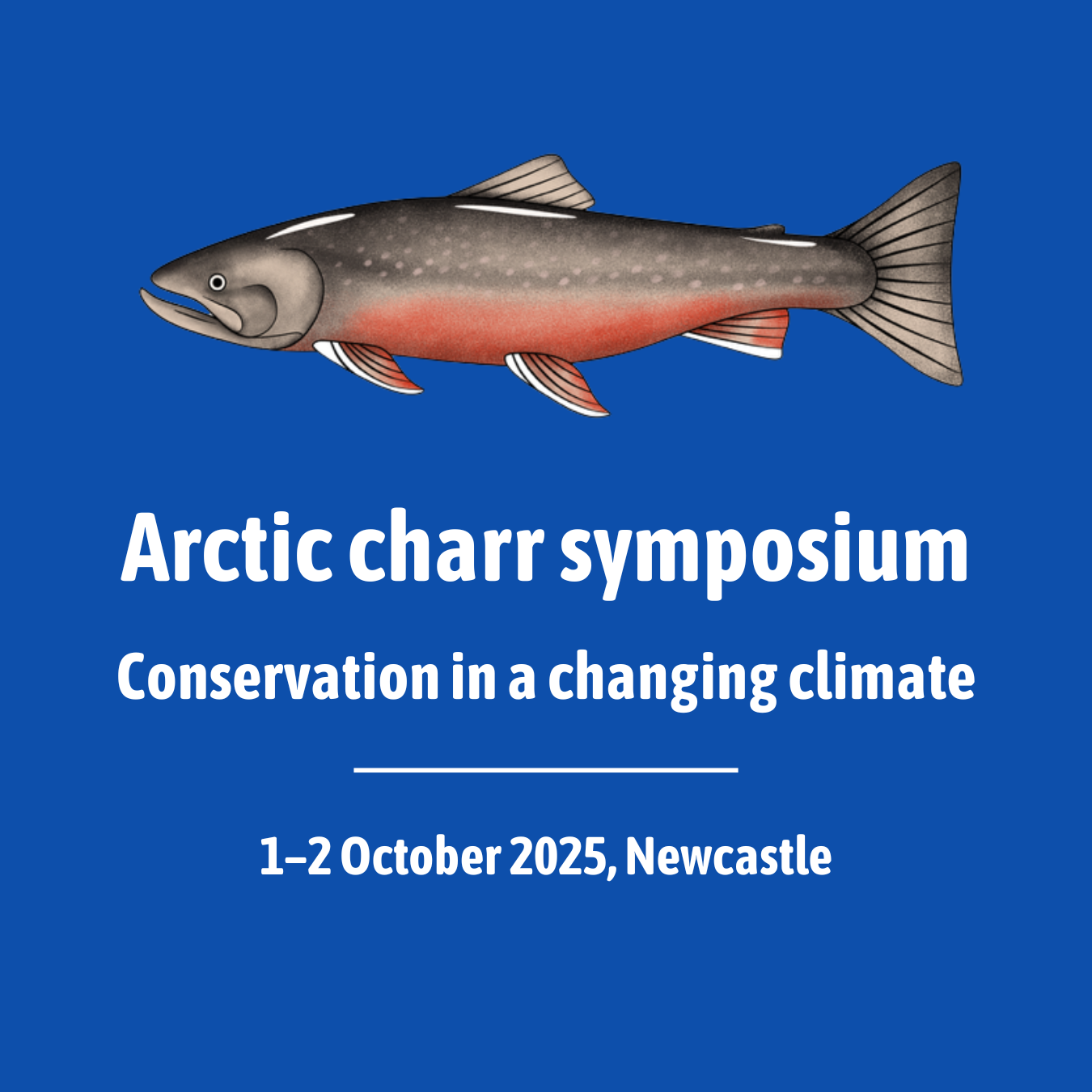
FBA in partnership with the Institute of Fisheries Management will be convening a special symposium titled ‘Arctic charr - Conservation in a changing climate’ taking place on 1–2 October 2025 in Newcastle. The symposium will bring together 35 invited experts, from across the UK and Europe, to enable greater networking and collaboration, as we work together to better understand and protect this iconic cold-water fish species and the ecosystems that support them.
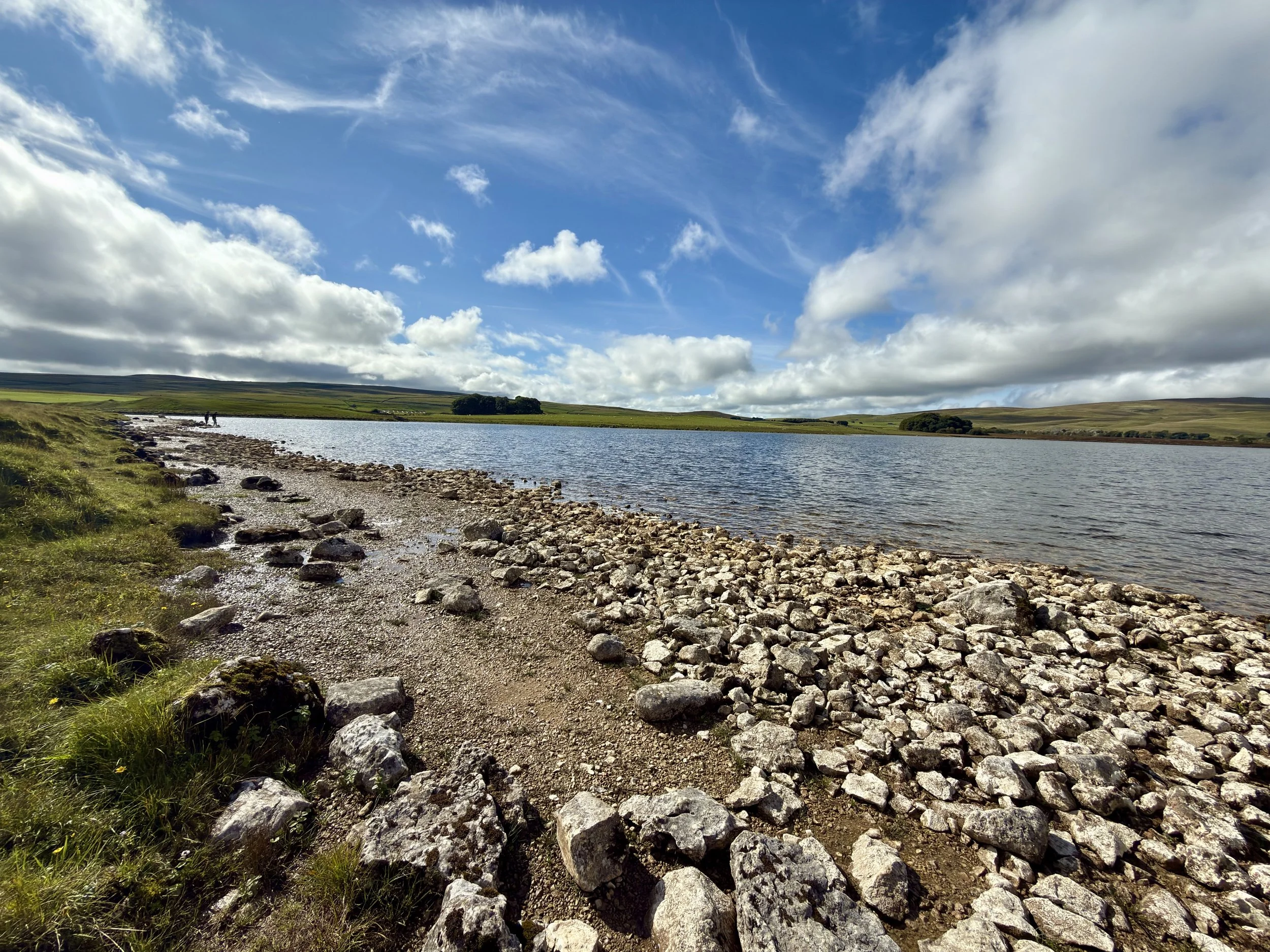
Results from the most spatially detailed water quality dataset for Windermere have been published today by scientists from the FBA and Lancaster University, in response to community concerns and gaps in traditional water quality monitoring. The Big Windermere Survey report, covering the period June 2022 to November 2024, demands action to address ‘Poor’ water quality results.
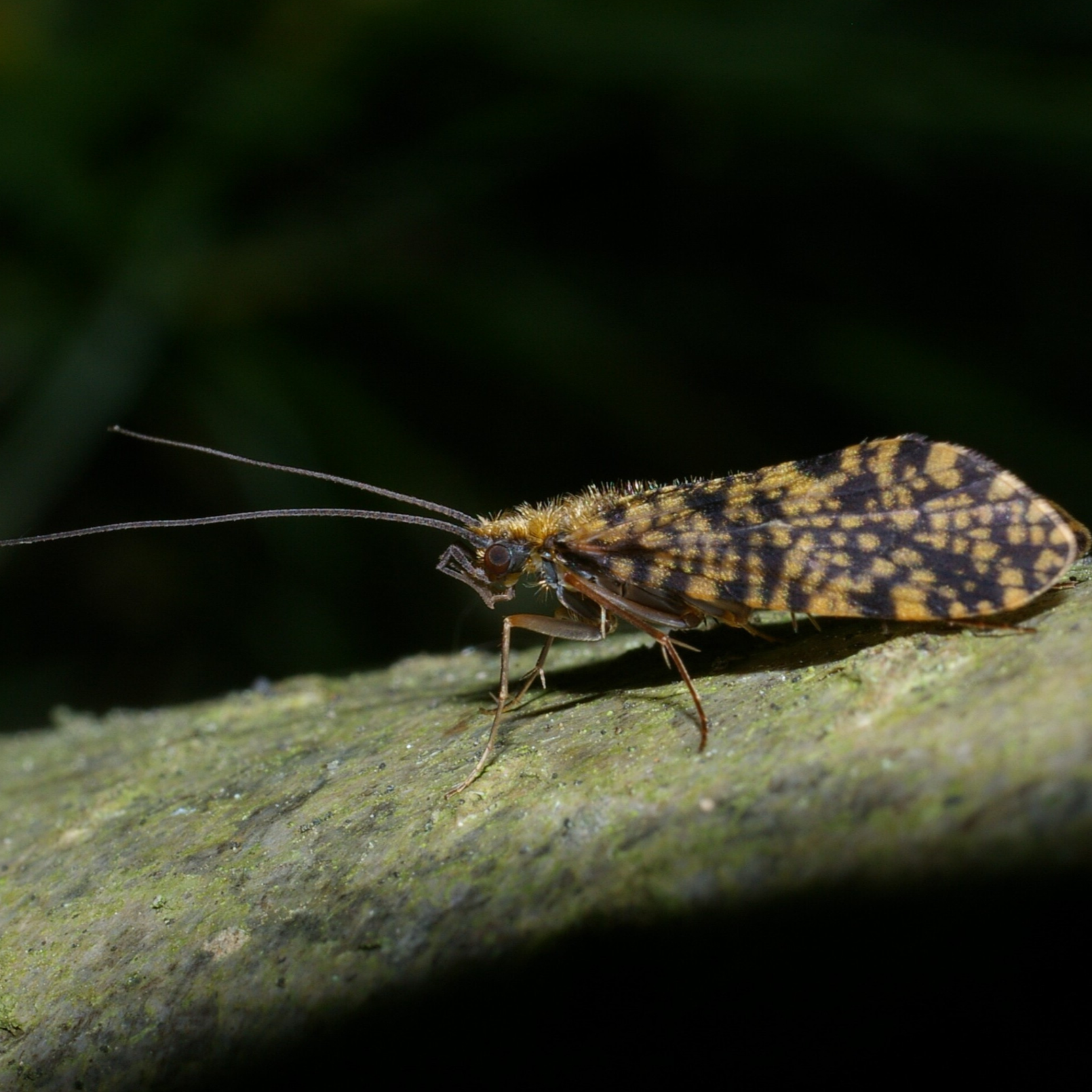
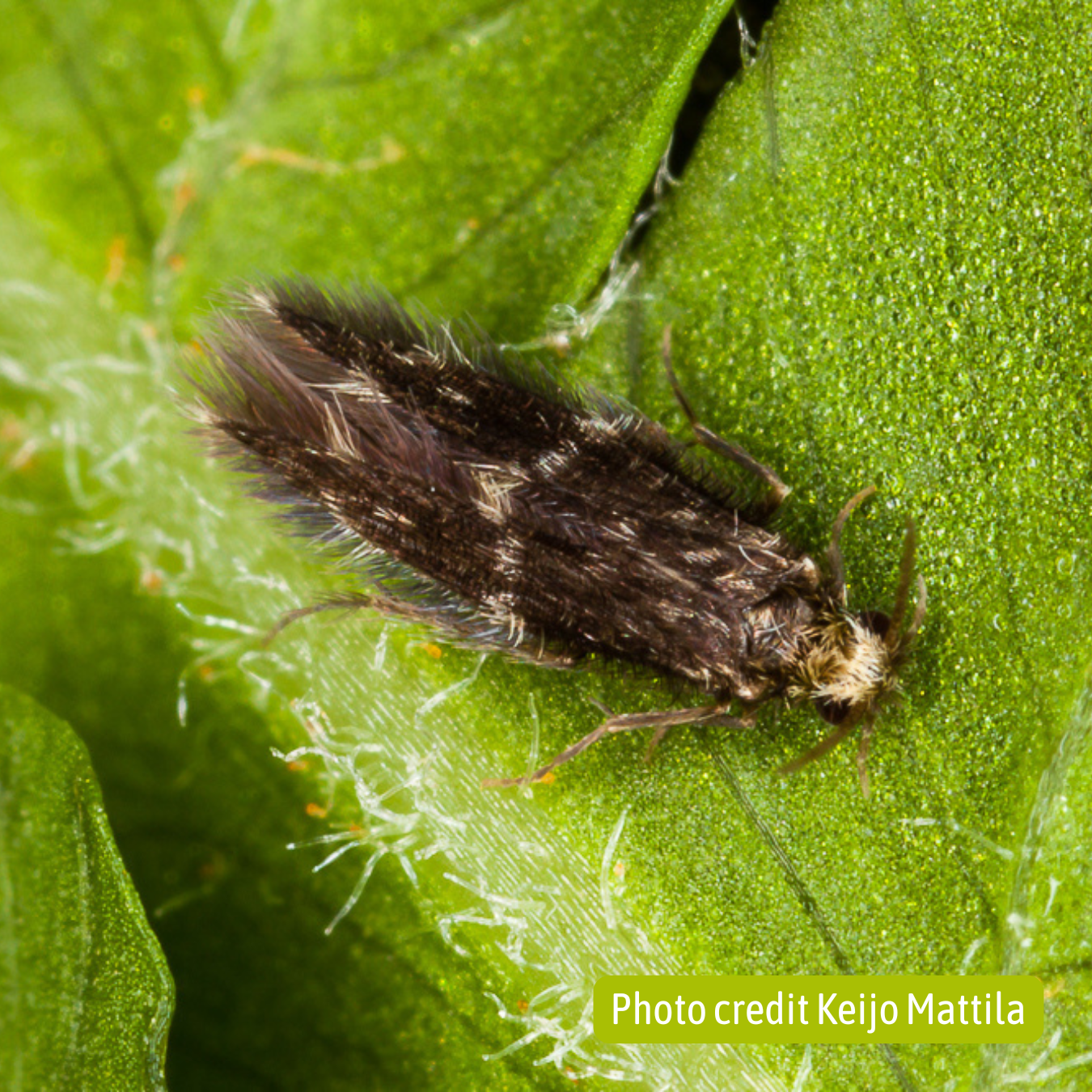
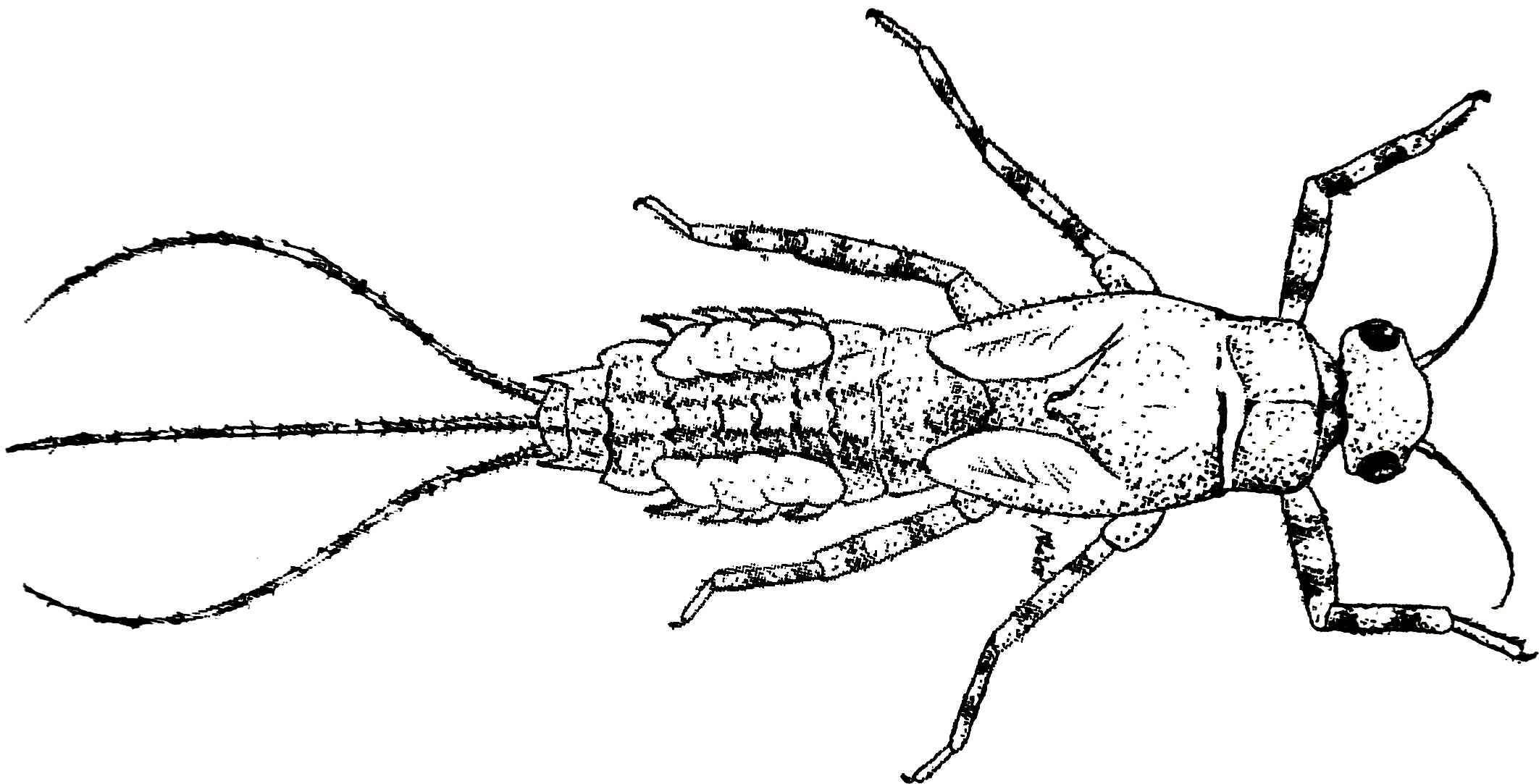
A tiny insect last recorded in Britain in 1945, has been rediscovered from the River Brathay near Skelwith, Ambleside by amateur Entomologist, Andrew Dixon. The invertebrate found is known as a ‘micro’-caddisfly (family Hydroptilidae) measuring a mere 2 to 3mm. The species name is Ithytrichia clavata and was first added to the British list from specimens collected at Llanbedr (Merionethshire) by the Grensteds in 1939.
This week the FBA reached a crucial milestone in our efforts to save the freshwater pearl mussel from extinction in England. On 23 July 2025 in the River Kent (Cumbria), we released our 5000th juvenile mussel from our conservation breeding programme, the Freshwater Pearl Mussel Ark, boosting the population in the River Kent from fewer than 10 individuals to over 100.
Here we join Amritha Nair for her reflections on the FBA's Early Career Member Network (ECMN) event at Nottingham Trent University in June. The ECMN event took place on Thursday 26 June, the day after the Annual Scientific Meeting, with the wish to improve the support FBA gives to early career researchers and practitioners.
FBA Executive Director, Simon Johnson, shares his thoughts on last month’s Annual Scientific Meeting. We received a fantastic response and huge thanks to all who attended! It was great to meet old friends and make new connections and the energy in the room over our pre-meeting coffee was a joy to witness! What followed was a day of scientific knowledge exchange on many of the key issues and scientific research affecting freshwaters.
The last couple of months has been a busy period of archival investigation to support the Lake District Charr Recovery and Management (LD-CHARM) project. Activity has included diving into the FBA's extensive archive and a visit to the Natural History Museum. Here we join FBA’s Emma Kelly for a Q&A to discover more about these explorations for historical information relating to Arctic charr.
Want to get involved in Riverfly Monitoring but not sure what it entails? The Riverfly Partnership have a new film explaining why and how we monitor riverflies. Learn about its applications in spotting pollution, deterring polluters, measuring the impact of restoration works, contributing to long-term data sets, and increasing awareness and education around our waterways.
Registration now open!
Funded by NERC, the Freshwater Biological Association, Bournemouth University, Natural England and AECOM, we are offering a free field workshop on Freshwater Taxonomy and Field Identification Skills: macroinvertebrates, protists, meiofauna and eDNA.
This summer, the first 1000 juvenile freshwater pearl mussels will be released into the River Kent as part of the LIFE R4ever Kent project. In preparation for this, all mussels must be tagged and placed into a flume system to prepare them for conditions they will experience in the River Kent.
We are delighted to announce that the Lake District Arctic Charr Recovery and Management project has been awarded Natural England Species Recovery Programme funding to support vital research to help save Arctic charr populations in England from extinction.
Today, we are delighted to share in full the State of Windermere in 2024 report and the Windermere Integrated Science Plan (WISP), authored by Dr. Lynsey R. Harper, funded by the Environment Agency and produced by the Freshwater Biological Association.
At the Species Recovery Centre, the FBA has finished its annual "Exhaustive Surveys", a census which involves counting all mussels in the facility that are more than 5mm in length. Counts take place on every mussel rearing system and from this a representative sample will be taken to determine average lengths of the freshwater pearl mussel population at the FBA Ark.
We are delighted to announce that our first official in-person ECMN event will be on 26 June at Nottingham Trent University. Taking place the day after our Annual Scientific Meeting, this is an opportunity for early career researchers and practitioners to attend both gatherings, to enable networking and establish mentoring partnerships that offer members of the ECMN career support.
Here we catch up with FBA’s Pearl Mussel Assistant, Jodie Warren, to hear about the daily activities at the FBA Ark species recovery sanctuary and the freshwater science making a vital contribution towards protecting vulnerable freshwater pearl mussels (Margaritifera margaritifera).
We are delighted to share the agenda for the FBA Annual Scientific Meeting at Nottingham Trent University on Wednesday 25 June 2025. This conference-style event will be a showcase for an array of speakers from a diversity of backgrounds in freshwater science including early career researchers and senior academics.
Calling all freshwater scientists, researchers and academics. Following the EEA’s ‘Europe's state of water 2024' report, European institutions are now in the process of updating the priority pollutants to be regulated under EU water law and we invite you to sign this statement in support of maintained ambition in the upcoming negotiations between the EU institutions on the final text.
We are excited to announce the restoration of the FBA Annual Scientific Meeting. This conference-style event will showcase the research and practice of FBA members including staff, early career scientists and fellows. It will be in person only at Nottingham Trent University on Wednesday 25 June 2025.
The past 12 months has seen an inspiring evolution in the Riverfly Partnership, with growth in their full-time team and a transition over to an upgraded database with extended capacity to provide more refined recording and analysis.
The Limnological Society in Türkiye and the European Federation for Freshwater Sciences are pleased to announce that the 14th Symposium for European Freshwater Sciences (SEFS14) will be held in Bolu, Türkiye, 21-25 July, 2025.
FBA News 2021-2023
FBA Fellow, Carl Sayer has contributed to an article published in Farmers Weekly, titled: How to restore ‘forgotten’ farm ponds for wildlife.
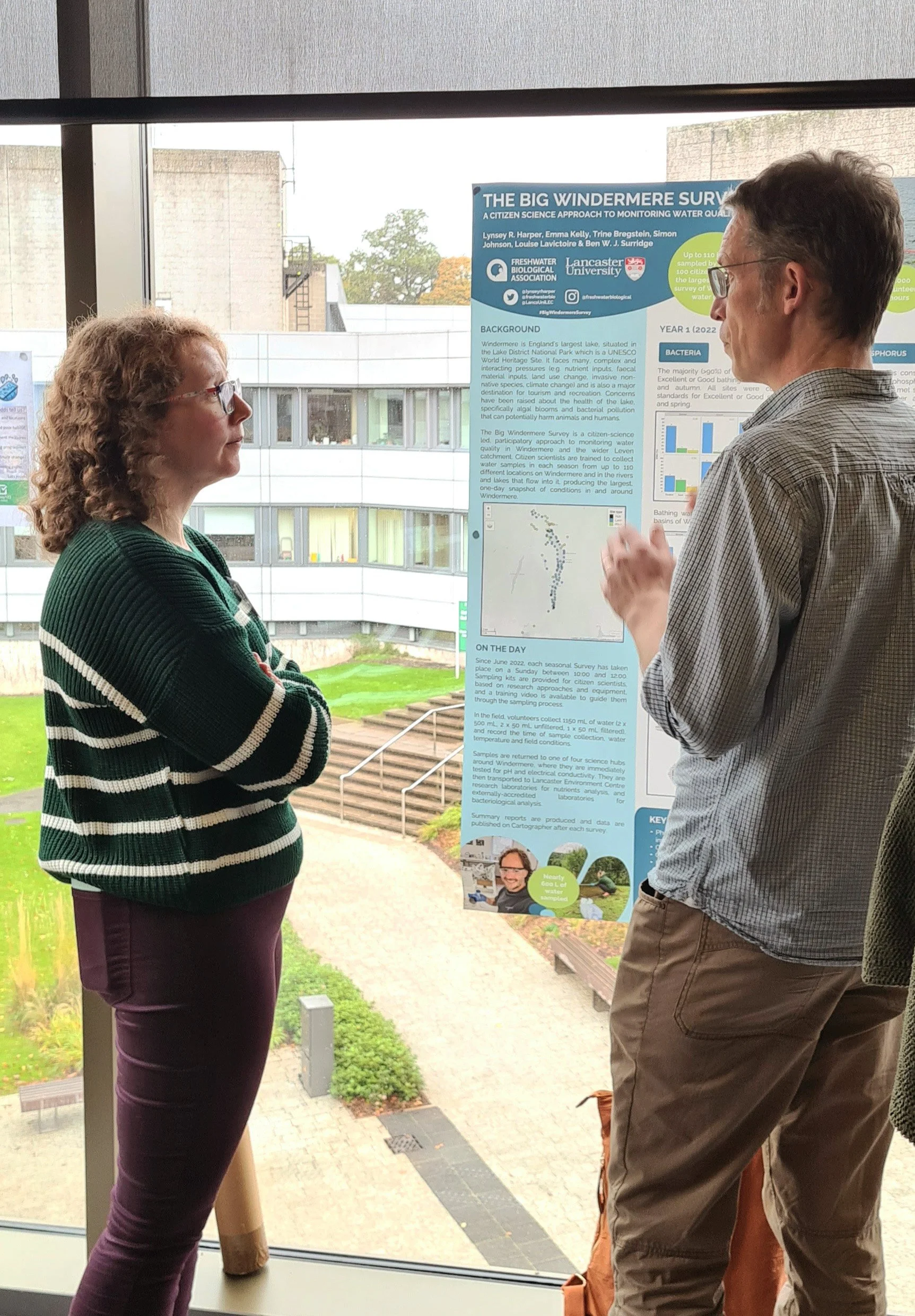
FBA’s Windermere Senior Scientist, Lynsey Harper, and Riverfly Development Manager, Trine Bregstein present at this year’s Cumbrian Lakes Research Forum at UKCEH.
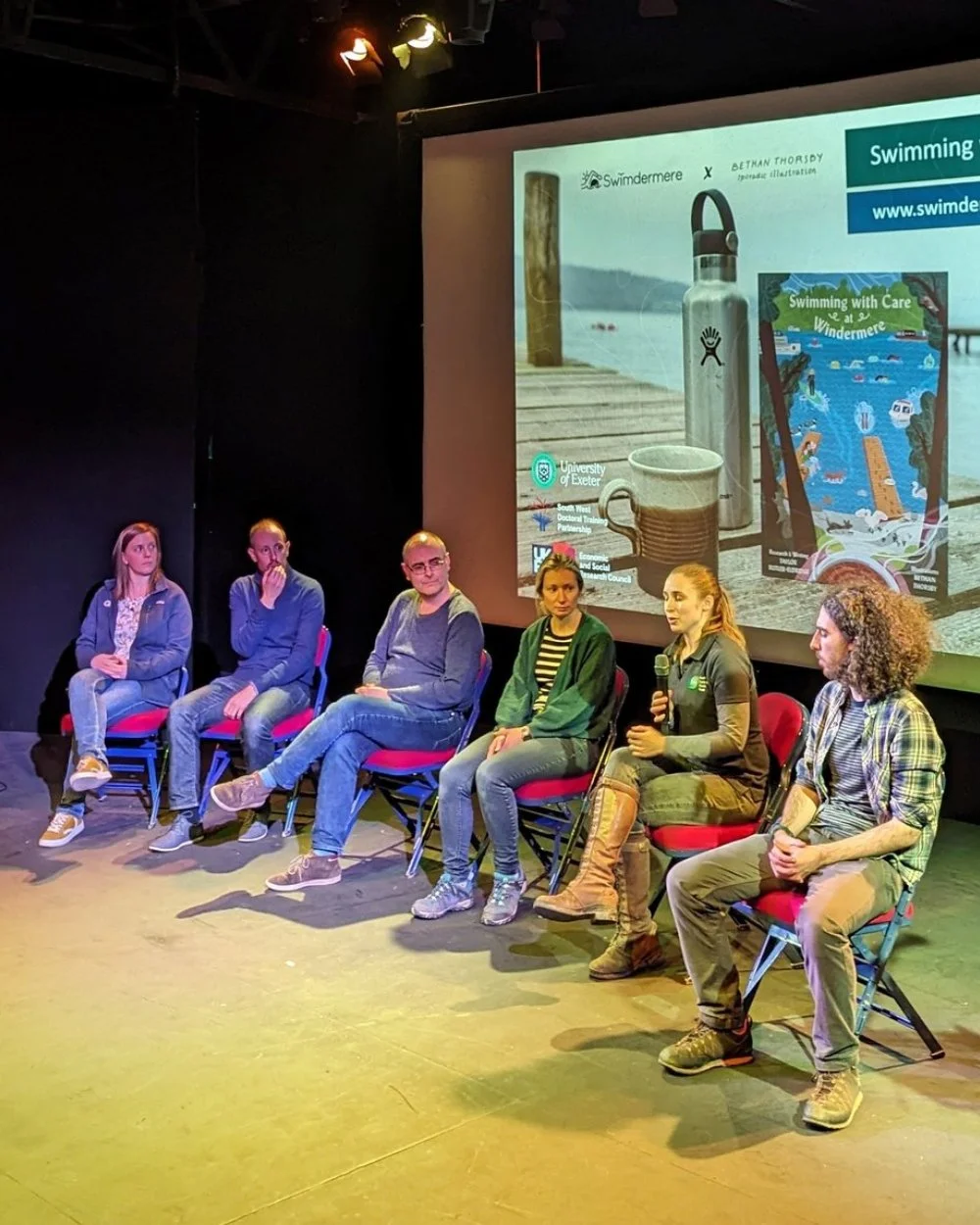
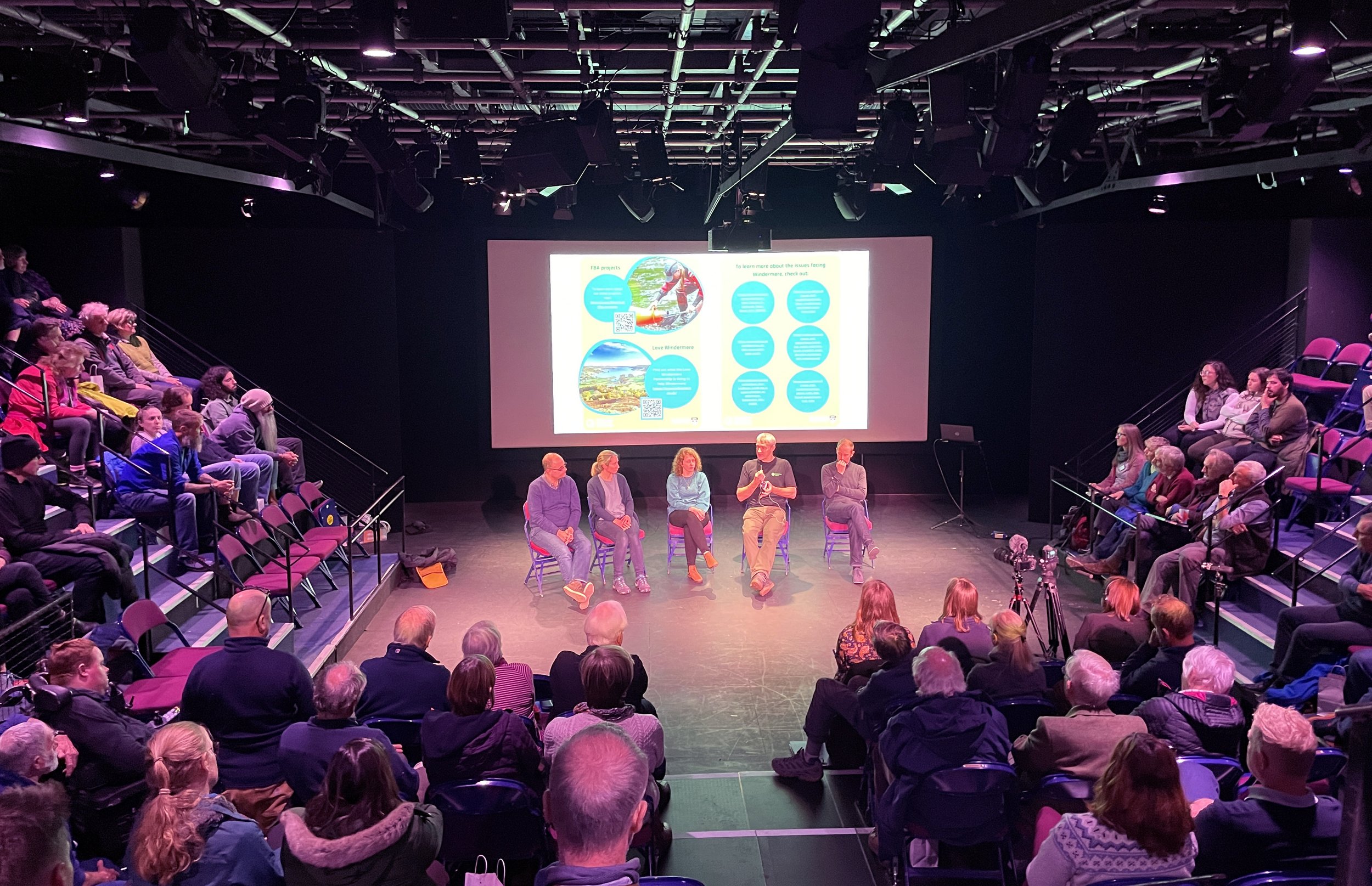
On the 15th November 2023, the Freshwater Biological Association and Lancaster University hosted a Windermere Science Evening at the Old Laundry Theatre in Bowness-on-Windermere, Cumbria.
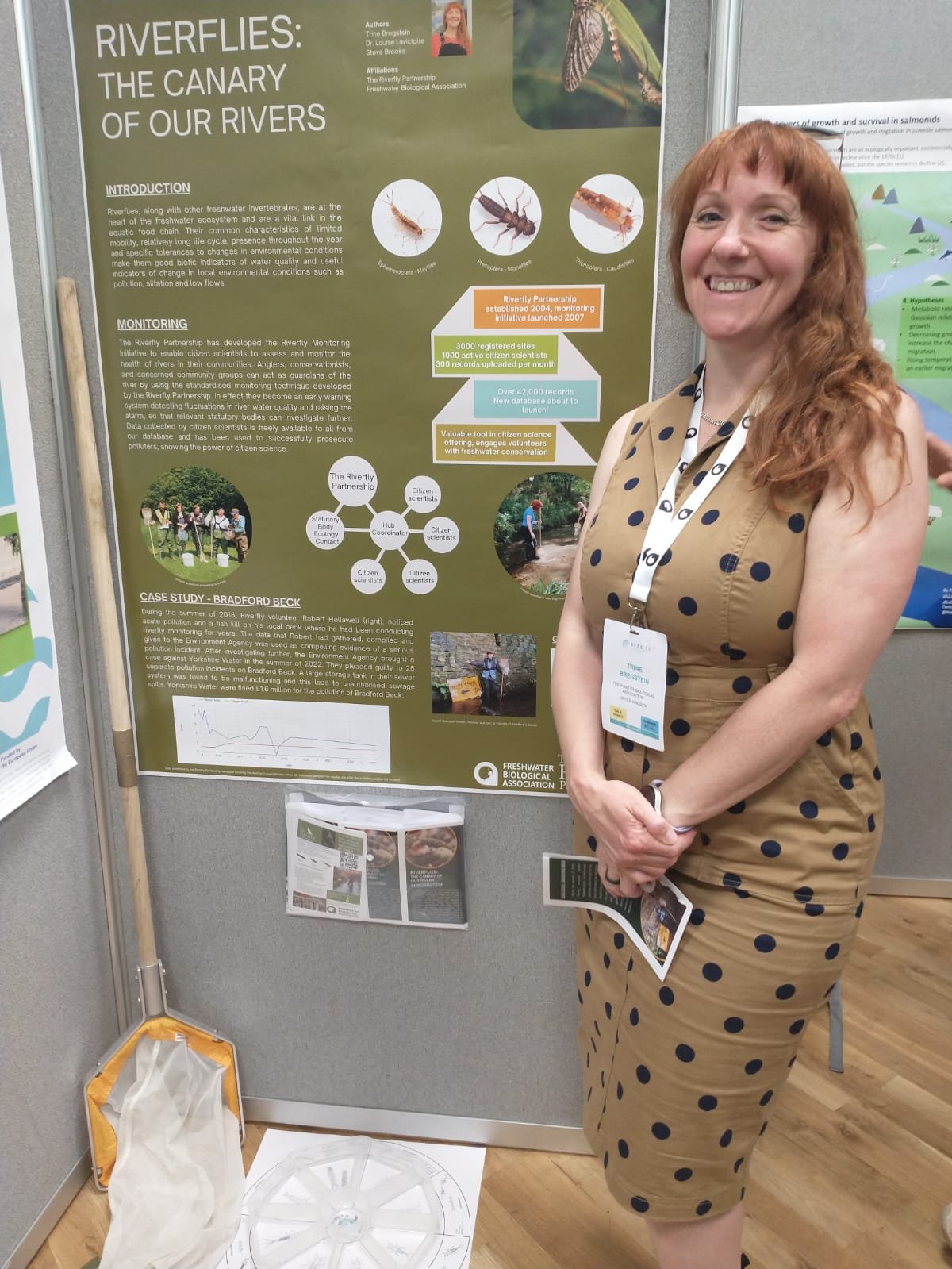
The Riverfly Partnership team expands, seeing three full-time members of staff - including Trine Bregstein, Beth Korab, and Ellen Burton.
The FBA joined other organisations in presenting its citizen science projects at The Scottish Freshwater Group’s 109th meeting.
The Freshwater Biological Association and Lancaster University are delighted to share the results of the August 2023 Big Windermere Survey.
The Freshwater Biological Association has appointed Josie Niemira as its new Priority Habitats Project Officer.
The FBA is thrilled to have contributed information about our work on the freshwater pearl mussel in Natural England’s newly published selection of case studies.
The FBA’s Head of Science, Dr Louise Lavictoire, is a leading author on a newly published paper concerning captive breeding freshwater mussels.
Emma Kelly, Windermere Project Officer, reports on the Big Windermere Survey ‘Thank You Event’ with local citizen science volunteers.
Simon Johnson, Executive Director of the FBA reflects on this years Symposium for European Freshwater Sciences.
Invertebrate specialist and Fellow of the FBA, John Davy-Bowker, has been involved in saving the critically endangered Yellow Sally Stonefly after it had been declared extinct.
Clean Water Campaign founder, Harrison Hunter, is to attempt to swim the length of Windermere on Saturday 19 August in order to raise awareness about water quality and money for charity - including the FBA.
The FBA is delighted to announce that it has secured funding from the Lake District Foundation and National Trust to continue with the Big Windermere Survey.
The Freshwater Biological Association is delighted to share the results of our fourth Big Windermere Survey.
Recent hot and dry spells in the Lake District have brought on expected returns of algal blooms in several water bodies, including Windermere.
The Freshwater Biological Association is delighted to share the results of our third Big Windermere Survey.
The FBA has entered into partnership with The Institute of Environmental Sciences to develop a modularised training programme based on the new Biology and Ecology Handbook.
The Freshwater Biological Association is delighted to announce that it will be hosting SEFS13 from 18th - 23rd June 2023 in Newcastle.
The Freshwater Biological Association has recently developed and secured a £300,000 grant to develop the Riverfly Partnership nationally over the next three years.
The Freshwater Biological Association is delighted to share the results of our second Big Windermere Survey.
The Freshwater Biological Association calls on world leaders at COP to urgently recognise the critical value of freshwater ecosystems such as lakes, rivers, streams and wetlands.
The results of the biggest ever citizen science survey examining the water quality of Windermere – England’s largest natural lake are now available.
Statement by the UK Centre for Ecology & Hydrology, Lancaster University, and Freshwater Biological Association on cyanobacterial blooms on Windermere.
We are excited to welcome you in Berlin or online for the SIL Centennial. Here’s an overview of the day to day program.
The Foundation for Water Research (now part of the Institution of Environmental Sciences) and the Freshwater Biological Association are pleased to announce the launch of their Freshwater Biology and Ecology Handbook.
A new “Love Windermere” partnership sees the biggest ever cooperation of sectors to tackle challenges in the lake.
Calling on local citizen scientists to help assess the health of England’s largest natural lake.
Expression of support for Ukrainian researchers by the International Society of Limnology (SIL), The Freshwater Biological Association (FBA), The Association for the Sciences of Limnology and Oceanography (ASLO), The European Federation for Freshwater Sciences (EFFS), and The Society of Freshwater Science (SFS).
FBA Executive Director Simon Johnson’s response to the article entitled “Lake District sewage could leave Windermere ‘ecologically dead’” published in the Guardian on 8th October.
Past editions of FBA News 2019-2021 available to download