Scientists' statement of support for updated EU water pollution standards
17 September, 2025
The scientists' statement on EU water pollution standards urges the European Commission, EU Member States and the European Parliament to prioritise the state of Europe’s freshwaters in the upcoming negotiations and to stand by the environmental objectives laid out in the Water Framework Directive.
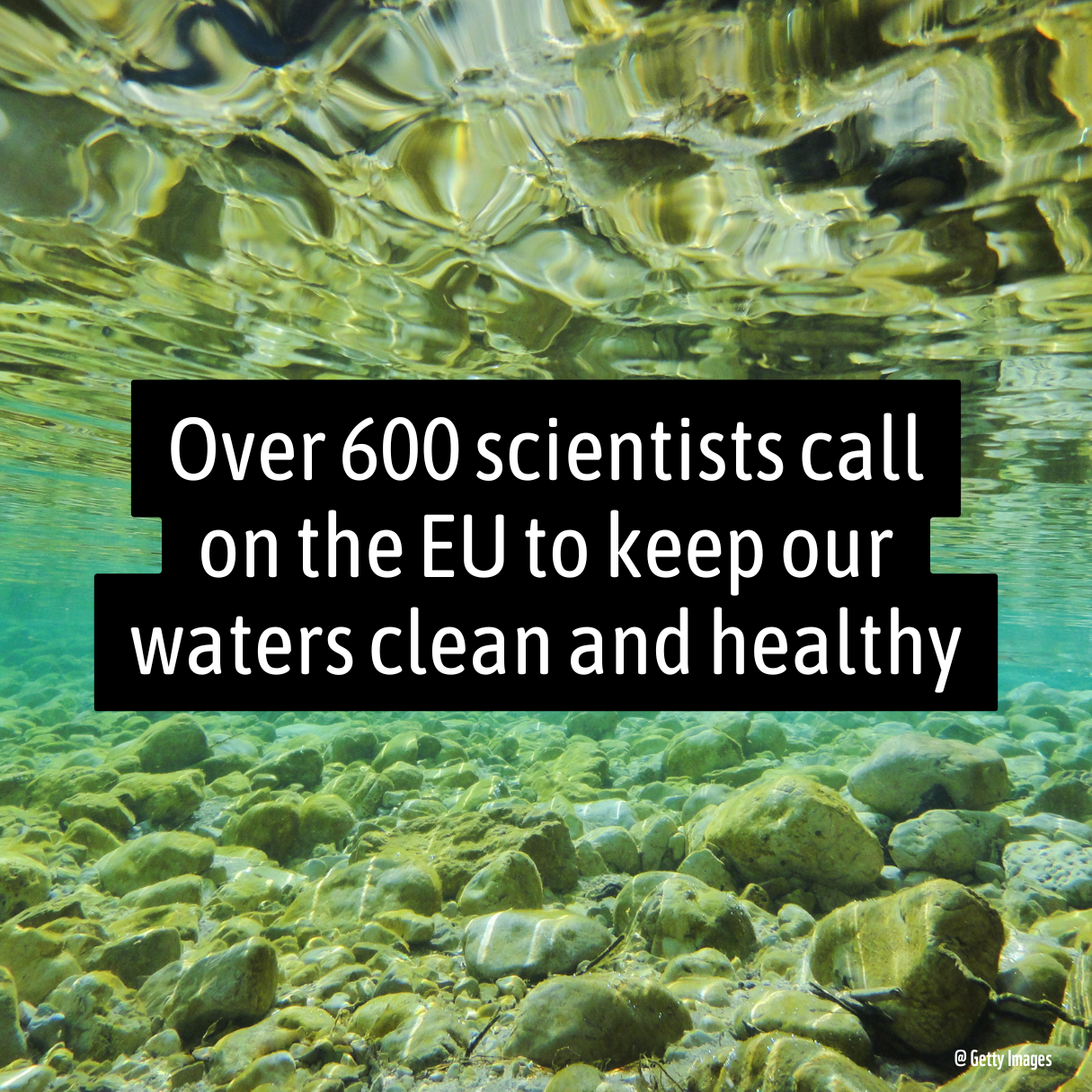
Over 600 scientists call on the EU to keep our waters clean and healthy
We are pleased to share, as a matter of urgency, the scientists' statement of support for a swift and adequate update of the EU water pollution standards under the Environmental Quality Standards Directive (EQSD), also amending the Water Framework Directive (WFD) and the Groundwater Directive (GWD). The statement has been signed by over 600 scientists around the world, concerned about freshwaters health, and supporting a call for immediate action for freshwater ecosystems.
Why is support for freshwater ecosystems so urgent?
Freshwater and coastal habitats are biodiversity hotspots. The 0.01% of the planet that makes up our lakes, ponds, rivers, streams, wetlands and bogs provide essential ecosystem services such as food and water, and recreation opportunities, for billions of people. They are also essential for nature and wildlife. Human impact has degraded freshwater ecosystems, to the extent that they are now among the most threatened habitats on Earth.
The decades since 1970 have seen an 85% collapse in freshwater species populations due to habitat loss and pollution [i] resulting in the alarming observation that fewer than half of Europe’s water bodies are in good health. Additionally, the recovery of Europe’s freshwater biodiversity has come to a halt since 2010.[ii] Scientists and conservation organisations list pollution reduction among key priorities to halt freshwater biodiversity loss.[iii]
Europe’s State of Water report 2024
The recent EEA report ‘Europe's state of water 2024’ was a stark reminder that Europe’s freshwater and coastal ecosystems are under serious pressure. Nearly a quarter of a century after the adoption of the EU’s main water law, the Water Framework Directive (WFD), only 29% of surface waters and 77% of groundwater body area are reported to be in good chemical status.
Yet, this does not give the full picture, as chemical status under the WFD is only assessed against a small fraction of the substances present in the environment and largely overlooks the effects of chemical mixtures. In short, the full picture of chemical pollution in aquatic environments is underestimated and underreported.
“It is a huge honour to sign this important statement of support on behalf of the Freshwater Biological Association. I urge all freshwater scientists, ecologists and managers to take a look at this. Why is it that freshwater ecosystems always seem to be the poor cousin when it comes to the attention placed on their higher profile terrestrial and marine family members? Without freshwater there is no life, human or wild. Together, let’s stand up for freshwaters!”
Why is this scientists' statement so important?
Hundreds of harmful substances are being detected in our rivers, posing serious risks to aquatic life and our access to clean water. Alarmingly, fewer than 50% of Europe’s water bodies are in good health today.
This statement is calling on the European Commission, EU Member States, and the European Parliament to prioritise Europe’s freshwater ecosystems during trilogue negotiations, urging policymakers to uphold the environmental objectives of the Water Framework Directive.
What is the Water Framework Directive?
The Water Framework Directive (WFD), adopted in the year 2000, is the EU’s key law to protect freshwater and coastal ecosystems, by providing an integrated and holistic approach to water management. It has played a pivotal role in advancing European water management. However, the rules that relate to monitoring, reporting and tackling pollution need to be updated to reflect the real extent of chemical pollution and its impact on aquatic biodiversity.
Current EU monitoring practices are failing us – they rely on an outdated and limited list of pollutants, leaving many harmful substances unchecked. It’s time for change.
This initiative has been coordinated by the European Environmental Bureau (EEB).
Massive thanks to all the freshwater scientists who have shown support for updated EU water pollution standards and signed the scientists' statement!
NOTE: This article was updated in September 2025.
References
[i] WWF, (2024), 85% collapse in Freshwater species populations since 1970 -https://wwflpr.awsassets.panda.org/downloads/2024-lpr-executive-summary.pdf
[ii] Haase, P., Bowler, D.E., Baker, N.J. et al. The recovery of European freshwater biodiversity has come to a halt. Nature 620, 582–588 (2023). https://doi.org/10.1038/s41586-023-06400-1
[iii] Tickner et al., (2020) Bending the Curve of Global Freshwater Biodiversity Loss: An Emergency Recovery Plan, BioScience, Vol. 70:4, pp. 330–342, https://doi.org/10.1093/biosci/biaa002