The Wensum: England’s dying and forgotten chalk river
11 September, 2025
Simon Johnson issues a call to action to those who must do more to save England’s forgotten, and sorely neglected, chalk river.
Simon is Executive Director of the Freshwater Biological Association. He is a former Director of the Wild Trout Trust and the Eden Rivers Trust, and has worked as an independent consultant for river and catchment restoration.
I have had a love affair with the River Wensum in Norfolk for over 30 years. A place in my heart where wild trout rise, mayflies dance, otters cavort, and kingfishers dazzle with their electric blue flypasts. A living river beyond value.
After many years away, I’ve re-connected with the Wensum. I still have friends in the area who I fish with and have also become a board member of the Norfolk Ponds Partnership. I’d been hearing rumours of the sorry state of the Wensum. So, in the summer of 2023 I decided to go and look for myself.
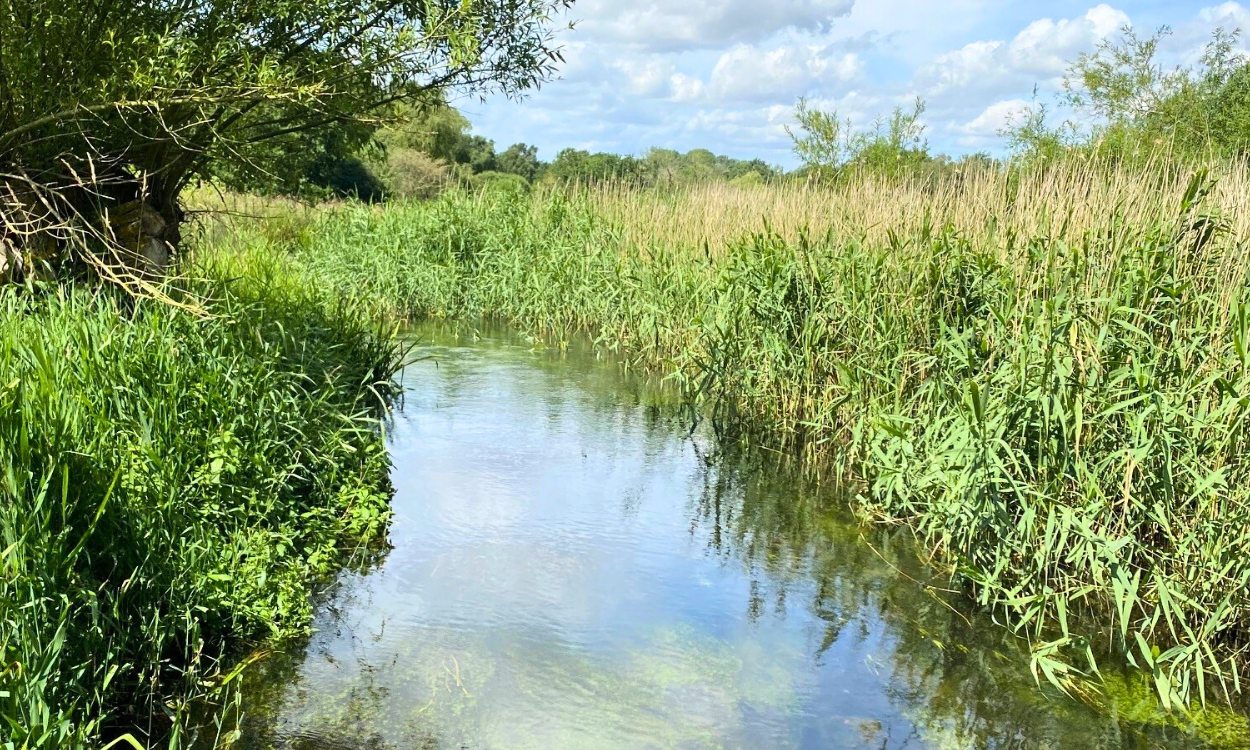
The River Wensum in Norfolk, a Site of Special Scientific Interest (SSSI) since 1993.
To my dismay, I found this beautiful and historic river, once bursting with nature and one of England’s most famous fisheries, in a sad state of unnecessary ruin. Sparkling gravel shallows where the river’s famous trout, grayling, barbel and chub used to spawn were choked with fine sediment. Iconic chalk river plants such as starwort and crowfoot were gone. Once vibrant and clear waters were lethargic and opaque.

Photographs showing the siltation on the Wensum at Great Ryburgh, Norfolk.
A little on my history with the Wensum
This article is difficult for me to write as I’m dismayed, utterly bewildered and outraged that one of our most heavily protected rivers could be in such severely poor health. However, I feel compelled to speak up for the Wensum, to share this recent sad story and issue a call to action to those who must do more to save England’s forgotten, and sorely neglected, chalk river.
As a fisherman and naturalist, I became acquainted with this iconic chalk river during my undergraduate days at the University of East Anglia. During that time, I found myself scouring libraries (pre-internet) and magazines for articles about the legendary roach, barbel and brown trout that the river was famed for.
The River Wensum supports diverse aquatic vegetation, invertebrates, and fish species, including the freshwater crayfish (Austropotamobius pallipes), brook lamprey (Lampetra planeri), and bullhead (Cottus gobio). The river also hosts the rare Desmoulin’s whorl-snail (Vertigo moulinsiana).
Eventually, I joined the Norfolk Anglers Conservation Association – a passionate band of angling and conservation renegades dedicated to restoring the Wensum. With little more than volunteers, shovels, rakes and wheelbarrows, we brought habitats back to life. It was through this work that I met Chris Turnbull, the group’s charismatic chairman. Chris quickly became a close friend and partner in many conservation capers along the river.
More than thirty years on, Chris’s friendship remains a source of inspiration – and a reminder of why I continue to fight for our rivers.
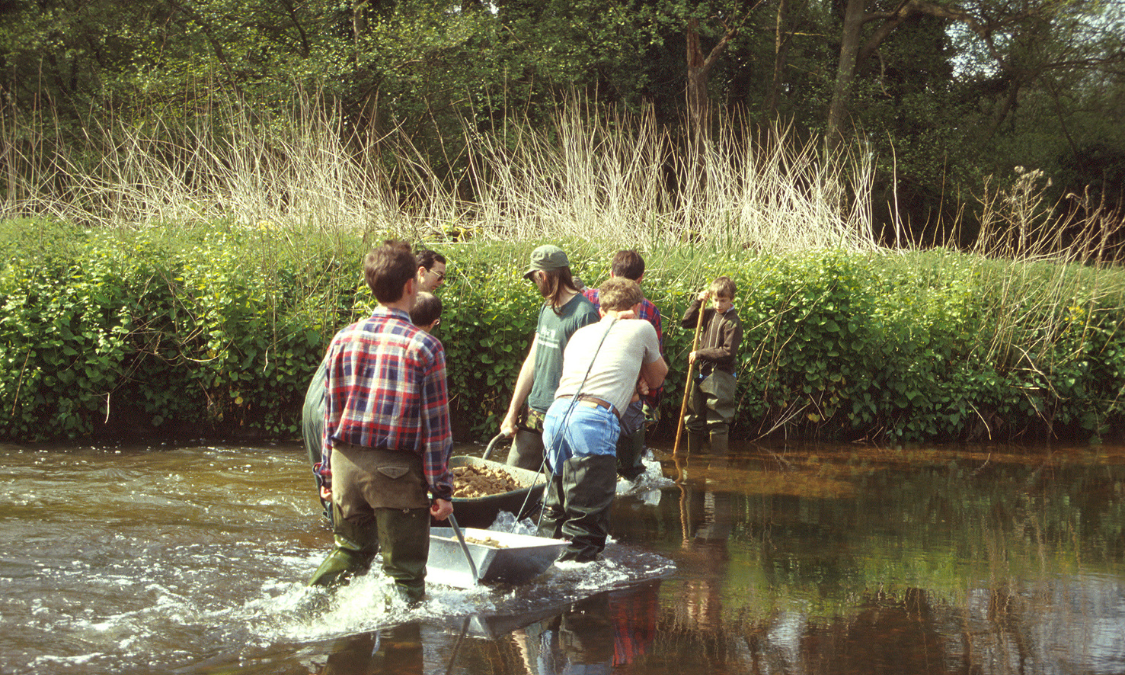

Photo (left) riffle building on the River Wensum, barrowing in gravel, Sayers Meadow, Lyng early 1990s. Photo (right) river restoration work on the River Wensum.
Please allow me to introduce you to the Wensum
The Wensum is not a chalk stream in the classic sense – it is a chalk river. While some of the upper reaches once resembled, and some still do, the textbook image of an English chalk stream, much of the Wensum is subtly different from more famous counterparts. The ecology of this enchanting river is shaped by the underlying chalk geology and a consistent baseflow, with a character that varies significantly along the waters’ course.
The source of the Wensum is between the villages of Colkirk and Whissonsett in Norfolk. The river then flows for 75km, through Fakenham and the Pensthorpe nature reserve, on through Swanton Morley, Taverham and Norwich, flowing out of the city at Trowse to join the River Yare at Whitlingham. The Wensum is the principal river on which the city of Norwich was founded.
Natural England describes the Wensum as a ‘naturally enriched, calcareous* lowland river’. In the upper reaches, spring-fed flows emerge from the chalk and are joined by run-off from calcareous soils rich in plant nutrients. This creates beds of submerged and emergent vegetation characteristic of chalk streams. Further downstream, however, the chalk is overlain by boulder clay and river gravels, resulting in aquatic plant communities more typical of a slower-flowing lowland river with mixed substrates.
(*composed of or contains calcium carbonate, giving it a chalky or lime-rich quality.)
Despite securing designation as both a Site of Special Scientific Interest (SSSI) and a Special Area of Conservation (SAC), the Wensum has always felt like an overlooked, lower middle-class cousin in the chalk river family – quietly flowing through the backwaters of rural Norfolk. In contrast to the globally renowned, aristocratic chalk streams of the south – like the Test, Itchen and Avon – the Wensum has often been under-recognised and under-prioritised.
Begging the question… has this lack of status and visibility contributed to the neglect of this challenged river?
The River Wensum was designated a Site of Special Scientific Interest (SSSI) in 1993, and a Special Area of Conservation (SAC) in 2000. The SSSI designation covers 71 km (44 miles) of the River Wensum, recognizing it as one of the most important chalk river habitats in the country.
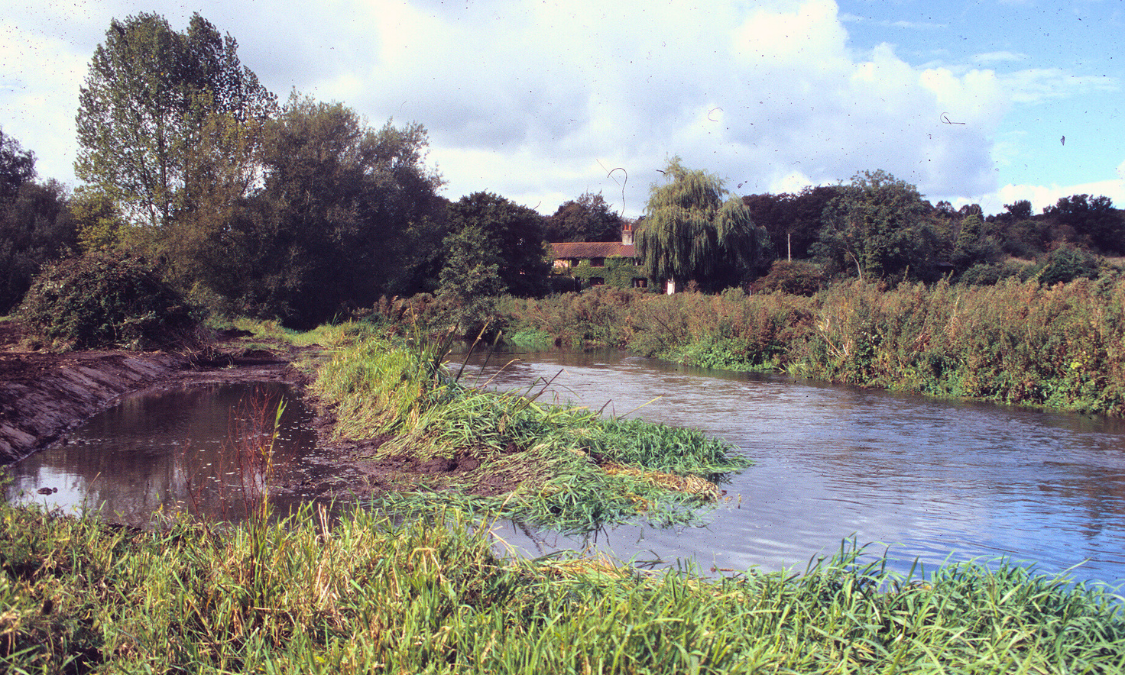
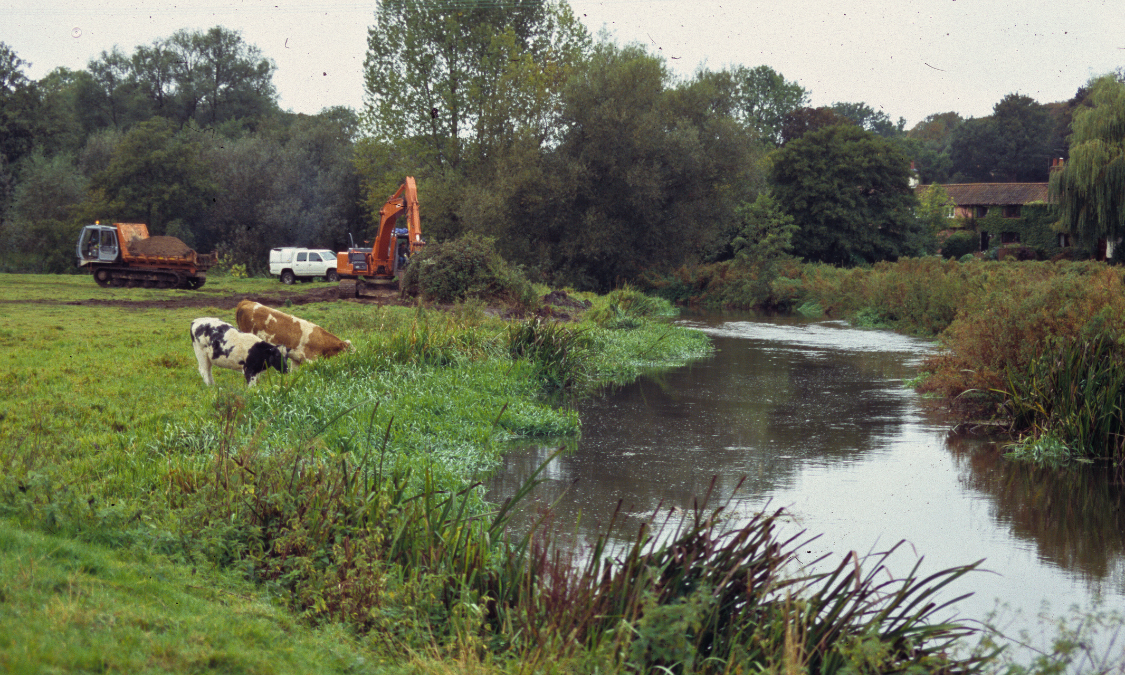
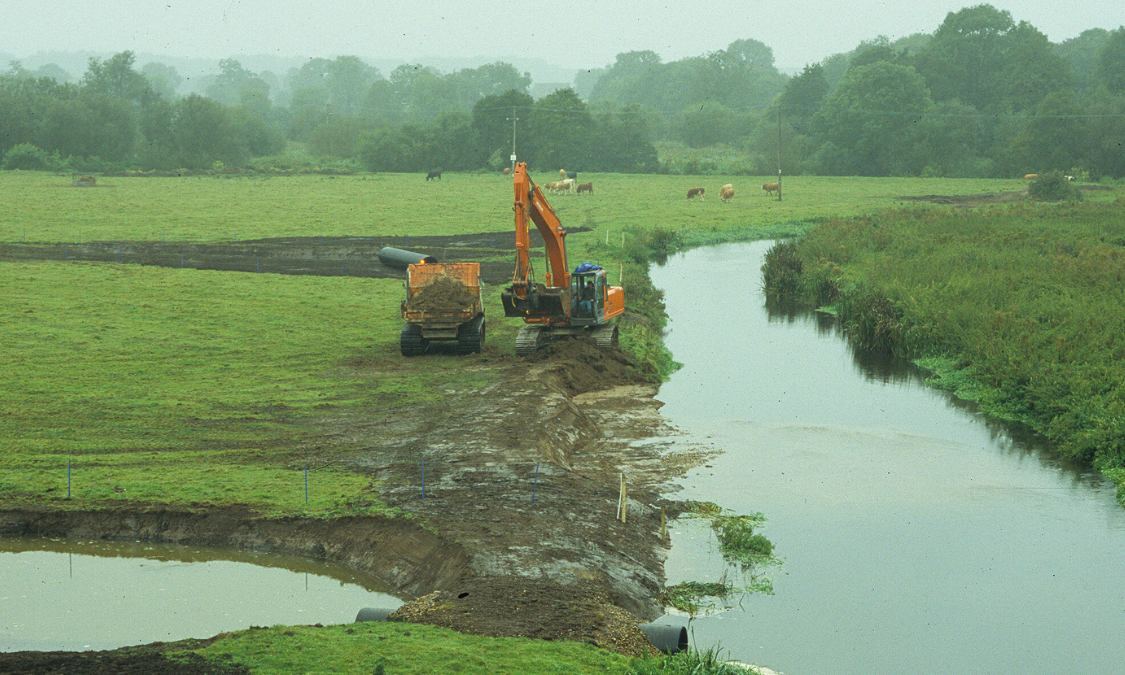
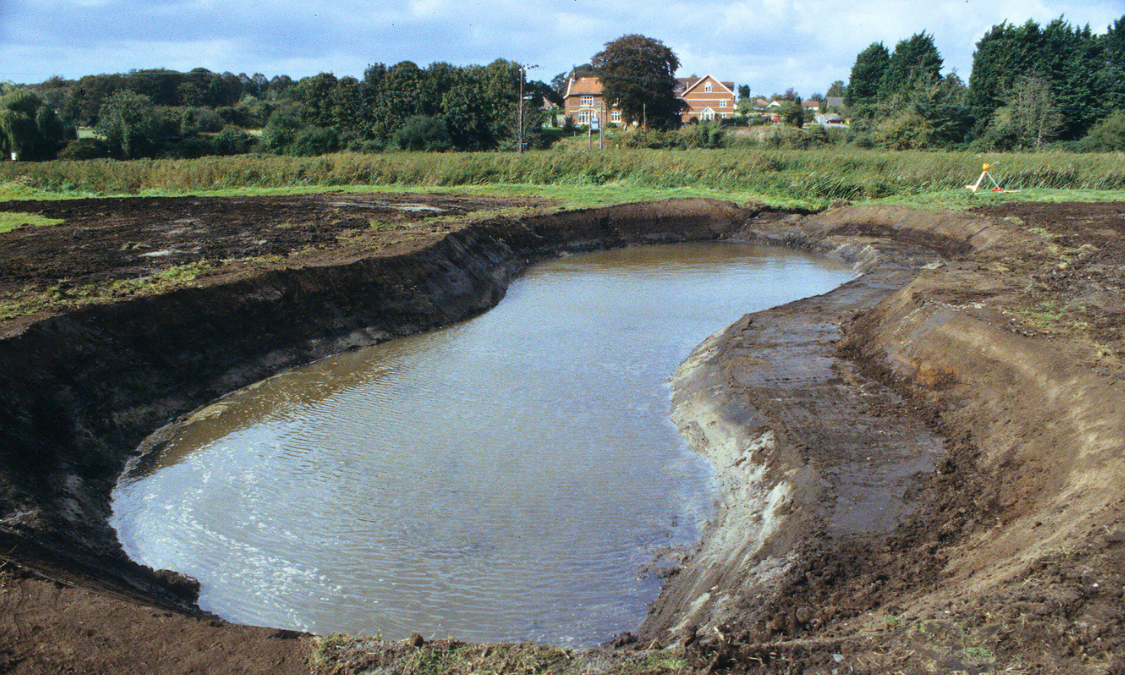
Photographs of the Costessey Point River Restoration Project in 2003. A major project designed by Simon Johnson, aiming to mitigate impacts of over-abstraction and habitat loss on the River Wensum. The project included reintroduction of spawning gravels in the river including off-river refuges for fish fry to thrive.
Today the Wensum is teetering on the edge of an ecological precipice
Chalk rivers, like all rivers, are damaged by low flows, poor water quality and physical modification that prevents the natural function of the river’s interaction with the floodplain.
Over-abstraction from the aquifers feeding the Wensum – for agriculture, businesses, and public supply – is reducing river flow. This low flow worsens pollution from sewage, septic tanks, and agricultural runoff by limiting dilution. Climate change, with more frequent droughts, heatwaves, and floods, further threatens the base flow of chalk rivers and their ecosystems.
Together with the physical modification of the river and the floodplain over so many years, ignored and unaddressed, it is not an exaggeration to say that observing the health of the river today, the diagnosis is bleak… the Wensum is dying.
Natural England’s 2024 SSSI Condition Assessment makes for some grim reading.
“Despite some localised improvements, the overall condition is unfavourable – No Change”.
“The SSSI is not recovering and faces continued ecological stress. Targeted action is urgently needed to reverse these trends to achieve favourable condition”.
These statements from Natural England confirm that the Wensum has some glaring ecological and physical faults and they are certainly glaring at us in this assessment!
How could such an ecologically significant river become so polluted and neglected?
The River Wensum has been a SSSI since 1993 and yet, in recent years at least, there has been little or no improvement. If the Wensum, which has the highest level of ecological safeguarding and the strongest legal drivers for recovery, is still not improving and is in fact getting worse, there is something very wrong with the protection and conservation approach being taken.
This was brought home to me in July 2023 when I went to Norfolk with some old colleagues to revisit a restoration site on the upper Wensum. All we found was a river channel with 100% Bur Reed (Sparganium) encroachment and little or no perceptible flow.

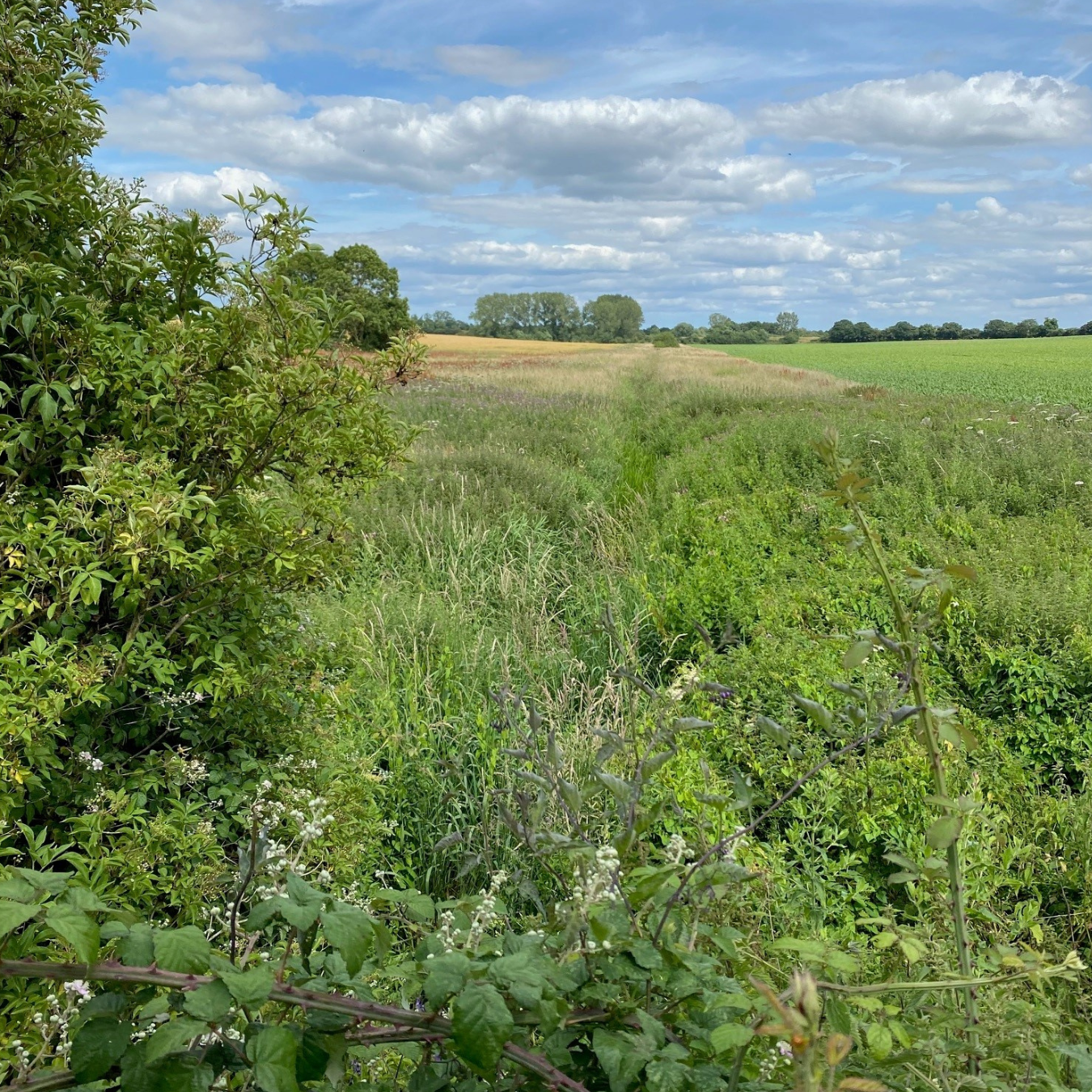
Photo (left) taken in 2023 showing the upper River Wensum with 100% encroachment of Bur Reed in the channel. Photo (right) taken in 2023 further up the catchment showing another stretch of the Wensum with 100% encroachment of Bur Reed.
To see a chalk river with no, or so little flow, is unnatural and deeply troubling. Twenty years earlier I had canoed down this very same stretch undertaking habitat surveys. We checked several other sites upstream and confirmed this was not an isolated case. Was this clear evidence that a conservation project which had received major public investment had failed to protect the vital base flow that a chalk river needs?
Over my decades of working within the environmental sector, I have had an uncomfortable feeling that with chalk rivers there is all too often a disconnection between the Environment Agency’s water resource licencing folk and those tasked with delivering binding conservation requirements.
Begging an uncomfortable, but necessary, question… is the altered flow in the Wensum a result of regulatory failure?
The purpose of a Site of Special Scientific Interest (SSSI) is to legally protect and conserve areas of land and water that are nationally important for their wildlife, habitats, and geology, ensuring their survival for the future and safeguarding England's best natural sites.
These designations protect special features like endangered species, rare habitats, and unique geological formations, with owners and occupiers having legal responsibilities to protect these features from harm.
How can this be allowed to happen on a river with the highest levels of conservation protection afforded to it?
It is scandalous that over the last three decades we have had wave after wave of initiatives, strategies, directives, and partnerships with the intention of protecting the Wensum, yet the river today is in a sorrowful state of continued decline.
Back in 1998, when working at the Environment Agency (EA), I produced the first river habitat rehabilitation feasibility study for the Wensum. This felt like a brave new dawn for the river (which was in real trouble back then too!) as we brought together all those with a responsibility and love for the river to help us a shape a get-well plan.
We secured investment and delivered projects at Costessey, Lyng, Bintry, Billingford and Fakenham. We looked at the science and ecology of the river and worked with stakeholders to build up a decade by decade (starting in the 1930s) picture of the Wensum. This work pinpointed when the decline in fish populations started (1970s Columnaris disease). We went a step further and identified the likely causes and challenged the status quo. For example, whilst average trends in ammonium were deemed as compliant, we identified that peaks during storm events were at elevated concentrations that could have sublethal effects on coarse fish larval survival. Not a universally popular finding when you are working for the regulator reporting that everything was fine!
Nonetheless, we were focusing on priorities and building momentum. Since then and despite three decades of attention the river is still in state of terminal decline. Clearly, something is going drastically wrong in terms of the management and efforts to rejuvenate what was once a thriving chalk river ecosystem.
“It is scandalous that over the last three decades we have had wave after wave of initiatives, strategies, directives, and partnerships with the intention of protecting the Wensum, yet the river today is in a sorrowful state of continued decline.”
State intervention has failed our rivers and the current system of catchment governance is not working
The Wensum has a ‘Catchment Partnership’, however, it is woefully under resourced, squeezed into some lovely people’s day jobs and has no specific investment. At a recent partnership meeting, key organisations, including Natural England (NE) and Anglian Water (AW) were absent. I asked why they were not participating in the partnership and received a somewhat conflated response along the lines of this was an ambition of the group.
What chance does the Wensum have if a key regulator (who produced the condition assessment) and major discharger of wastewater and abstractor from the chalk aquifer (Anglian Water) are not active participants in the partnership? It feels to me like they may have given up on the Wensum? If so why?
So, what can be done to ‘save the Wensum’?
We need a paradigm shift to challenge much of the current thinking and ways in which we are approaching nature recovery on the Wensum. More than ever, we need action-focused approaches, delivery at pace, fewer failed strategies, directives and under-funded partnerships and less blah, blah, blah.
Inspiring leadership engaged and informed communities, stakeholder commitment, major investment, transparency and accountability are in desperately short supply.
A radical new approach led by freshwater scientists, communities and democratically elected local bodies would deliver just the type of step change we desperately need to enable effective protection and stewardship of rivers.
Regulators and ‘operators’ such as Anglian Water should be supporting, not leading, this new approach to save our rivers. Ditch the gobbledegook and fudged metrics so often associated with failing directives too! The time has come to shape and replace those with actions for rivers that support nature recovery and tangible outcomes.
What does a healthy future for the Wensum look like?
The Wensum should be a river where nature in abundance flourishes. Chalk rivers are incredibly special places and the UK is the global home to 85% of them. The Wensum should, and can, be a place where fish thrive, a showcase of freshwater biodiversity, self-sustaining and enriching the lives of all those who experience time there.
A river for nature and people: accessible, safe fun and culturally vibrant. But we have much to do to get there.
To deliver the above we must:
Safeguard the Wensum’s SSSI status to protect and conserve this nationally important chalk river.
Inspire, motivate and sustain the participation of all stakeholders who will hold to account those who damage and regulate the Rivers Wensum.
Embrace scientific and innovative approaches such as data driven catchment resilience support tools to show what change could look like.
Target and prioritise delivery where it counts and where it delivers integrated and sustained benefits for people and nature.
The Cunliffe review and subsequent ministerial announcements, alongside an unprecedented level of public concern, make this the perfect time to secure a fundamental change of approach.
Now is the time to act resolutely if we are to stand a fighting chance of healing the Wensum before it’s too late.
For most of my adult life the River Wensum, has been a companion, a spiritual guide and a friend. The test of a true friendship is to be there as a support through the tough times. I will do all I can to stop the unnecessary death of this wonderful river and support a recovery to the rudest of health!
“Now is the time to act resolutely if we are to stand a fighting chance of healing the Wensum before it’s too late.
Will you join me on a determined journey to get the Wensum well again?”
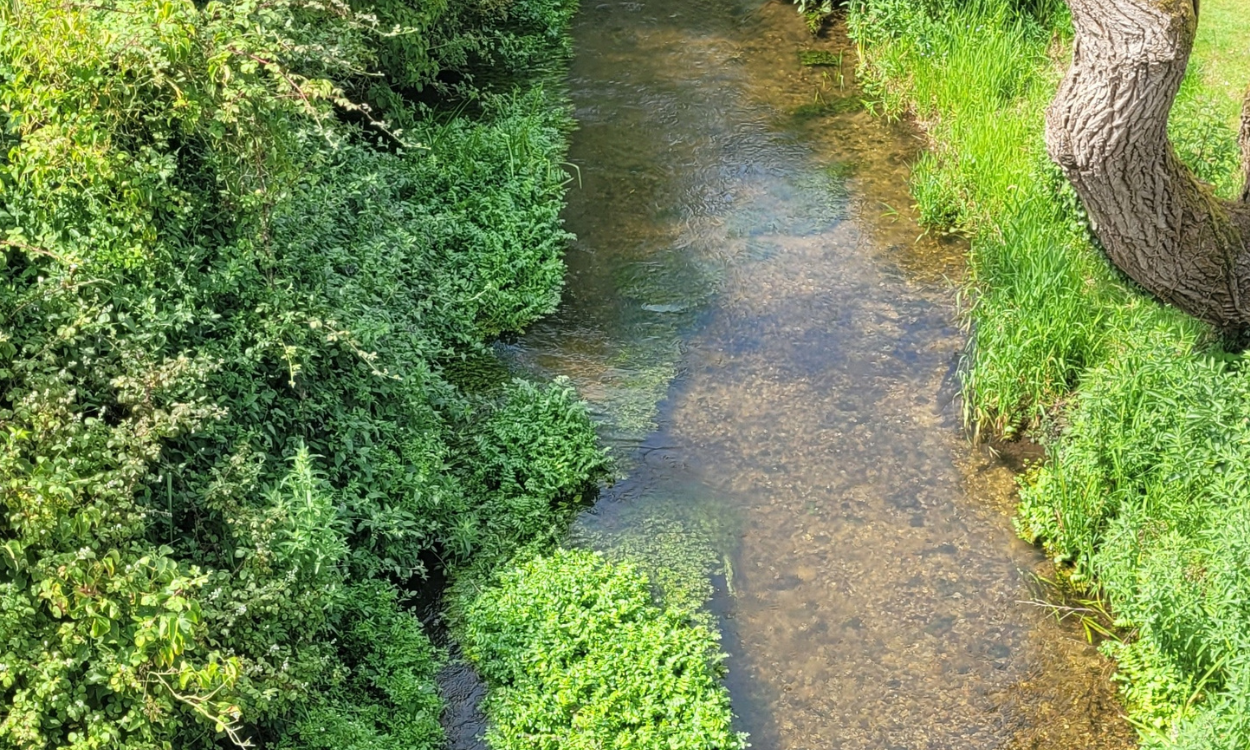
Photo of the Wensum at Sculthorpe Mill in Norfolk, showing a small section of the river that has escaped the destruction of the dredger.
Interested in discovering more?
Read the FBA science article: Restoring chalk streams in a changing climate
Natural England report: River Wensum Special Area of Conservation, First published August 2022, revised June 2024