
Ghost pond resurrection – the most successful ecological restoration ever known?
21 November, 2025
Carl Sayer is Professor of Limnology & Freshwater Ecology, University College London. He is also a passionate advocate for the profound potential of pond restoration.
We were delighted that Carl was able to attend the FBA Annual Scientific Meeting in June to deliver a keynote talk on Ghost Ponds. These pond resurrections are an incredible example of ecological restoration in rapid response times. An inspiring showcase of how scientists and communities can work together, and impressively one of the most successful forms of freshwater restoration known.
Here we have the pleasure of sharing a deep dive with Carl into the fascinating world of ghost ponds, and their potent power for ecological and palaeoecological regeneration.
Please share a little about how you dipped your toes in the world of freshwater biology?
I grew up in a village in North Norfolk and when I was around 9 years old, I used to go fishing with my friend. We struggled to catch any fish, but we just loved finding these little ponds out in the countryside, near where we lived.
So, I think that was what hooked me really, having a childhood in nature. I went out in the morning and came back at night, black and blue covered in thorns and scratches. I just loved it. Water in particular and the ponds where fish seemed so mysterious. These little creatures swimming under the surface that you couldn't see. It made water even more exciting. You know, the marvel of what's lurking under the water?
And please tell us more about your ghost pond restoration project...
I've been based at the University College London (UCL) since 1997, after I finished my PhD and I've been working here ever since. It wasn't until the early 2010s that I started getting into ponds.
I met this wonderful farmer, Richard Waddingham, a wonderful man, and a very clever farmer. He showed me the ponds on his farmland, and I couldn't believe how amazing they were, so beautiful and full of species. I learned about how he'd been looking after his ponds, occasionally clearing the trees, scraping some mud out and keeping them, while everyone else had been filling them in.
Richard had 40 ponds on a little farm, but it seemed like hundreds, and they were all beautiful. He taught us about how brilliant ponds could be. So we started studying his ponds to try and understand why. one of the things we realised was that when you disturb the mud in a pond or take some of the mud out, especially in a very overgrown pond that hasn't been disturbed for years, you expose seeds that have been alive for centuries.
We didn't know that at the time, but suspected that all these amazing things grow, from being buried in a pond.
And the ghost ponds project came out of this richly informative time spent driving with Richard around and along the edges of his farm, where he'd point to the neighbouring farm to where he remembered a pond being. And he would say, “Look, there used to be a pond there, Carl. Why don't you start digging ponds where they used to be? You're definitely going to get a pond there.”
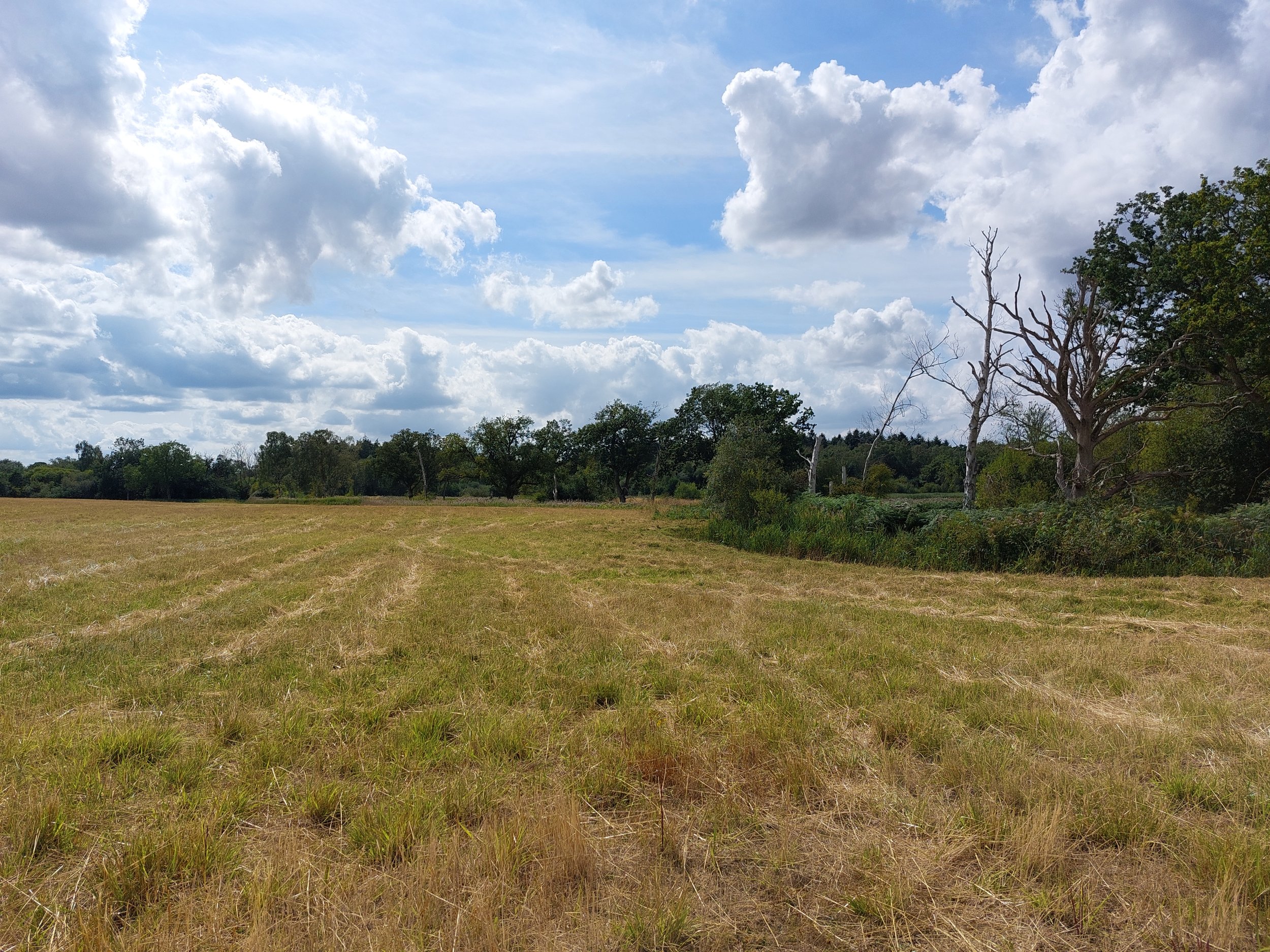
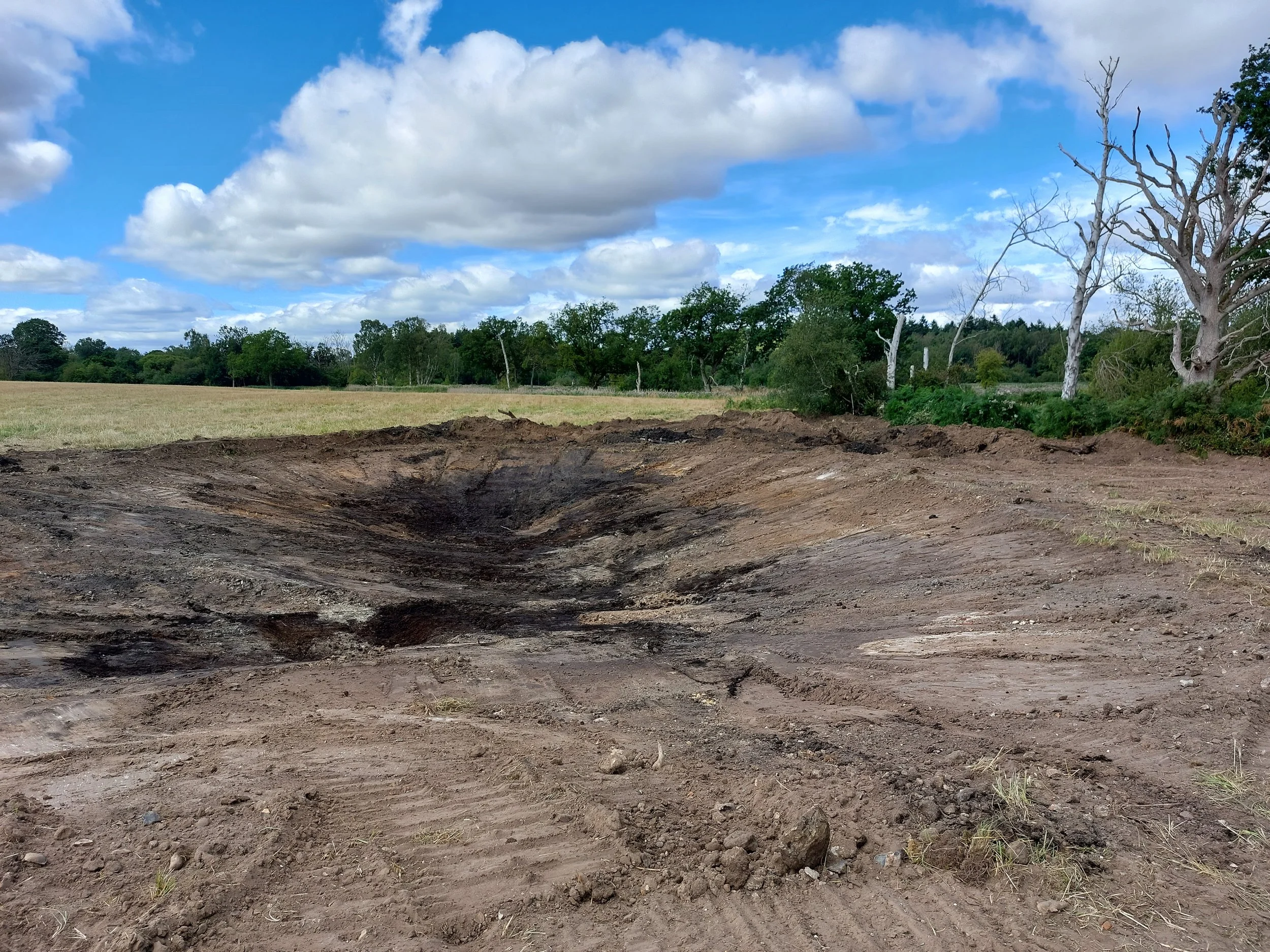
A Norfolk pond resurrection project in action: showing the lost pond location before restoration (left) and following pond excavation (right) - photo credit Carl Sayer.
When we looked at these lost ponds, they were like shadows in the fields. So, either dark patches in the soil or puddles. They kind of have a trace in the landscape. Even though they're completely lost, you can usually see them. We used to drive past this lost pond that was a dark patch in the field, every time we used to visit, and Richard would say the same thing, more or less.
I think eventually he realised I got what he said, and I came up with this idea, I thought, let's call these ‘Ghost Ponds’ and if we dig there, I wondered if the seeds would still be alive, even if they'd been farmed over.
We started the Ghost Pond project in 2013, and found three farmers who were prepared to let us dig the lost ponds on their farms. We got the research up and running, and there was a wonderful PhD student who worked on the project called Emily Alderton, who made the discovery that we could grow the stuff that was buried underneath the field. Even if the pond had been filled in over 150 years ago, it would still grow. So, it meant that they weren't truly lost ponds, there was still something, buried life, there. They literally had a ghostly presence. And you could bring them back to life.

The Norfolk pond looking lusciously biodiverse in August 2024, two years after restoration - photo credit Helen Bennion.
“So we’re really undoing what people have done. We break all the drainage that drained the water away from them, and we re-excavate, bring the pond back to where it was. The water then comes from the ground and from the rainfall, and the pond that used to be there returns. A transformational pond resurrection.”
How do you go about restoring a ghost pond?
All we do is re-excavate where the pond used to be. We do it with trenches like archaeology to try and find the old sediments which stand out as being darker, then dig down. Once we've found the pond we try and make it the same shape and size as it used to be.
So we're really undoing what people have done. We break all the drainage that drained the water away from them, and we re-excavate, bring the pond back to where it was. The water then comes from the ground and from the rainfall, and the pond that used to be there returns.
A transformational pond resurrection.
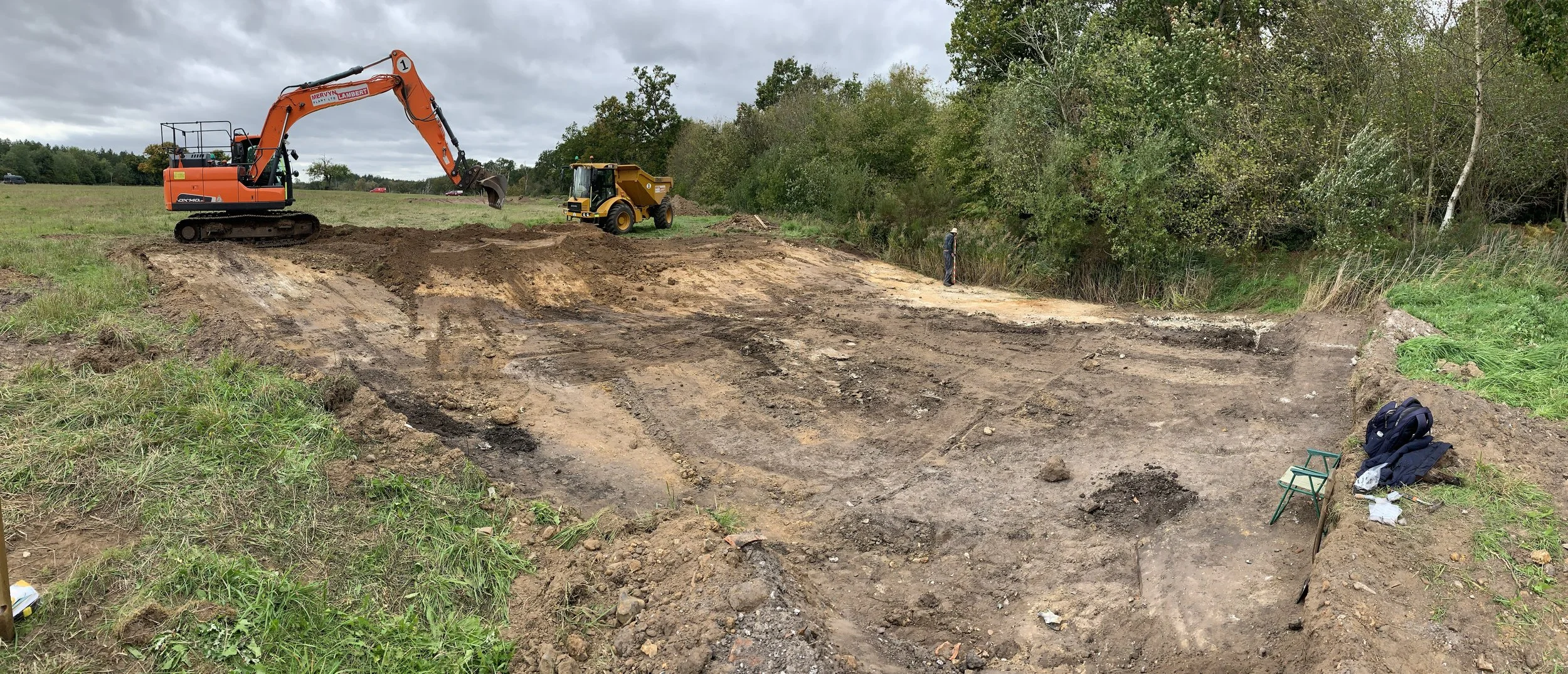
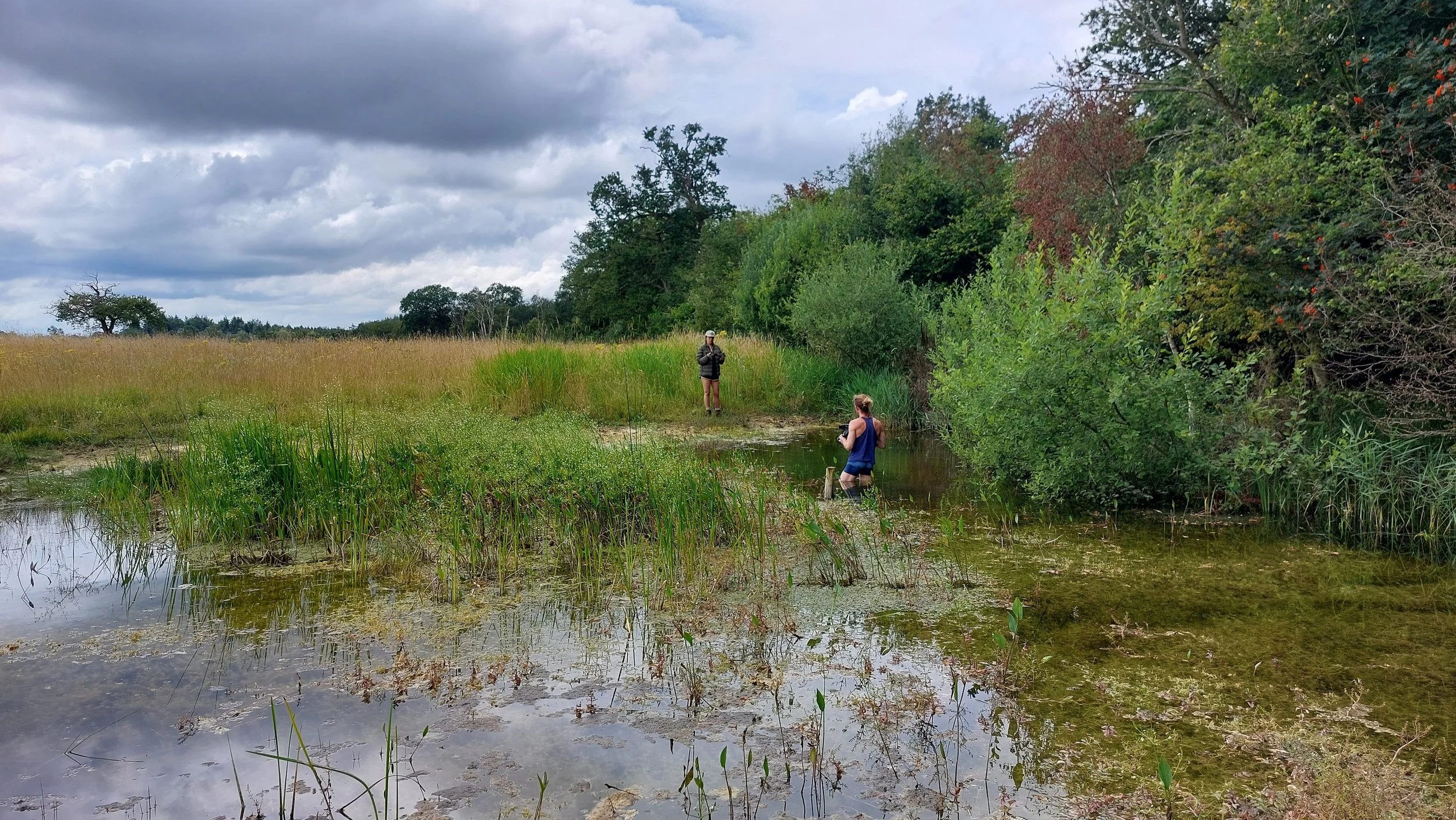
Another pond during restoration (left) - photo credit Tim Holt-Wilson. The same pond two years after restoration (right) - photo credit Carl Sayer.
Are there different types of ghost ponds?
Historically a lot of ponds are human-made, they're centuries old. So made by humans at one point and then filled in by humans, and we re-excavate those. Alongside those ponds, which was the subject of my presentation at the FBA Annual Scientific Meeting in June this year, we have also been excavating natural ponds, that have been filled in, which are 10,000 or more years old.
You know, these natural ponds would have been around when the last of the mammoths were cruising around, walking through these damp depressions that are ponds.
Imagine how unlucky that is... these ponds survived for over 10,000 years until we filled them in a few 100 years ago! So we've been on a resolute mission to reactivate these as well, and then we call them Ice Age Ghost Ponds, even more zany.
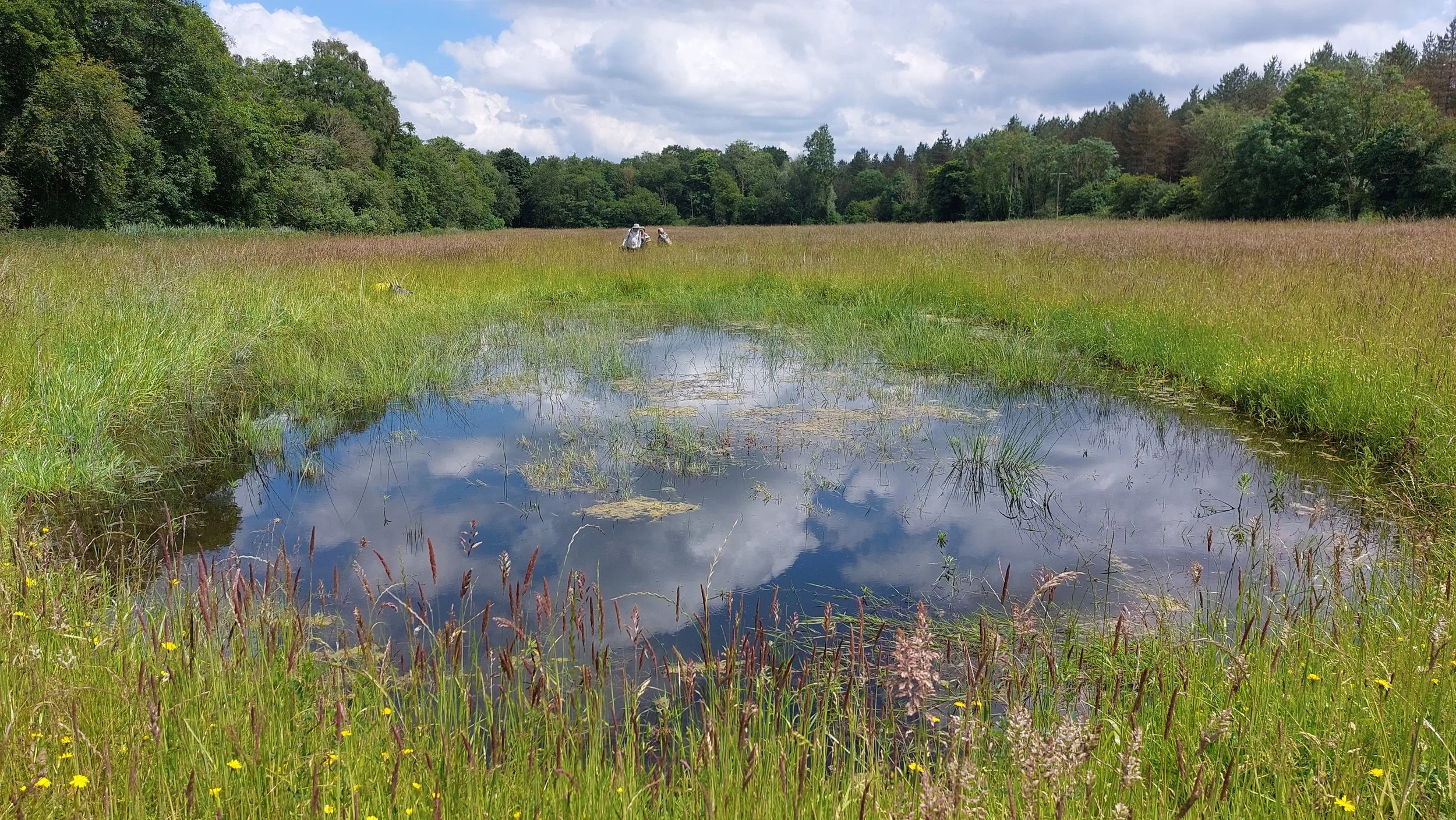
The pond restoration two years on - photo credit Carl Sayer.
Is there a difference in the biodiversity of those two different sorts of pond?
Yeah, there is. Once restored the human-made farmland ponds become very diverse, very quickly. Within a year or two, they're as good as the best farmland ponds around. Their return to a pond ecosystem is extraordinarily rapid. With the Ice Age Ghost Ponds, the ancient ponds, when you bring them back to life, it's like the magic is even more powerful. The spell is incredible. The regeneration is just as quick, but the biodiversity that returns is absolutely astonishing. And it's because the ponds themselves are naturally richer in their biodiversity. You're digging into ancient, older and even more magical mud. I still can't really believe it. What actually happens, the quality of habitat regeneration and how quickly it happens.
Sounds incredible! So how many ponds have you resurrected since the project started in 2013?
We’ve done a lot. In terms of ghost ponds, which are entirely lost ponds, I think we would have brought back to life about 60, something like that, or maybe more. I actually haven't counted, but over the last four years we've been restoring Ice Age ghost ponds, and we've done about 26 of those.
I don’t have an exact number of ghost pond resurrections to hand, but I would say that it is a wonderful thing and that the restoration of biodiversity is brilliant each and every time.
And have they all been in Norfolk?
I do most of my stuff in Norfolk because I love Norfolk so much. That's where I come from. That's where we have our Norfolk Ponds Project, which is the main vehicle group by which we deliver the lost pond restorations.
But I’m pleased to say that the love is spreading and we’re giving advice to people from all over the country.
People are doing it all over the place now. So it's really catching on as a restoration opportunity for freshwater habitats and people are building more pond restorations into their conservation projects now.
In your wildest dreams, what would you like to see for pond restorations in the UK and further afield?
We must stop filling in ponds because they're so brilliant for conservation, wildlife, nature… a million different reasons. And we need to do more digging out of the ghost ponds.
This needs to be informed and considered. We have an FBA training course on pond restoration which is really needed because there are things you need to think about to do it well. We had to learn from our mistakes, and there are things you can do that are wrong and things you can do are right when you do it. But the training course covers that. So I'd love to see the pond restoration course really take off so that people are doing this, not just in this country but all over the world.
If you look at how much wetland we've lost, statistically it’s colossal. What we're trying to say to people in a position to support conservation efforts is that wetlands, even those that on the surface look like they’ve been destroyed, can come back to life.
If you undo the bad things of the past, wetlands can be restored. It's very positive. And you know, it's quite cheap, we’re talking no more than £1,000 per pond. Just think what you could do for £1,000,000. You know that's 1000 pond restorations.
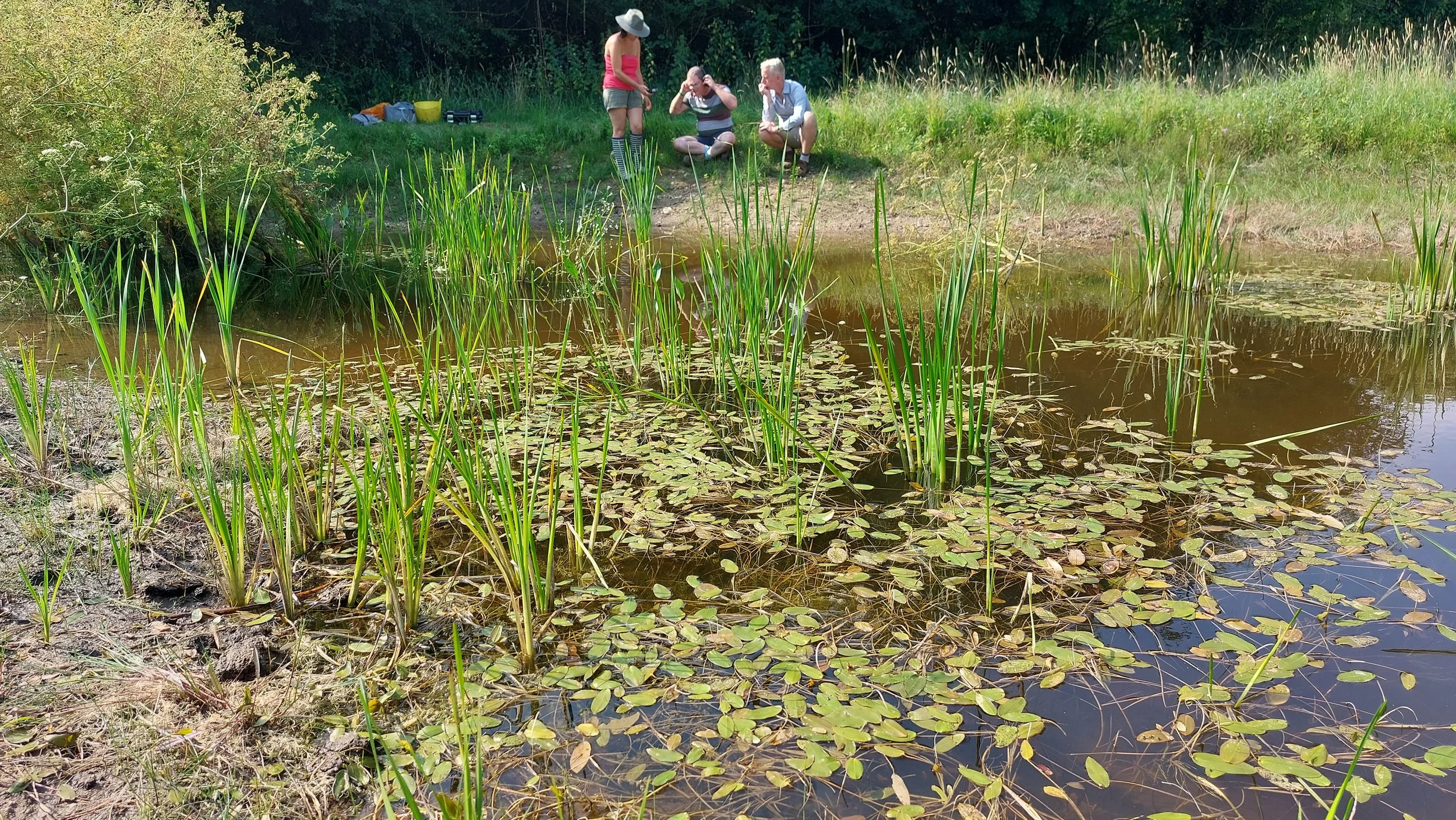
A Norfolk farm pond one year after restoration - photo credit Carl Sayer.
“Ponds are very important in supporting the wider countryside, not just aquatic environments, but the birds, the bats, the pollinators, the mammals. They are so important. They’re like restoration on steroids.”
Why should folk consider having resurrected lost ponds on their farmland?
Ponds are very important in supporting the wider countryside, not just aquatic environments, but the birds, the bats, the pollinators, the mammals. They are so important. They're like restoration on steroids. It’s really good.
You can have some brilliant conservation and still farm close by without losing much land. The other thing is that there are huge benefits to the to the farmer as well. There are lots of wildflowers in and around ponds, so they're real hubs for pollinators that can go out and help pollinate the crops. They may well be places where you get lots of pest controlling insects, sort of hiding and being harboured that go out and feed on pests out in the crops. The other thing to say is that a filled in pond is often not the best bit of land the farmer has because it can be a struggle to farm, remaining quite wet throughout the year and a spot the crops don't always grow in, especially in a wet year.
I'd say it's an absolute no brainer. You're not losing much farmable land. So big biodiversity gains, but barely any loss of revenue.
Do you have a favourite pond dwelling critter?
Well, my favourite is probably the crucian carp because that was the fish that I couldn't catch when I was little. So, whenever I see that small fish, I'm propelled back to childhood again, the very reason I love ponds in the first place. It's the most beautiful creature.
We have a crucian carp conservation project and with some of the ponds we restore we return the crucian carp to them, if we knew there was a history of the fish there.
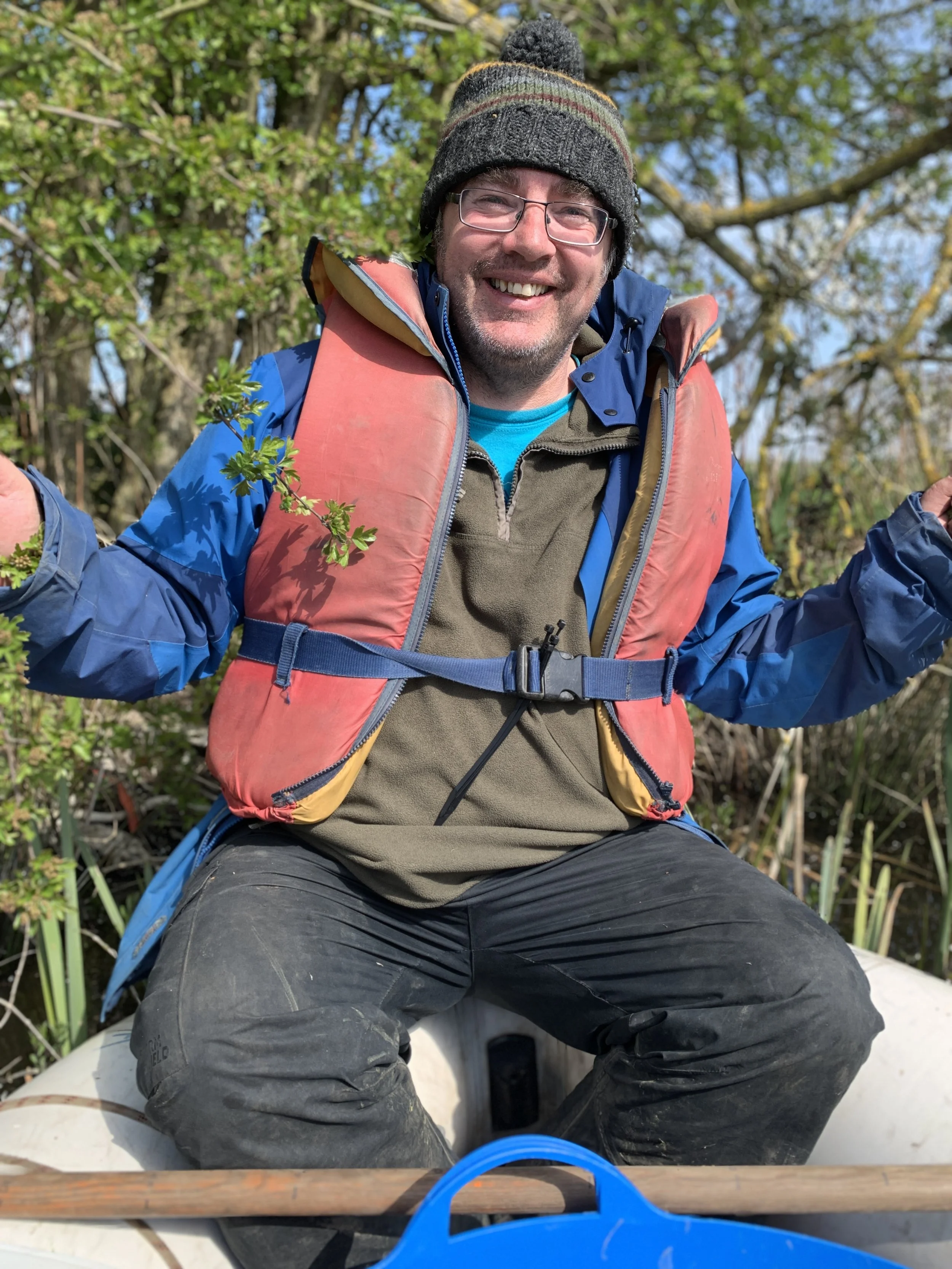
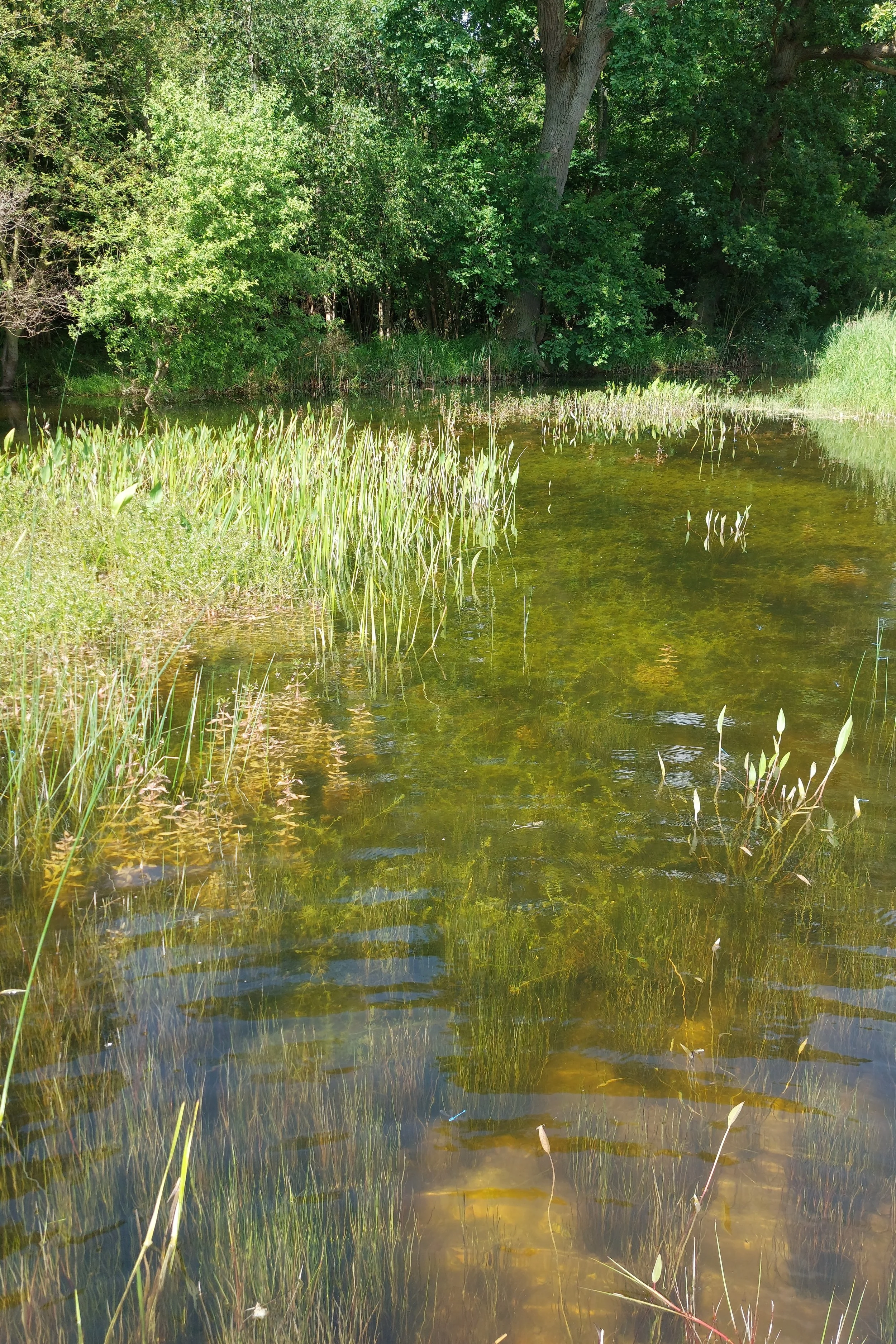
Carl Sayer (left), and the beauty of pond biodiversity with clear water and a multitude of plants (right).
And how can people find out more and get involved with ghost pond restorations?
Have a look at the Norfolk Pond Project website. We've got a good practice guide on the restoration and creation management of ponds, that covers ghost ponds and everything to get you started.
And then for people who want more guidance, which I we would recommend if you're going to start doing it for a living or do it as big projects, come and do the Pond Restoration course, it’s only two days. We've run it two years now and it was sold out both times and people really enjoyed it.
Once you've got the knowledge, go out and start getting it those pond restorations done.
“So here is my invocation for the restoration of the little freshwater places. Especially the ghost ponds, because you literally go from nothing, zero to start with, just a field with soil, to colossal gains in biodiversity. Ancient collections of species are restored. A return to the landscape of rare things. Extinct things. Magic.”
Any final thoughts you’d like to leave us with?
A simple statement that ghost pond resurrection is the most successful ecological restoration ever known.
Yet this is the least supported form of freshwater restoration. Ponds and small water bodies are so neglected and overlooked. People don't realise the astonishing biodiversity you can get in such a small thing. Everyone thinks big is good. And so, all the focus and investment go into the big rivers.
So here is my invocation for the restoration of the little freshwater places. Especially the ghost ponds, because you literally go from nothing, zero to start with, just a field with soil, to colossal gains in biodiversity. Ancient collections of species are restored. A return to the landscape of rare things. Extinct things. Magic.
Interested in discovering more?
The Norfolk Ponds Project (NPP) was formed in 2014, with the aim of promoting the conservation of Norfolk ponds, especially in farmland.
Read a report on the Inaugural Pond Restoration and Science Course by Simon Johnson, FBA Executive Director.
Find out more about Pond Restoration Training with Carl Sayer and Helen Greaves in Norfolk.
Read Carl Sayer's Norfolk & Norwich Naturalists' Society, Presidential Address 2019: Talk to the person on the farm: the huge value to conservation of lived natural history knowledge.