Rare Caddisfly (Trichoptera) found after 80 years since the last record in the UK
31 July, 2025
A tiny insect last recorded in Britain in 1945, has been rediscovered from the River Brathay near Skelwith, Ambleside by amateur Entomologist, Andrew Dixon.
The invertebrate found is known as a ‘micro’-caddisfly (family Hydroptilidae) and measures a mere 2 to 3mm. The species name is Ithytrichia clavata and was first added to the British list from specimens collected at Llanbedr (Merionethshire) by the Grensteds in 1939.
A little background on Ithytrichia clavata
Other than the site at Llanbedr, I. clavata has only been recorded from three other sites in the UK, one record is a circa 1900 specimen from Hampshire, and the other two sites are in the Cumbrian Lake District, the River Leven at Backbarrow in 1941 & 1945 and the River Brathay near Skelwith in 1943.
I. Clavata lives in sections of fast-flowing, boulder strewn rivers and ravines of a rocky course. Three of the recorded sites are rivers flowing from lake origins.
Andrew Dixon and his quest to find Hydroptila tigurina
Andrew Dixon is an amateur entomologist who is particularly interested in caddisfly (Trichoptera). He had only two weeks earlier returned from a recording trip to Assynt in Scotland, where he recorded another rare species of ‘micro-caddis’ Hydroptila tigurina from a new site.
H. tigurina had originally been recorded only by J.J.F.X. King in 1881 & 1894 with the locality recorded only as ‘Ambleside’ – likely, but not conclusively, also from the River Brathay. This species was not recorded again until 2008 when Mr D. Pryce discovered it on the River Inver, Assynt, Scotland.
In 2024 Andrew – along with another entomologist friend – Stuart Crofts, also found specimens of H. tigurina from the River Inver using sweep netting and light trap methods. On the last day of that trip in 2024, Andrew came across a section of another river with the potential habitat for H. tigurina, but the weather conditions for sampling at the time were unfavourable. Eagerly, and exactly a year later, another trip had been arranged for late June and early July, with priorities to sample – and hopefully find H. tigurina – at this new potential site.
On 29 June 2025, following days of rain and strong winds, conditions were favourable for light trapping and although still windy, air temperatures were at 16°C, So with reasonable conditions Andrew set off to drive a few miles from the accommodation, followed by a difficult walk through boggy peatland in the fading light and a risky climb down the ravine to find shelter from the wind and where the light trap was setup at 10:30pm.
Fourteen species of caddis were collected that night with six species of Hydrotilidae, including scarce species such as Hydroptila sylvestris, Hydroptila simulans and Oxyethira frici , but also satisfyingly, both male and female specimens of the target species H. tigurina were found from this 300 yards stretch of rocky ravine of fast cascading waters on the River Culag.
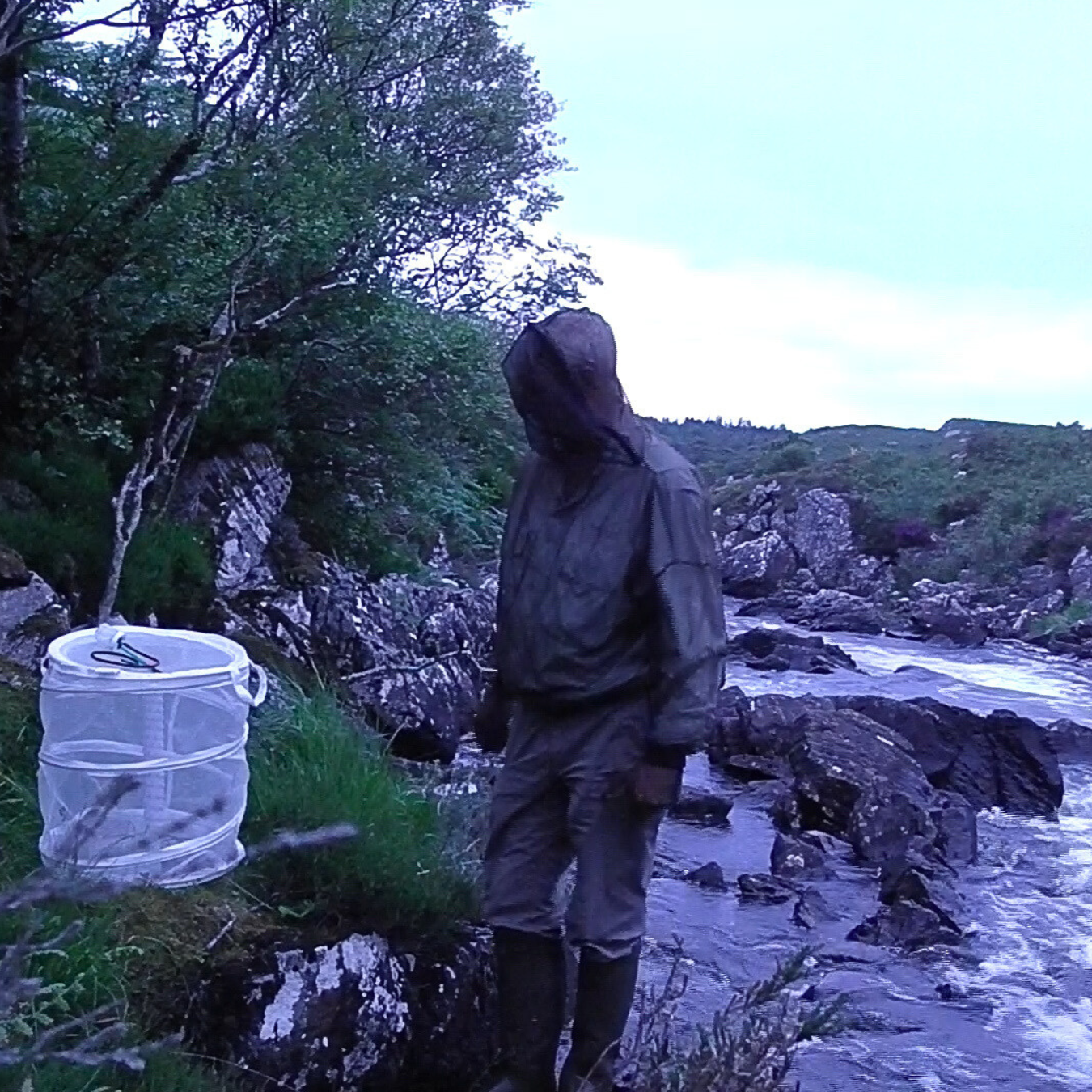
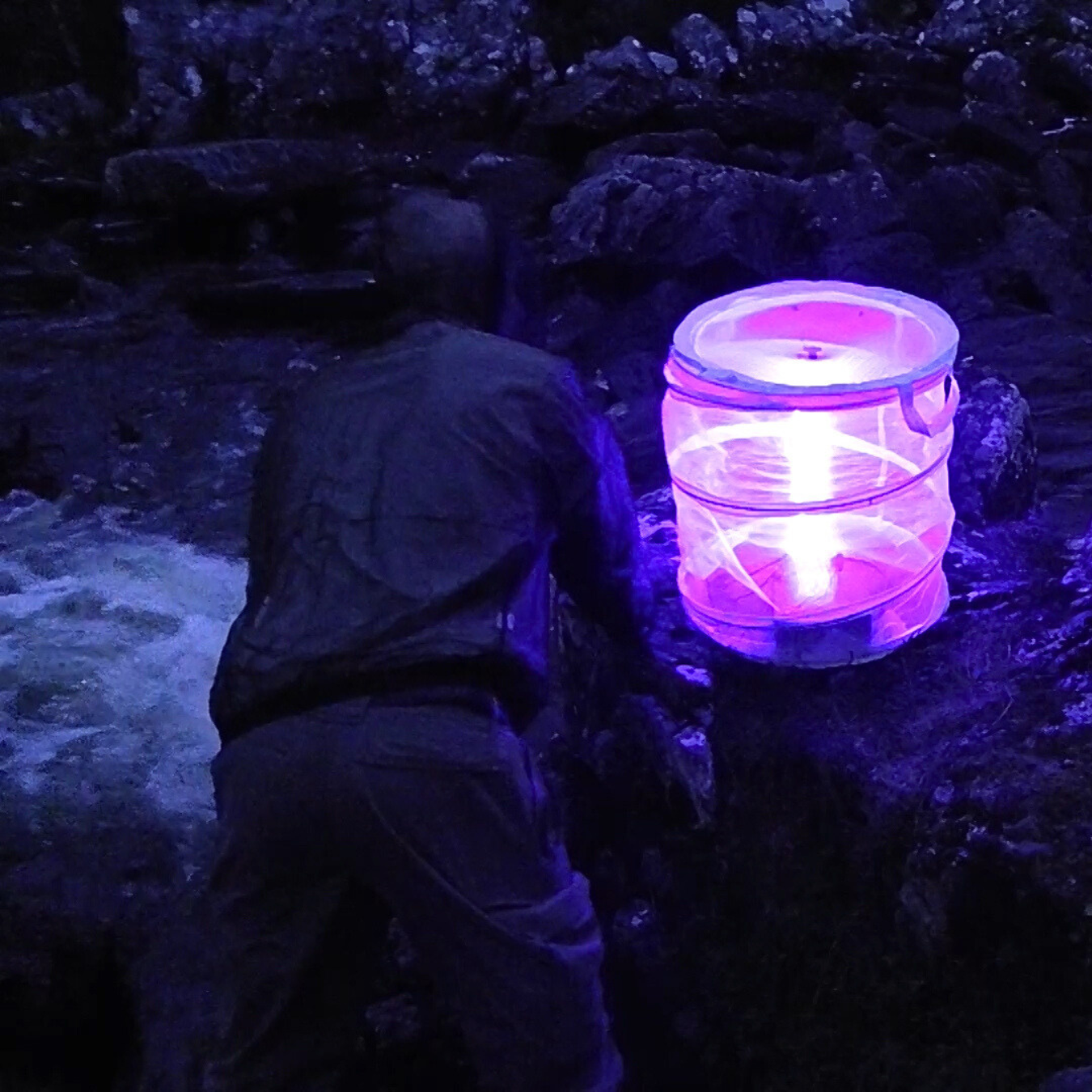
Photos: (left) Andrew Dixon in midge net waiting for darkness on the River Culag where Hydroptila tigurina was found, and (right) Andrew in darkness with the light trap on the River Culag.
Exceptional unexpected discovery of Ithytrichia clavata
After returning home from this trip to Assynt, and having gained a little more confidence in the possible habitat requirements for this species, Andrew decided to revisit the River Brathay, near Ambleside, for the fifth time. Hopefully, to conclude whether or not the original record for H. tigurina – which the recorded locality was only stated as ‘Ambleside’ – was indeed from the River Brathay, and if so, if it still survives there. Past surveys done by Andrew and Stuart Crofts over several stretches of the Brathay, including twice using light traps, one of these being only 400 yards downstream of Skelwith Force, but, all surveys failed to find it.
Following the trip to Assynt, Andrew now confidently felt that Skelwith Force was the most likely place to reinvestigate. The river here narrows due to a rocky ravine, and in 2024 Andrew had surveyed this site with a sweep net but again had no success for this species. This time the light trap was to be used, and on the 13 July 2025, there was no wind and the air temperature was 21°C throughout the period of 10pm to 11:40pm when the light trap was set, perfect conditions for this method, despite past surveys been unsuccessful confidence in finding H. tigurina was high.
However, on checking the identification of the collected specimens, H. tigurina was not found; but, to Andrew’s surprise, he had unexpectedly collected one male and nine female specimens of Ithytrichia clavata, 82 years after it was last recorded from the River Brathay, which was more than a bonus.

Ithytrochia clavata, photo credit Keijo Mattila.
“On checking the identification of the collected specimens, H. tigurina was not found; but, to Andrew’s surprise, he had unexpectedly collected one male and nine female specimens of Ithytrichia clavata, 82 years after it was last recorded from the River Brathay.”

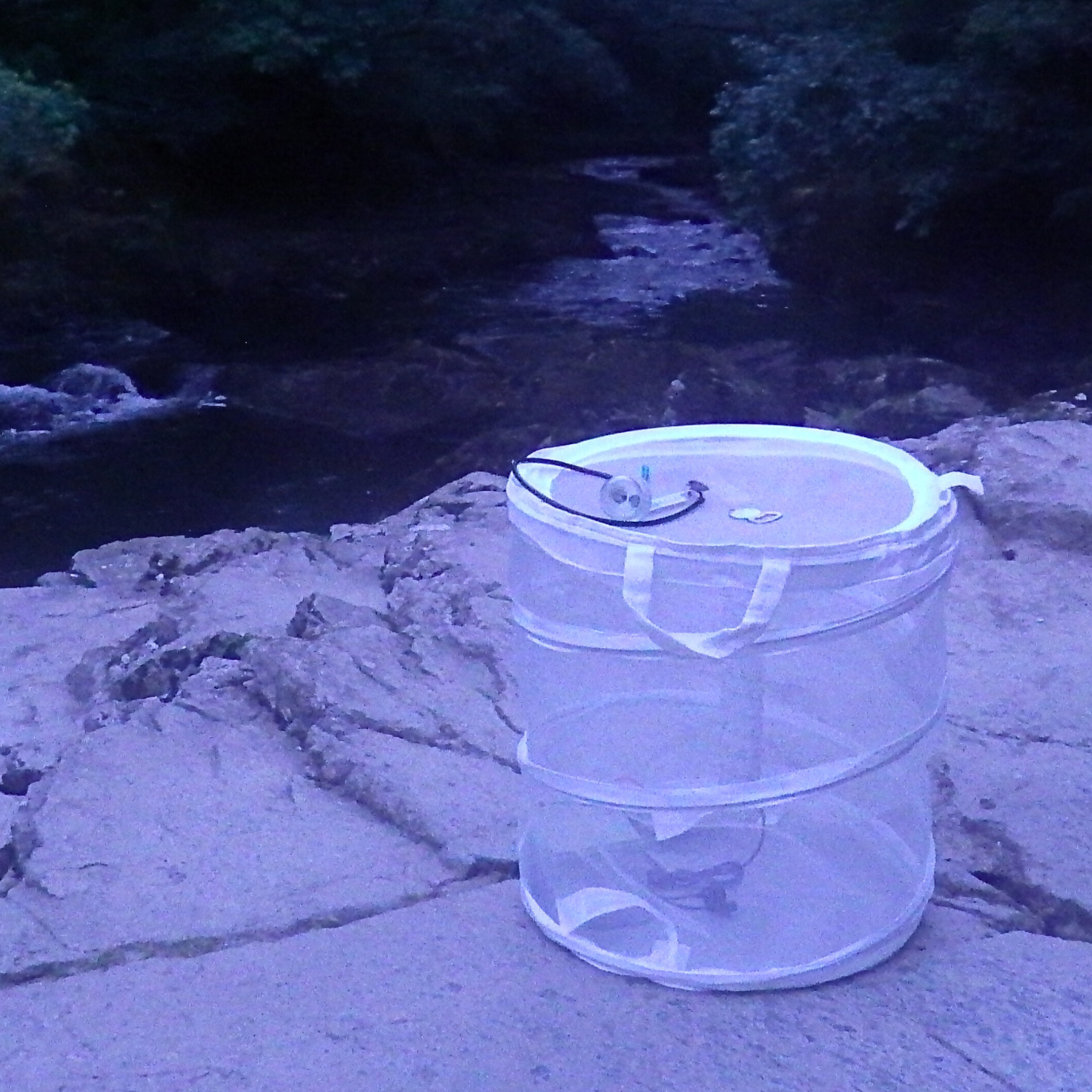
Photos: (left) Skelwith falls on River Brathay where Ithytrichia clavata was recorded for the first time in 80 years, by Andrew Dixon and (right) siting the light trap on the River Brathay where Ithytrichia clavata was found by Andrew in 2025.
“If Ithytrichia clavata still exists in the section of the River Leven at Backbarrow where Kimmins D. E. recorded it in 1941-43. And, if it does continue to survive there, then the next question would be, are there any other ravines in the area where any of the above species might exist?”
What next on the hunt for the elusive Hydroptila tigurina and Hydroptila sylvestris?
As for Hydroptila tigurina being in the River Brathay, the search continues. Perhaps it has since died out from this site, along with another rare species Hydroptila sylvestris, which has not been recorded there since the ‘Ambleside’ recording by J.J.F.X. King in 1881 and by D. E. Kimmins in 1943, with the locality of his record stated as the River Brathay.
H. sylvestris has only been recorded at 10 hectads in the UK, and was collected by Andrew on the River Culag and River Inver in Assynt, where it was very abundant. And although the Assynt Rivers are near pristine habitats in comparison to the more populated areas of the Lake District sites, if I. clavata has continued to exist in the River Brathay, then why would not H. sylvestris and H. tigurina?
Apart from continuing this research, Andrew is also keen to determine if I. clavata still exists in the section of the River Leven at Backbarrow where Kimmins D. E. recorded it in 1941-43. And, if it does continue to survive there, then the next question would be, are there any other ravines in the area where any of the above species might exist?
Interested in discovering more?
Entomology courses for Anglers
Andrew Dixon and Stuart Crofts run our Entomology for Anglers course, with an upcoming weekend of courses on 18 and 19 October 2025.
Find out more about Entomology for Anglers Level 2 on Saturday 18 October followed by Entomology for Anglers Level 3 on Sunday 19 October with Andrew Dixon and Stuart Crofts.
Interested in riverfly conservation?
The Riverfly Partnership is a dynamic network of organisations, representing anglers, conservationists, entomologists, scientists, water course managers and relevant authorities, working together to: protect the water quality of our rivers; further the understanding of riverfly populations; and actively conserve riverfly habitats.