
Section 2: Lakefly Invertebrate Identification
Estimated Time For Lesson: 3 minutes
ID Notes
Non-Biting Midges.
Non-biting midges move in an undulating movement in a figure-of-8 motion. They can be red, green or brown in colour. Red ones are often called ‘bloodworms’ because of a pigment that helps them survive in low-oxyen environments.
They are cylindrical with segmented soft bodies, sometimes in a case
Stumpy leg-like structures (prolegs) can be seen behind the head and on the last segment
Red ‘bloodworms’ can sometimes be seen at high densities
They have a hardened head capsule
They can be confused with aquatic worms, alderflies, beetle larvae and caseless caddisflies.
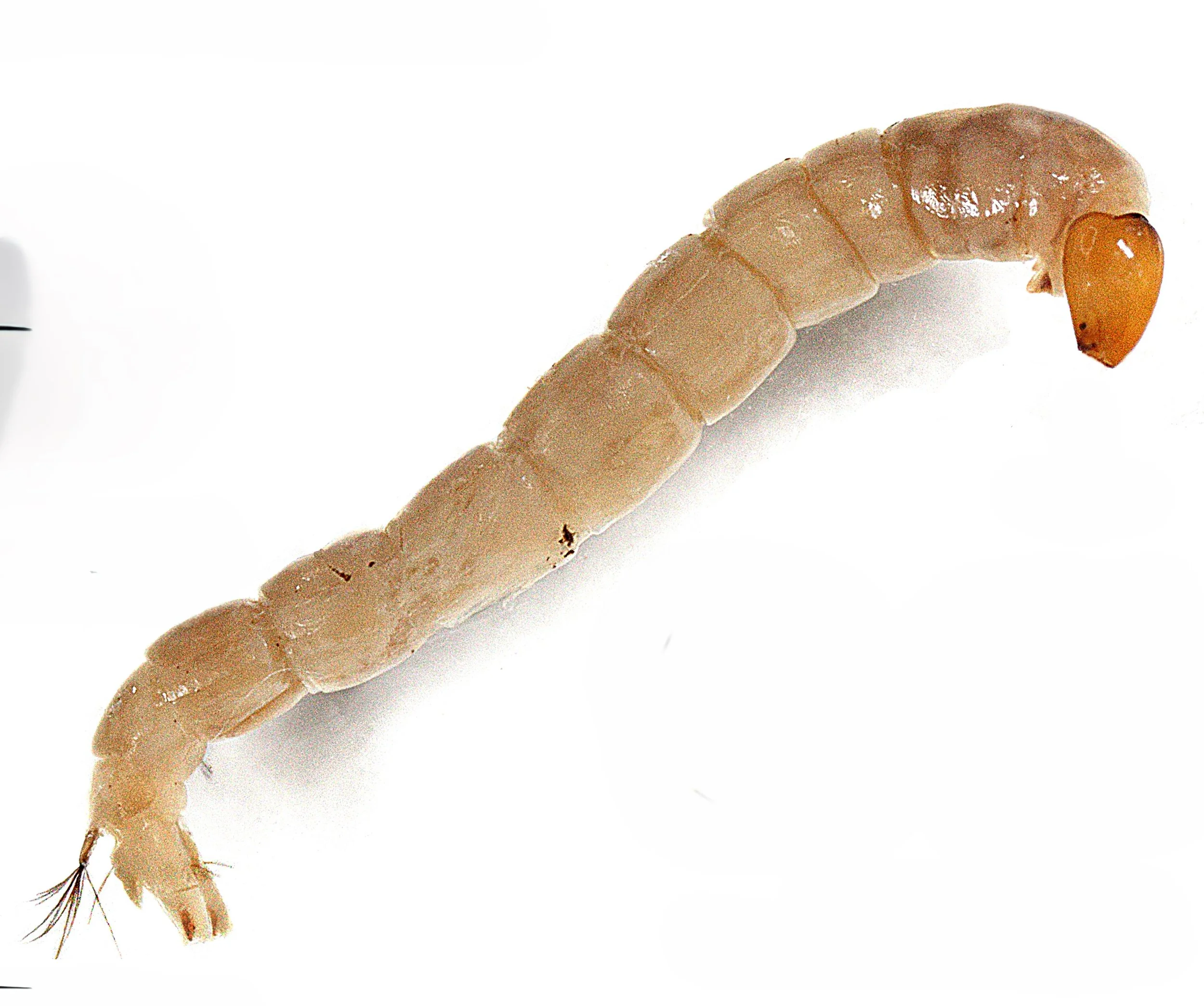
Photo Credit: Dr Cyril Bennet MBE
They can be found in all types of fresh and brackish water, often in muddy lakebeds.
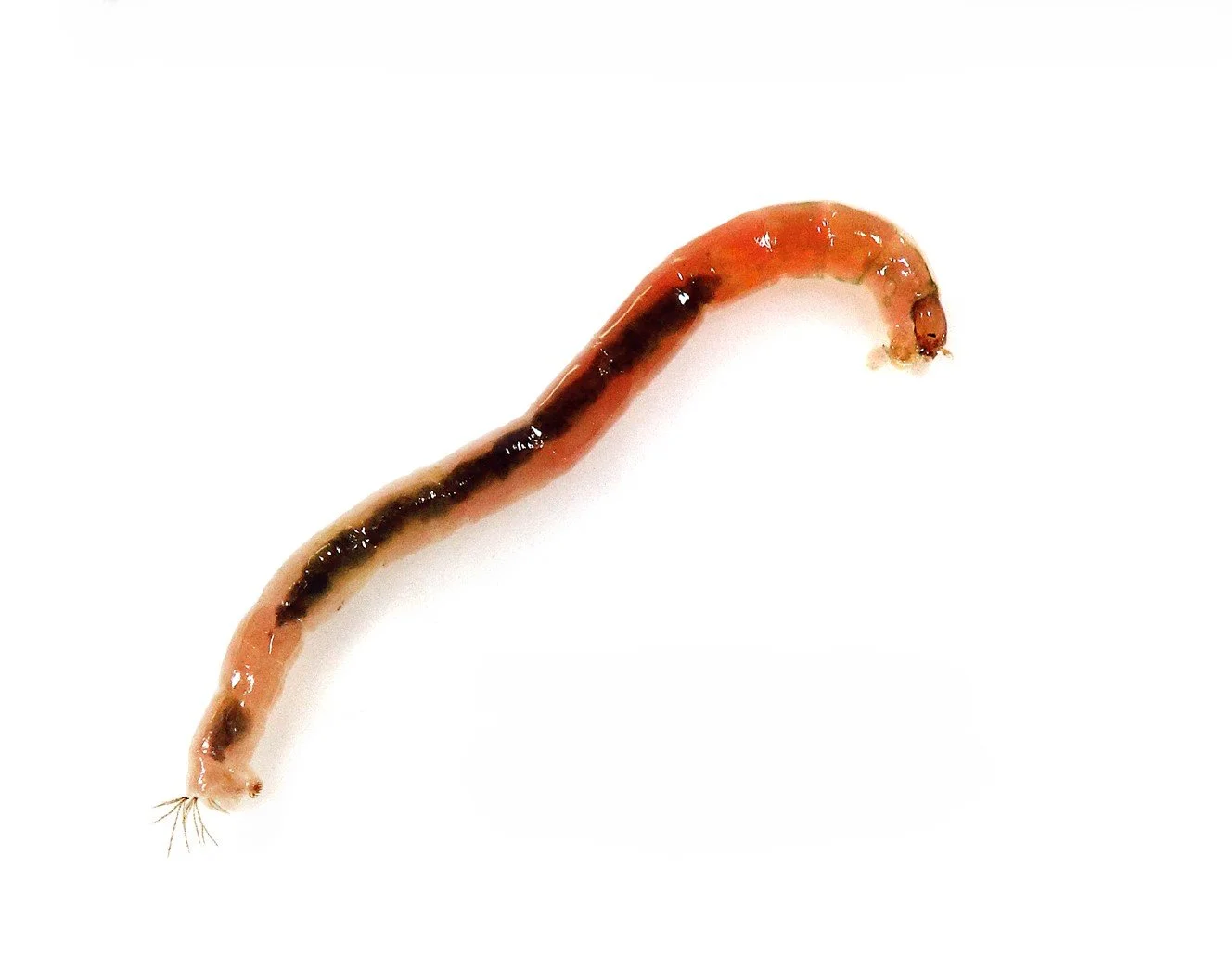
Photo Credit: Dr Cyril Bennet MBE