Welcome to the FBA Impact Report 2024–2025
15 April, 2026
Over the last year we have continued on our path to rejuvenate our action-focused scientific work to support freshwater ecosystems, and it is with great pleasure that we are sharing our latest FBA Impact Report.
Building on the FBA’s long history of performing research and facilitating freshwater science through the provision of training, information and facilities, we have been devoted in our activities as advocates for one of the most vulnerable ecosystems on the planet.
“I’m delighted to share FBA’s latest Impact Report. Contained within its pages are attention grabbing and inspiring examples of our work delivered by our dedicated team, volunteers and partner organisations. The FBA is a small non-governmental organisation (NGO) that punches well above its weight. We are able to do this by being ‘serial collaborators’, working with a diverse range of funders and co-delivery organisations. Everything we do is in partnership and we are proud of, and extremely grateful to, our long-standing friendships with public, private, academic and third sector partners.”
Welcome to our impact report for 2024 – 2025
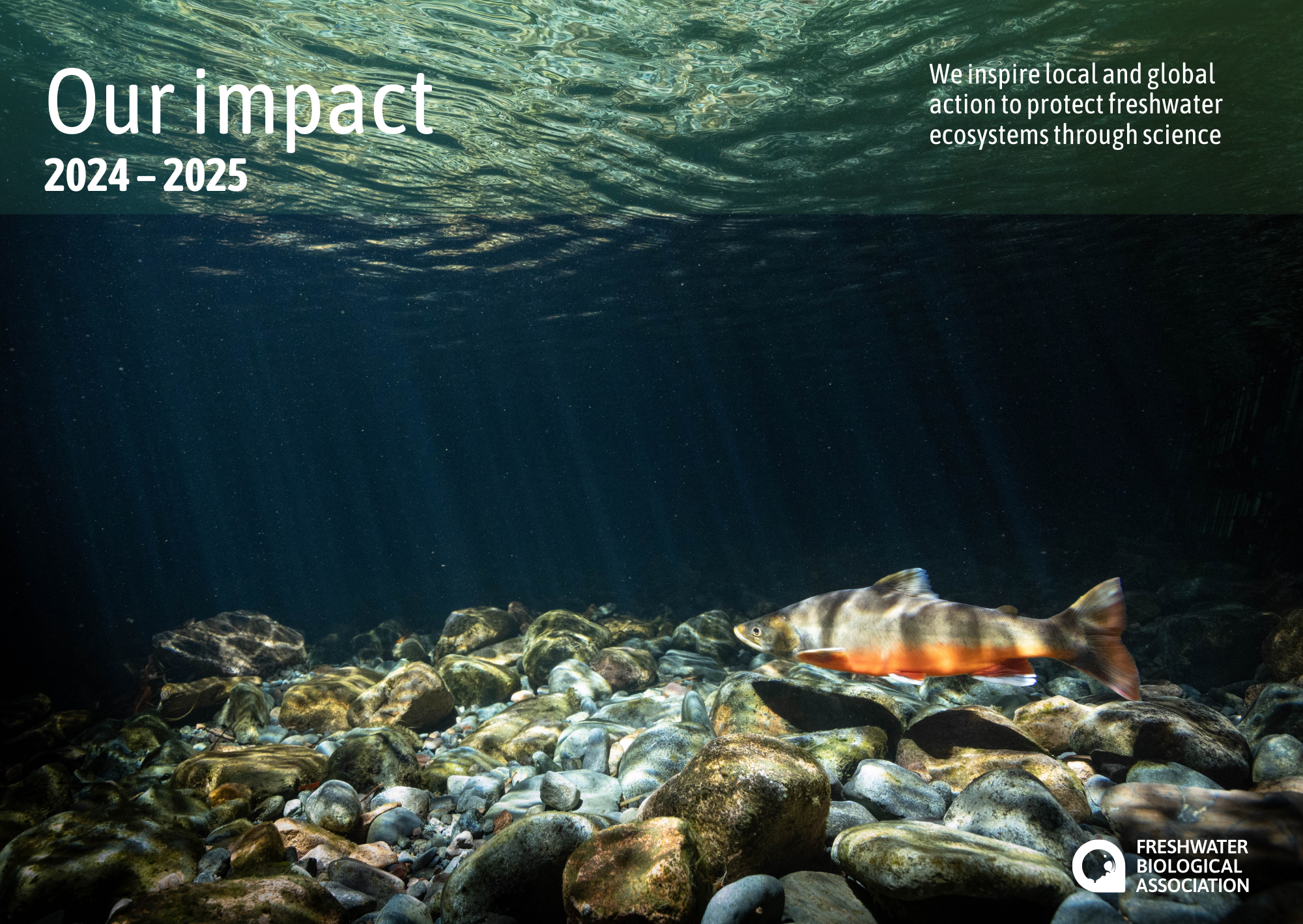
You can read a snapshot here and download the full report below.
Arctic charr photography on report cover by Lindsay McCrae.
Introducing some of our impact in 2024 – 2025
Action-focused science: Species recovery
Species recovery success continued at the FBA Ark with over 5,000 juvenile mussels being released across three rivers in Cumbria. The FBA freshwater pearl mussel team also participated in knowledge exchange activities travelling to Sweden and Wales to learn and share vital understanding to support recovery of vulnerable freshwater pearl mussel populations.
The FBA’s commitment to Arctic charr species recovery conservation saw the LD-CHARM partnership gathered at a symposium in Newcastle to exchange knowledge and plan future action. The consortium has also been carrying out cutting edge science activity to help build the evidence needed to support the conservation of Lake District charr.
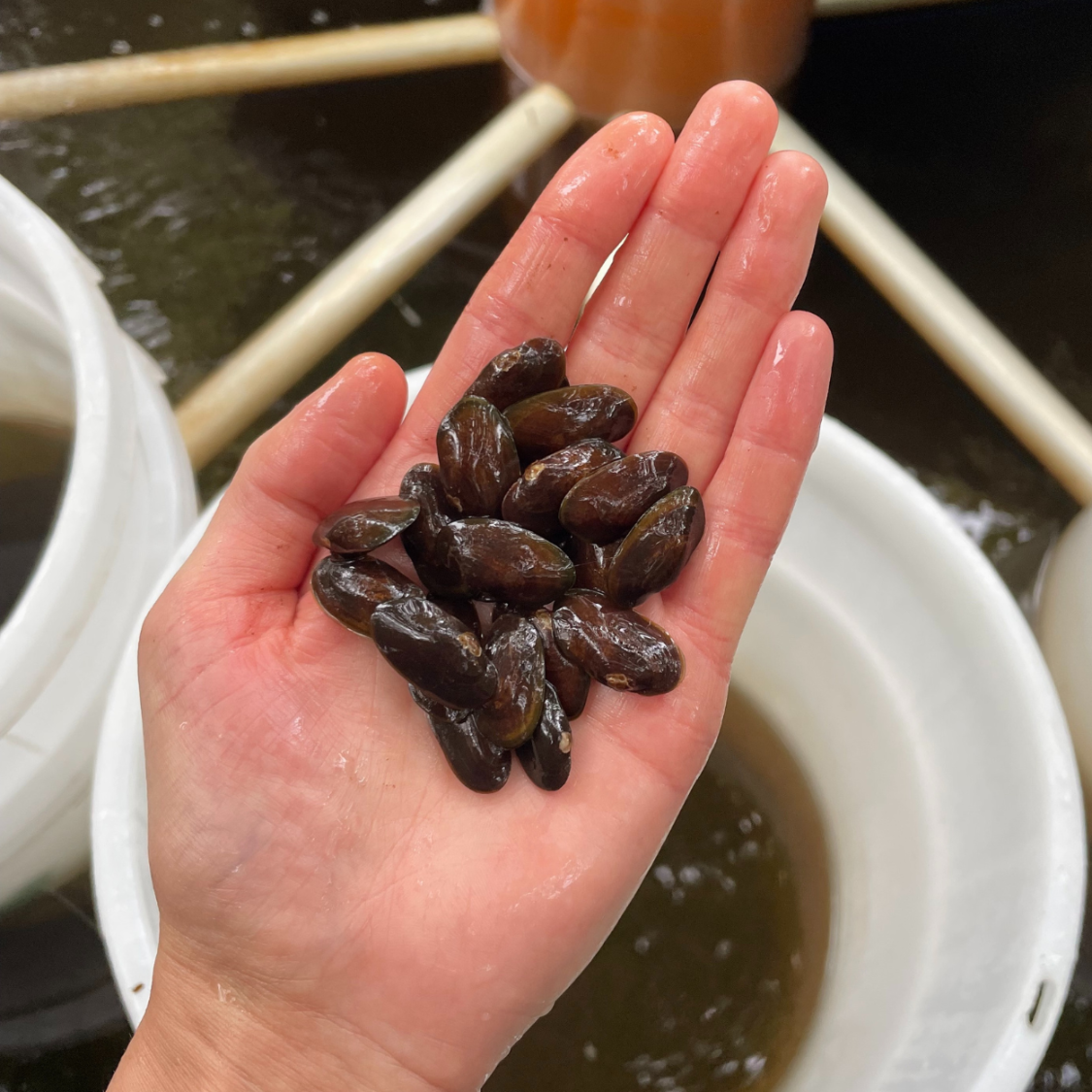
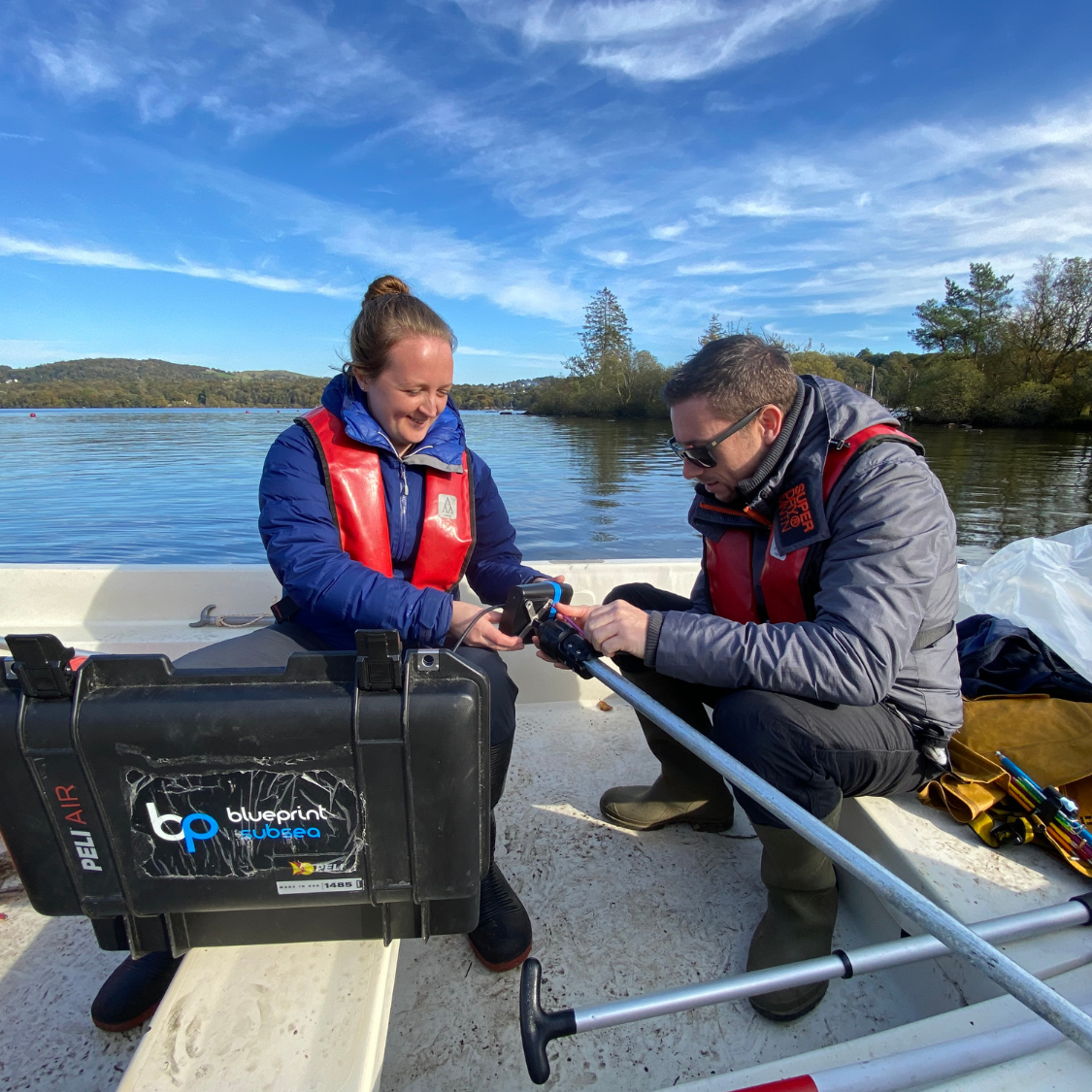
Freshwater pearl mussels at the FBA Ark in the Lake District (left), and some of the LD-CHARM team carrying out Arctic charr research on Windermere (right).
Action-focused science: Citizen science
Our citizen science activities with the Riverfly Partnership, and Lakefly pilot are testimony to the tremendous power of collaboration between scientists and communities to support freshwater ecosystems. We also made quite the media splash in August 2025 with the publication of the Big Windermere Survey (BWS) two-year summary report, covering the period June 2022 to November 2024, demanding action to address ‘Poor’ water quality results.
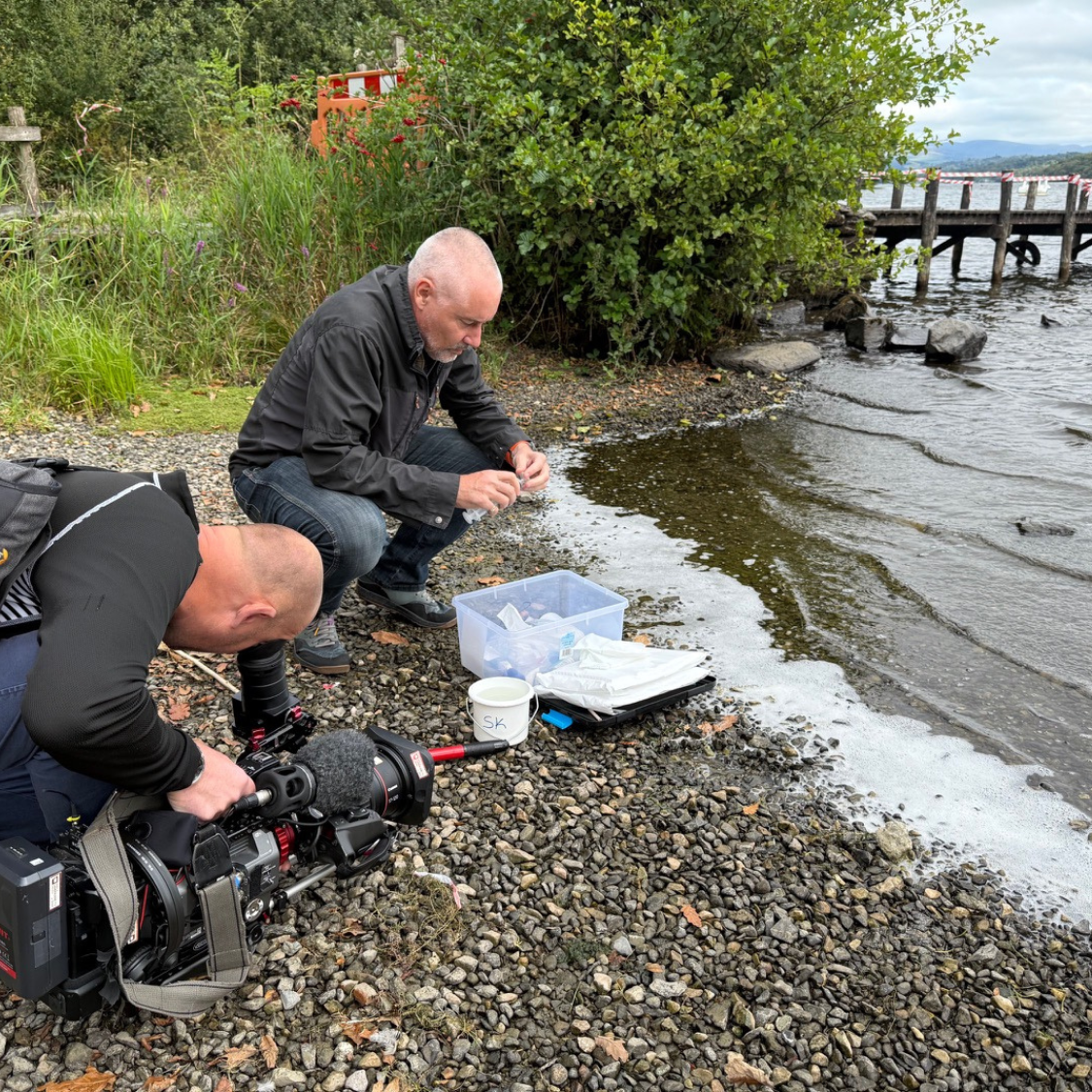
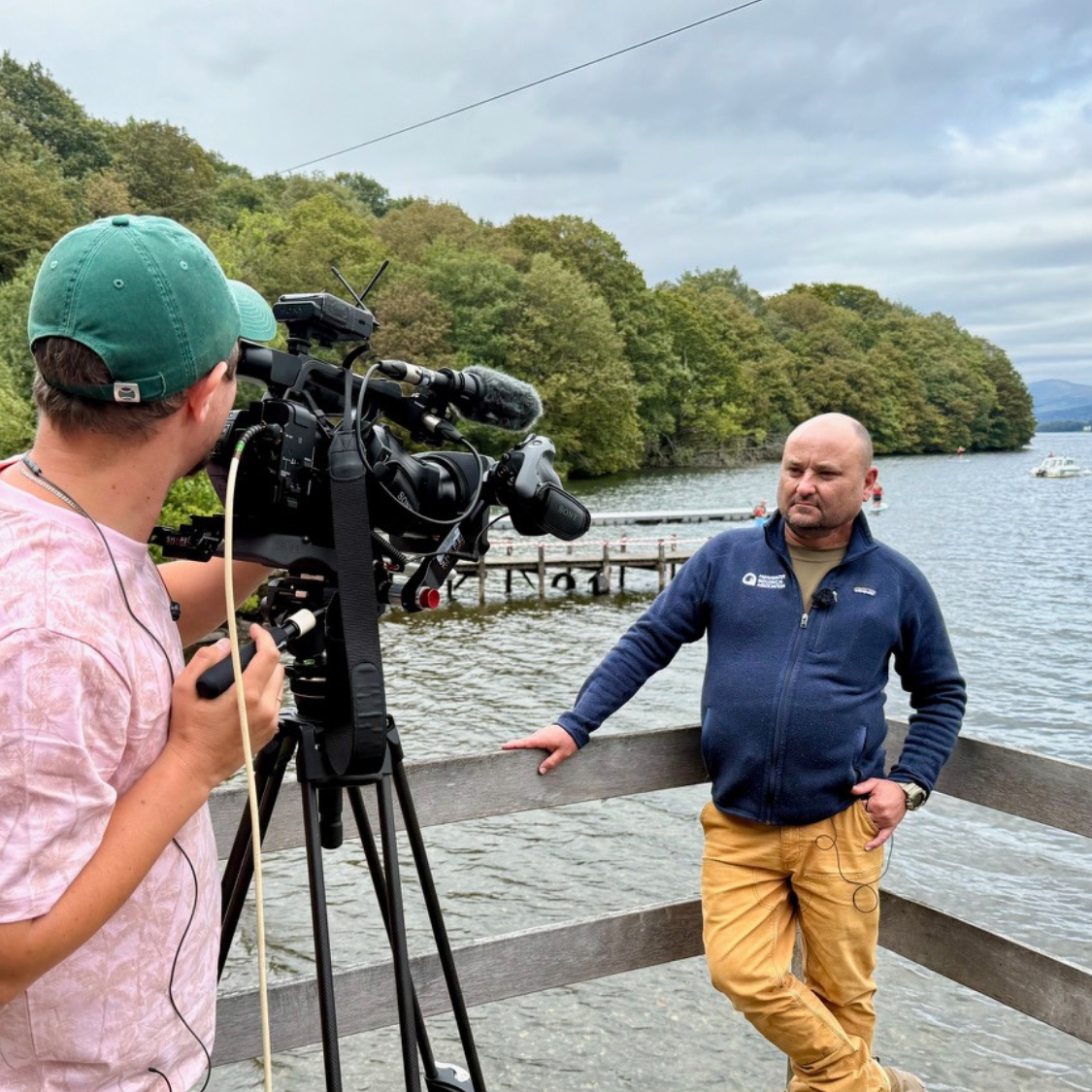
A Big Windermere Survey (BWS) Citizen Scientist being filmed by the media following the launch of the BWS two-year report (left), and Simon Johnson being interviewed about the BWS report by Windermere, in August 2025 (right).
Advocacy: Annual Scientific Meeting
It was a tremendous pleasure to see the return of our Annual Scientific Meeting (ASM) in 2025, at Nottingham Trent University, with an inspiring line-up of Keynote presentations and speakers from a diversity of backgrounds including early career researchers and senior academics. The ASM also saw the launch of the Early Career Member Network (ECMN), enabling early career researchers and practitioners to connect with the FBA fellowship, establish mentoring partnerships, and gain feedback on their research.
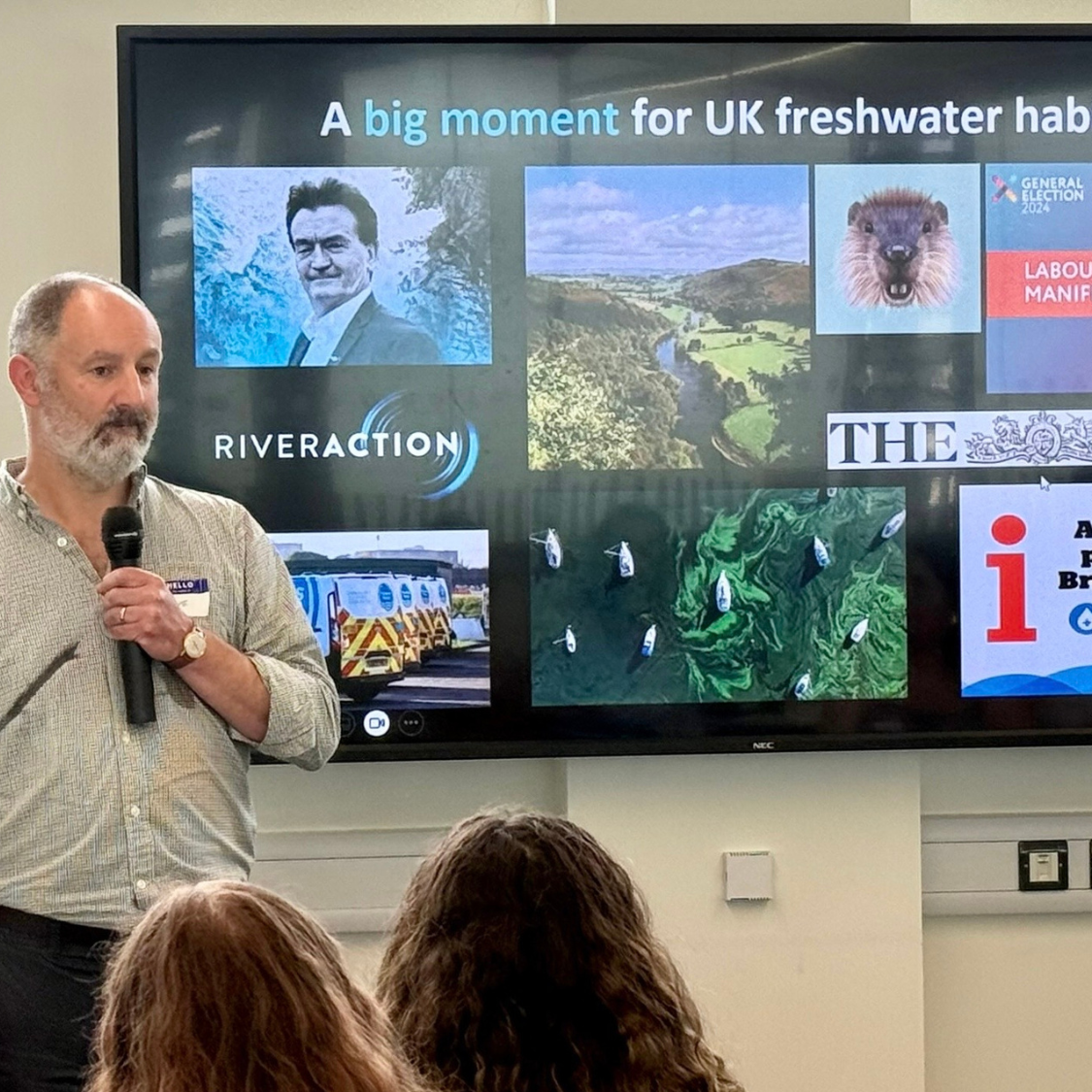
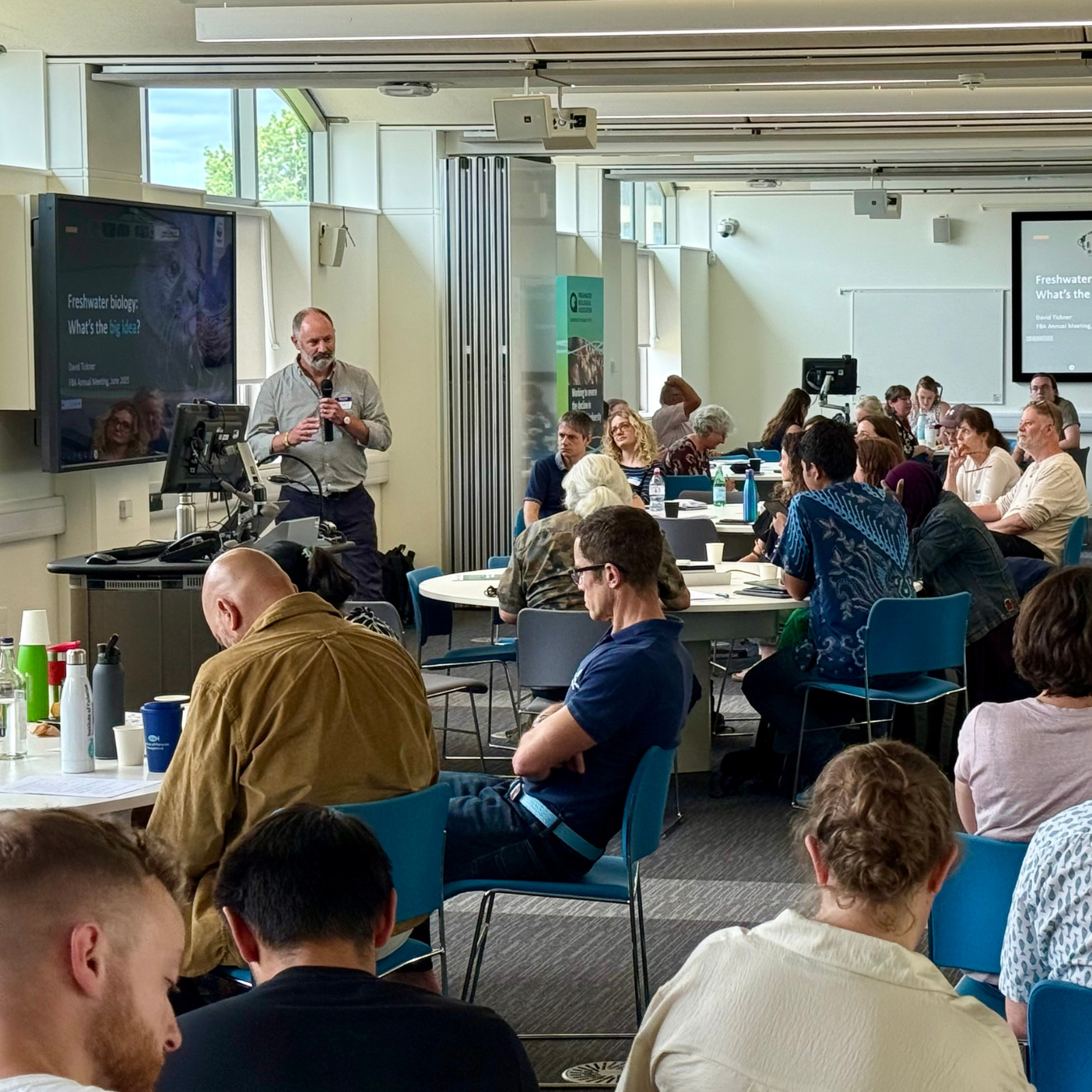
Dave Tickner, from WWF, presenting at the ASM, Nottingham Trent University, in 2025.
“It’s been quite a year at the Freshwater Biological Association and trying to sum it all up in a few words isn’t easy! It feels like the tide is changing when it comes to awareness about the challenges facing freshwaters (and yes, rivers can have tides). This rise in public awareness will inevitably influence political thinking and eventually lead to both political pressure and stronger commitment to freshwater science and protection for our precious waters.
This can only be a good thing and time is very much of the essence. At this watershed moment the FBA will play a vital role as a voice for our freshwaters; continuing to use its science and influence to champion the importance of freshwaters.”
Looking to the future
Our dedicated work over the last four years has enabled and improved our organisational resilience and impact. We are now ready to scale-up our efforts. 2026 will see the publication of our new 5-year organisational strategy to achieve this.
By 2031, we wish to see the FBA, our partners and communities inspired to play a more active role supporting tangible sustainable outcomes for the conservation and regeneration of freshwater ecosystems.
We will continue to deliver this in 2026 (and beyond our centenary) through a highly-focused, passionate and connected programme of species recovery, citizen science, training and engagement initiatives.
I hope you enjoy reading the report. Should you wish to offer any feedback or discuss anything (especially new partnership opportunities!) please contact Simon Johnson sjohnson@fba.org.uk.