Why Channel 4’s Dirty Business should matter to all of us
A personal perspective from Chris Dessent, Chair of the FBA Board
19 March, 2026
If you haven’t watched it yet, I would urge all those who care about our freshwaters to watch the three-part docu-drama Dirty Business, available now on Channel 4 catch-up.
The series is heavily based on an almost decade-long investigation by the group Windrush Against Sewage Pollution (WASP), interwoven with powerful and often harrowing personal stories.
The fact that this series was commissioned at all illustrates how far the sewage pollution issue (actually let’s call it a scandal) has rocketed up the public agenda. What becomes clear whilst watching the series is that the sewage scandal has taken a decade of rigorous research, investigation, data crunching and campaigning to reach this point.
So why does this series matter so much?
It matters first and foremost because this series is shaped around the real and heart-breaking stories of Heather Preen, Reuben Santer and many more who have suffered so tragically from the health impacts of sewage pollution. Their stories are the reason we must watch, not look away.
And let’s remember these are just a small number of the many people whose health has been impacted. How many other people could have told similar stories but have never made a connection between their illness and exposure to pollution in our waterways and seas?
Indeed, since the programme aired, more victims of this tragedy have come forward and their voices are beginning to be heard. The Guardian and Channel 4 recently covered the story of Rex, a seven-year-old boy, who spent six weeks in hospital after contracting E. coli after a family kayaking trip on Windermere last August. Rex contracted the same strain of E. coli as nine-year-old Heather Preen, who died in 1999 after swimming in Devon and was featured in Dirty Business.
That is why Dirty Business matters, because it shines a very uncomfortable light on a broken water industry and failed regulation that is impacting negatively on our entire freshwater system and our coastal waters too.
Uncomfortable but necessary viewing
The docu-drama cleverly combines the facts, the evidence and the personal and emotional stories of those exposing the scandal and those directly impacted. The focus is firmly on the human health aspect of this tragedy but the images of fish kills and sewage spewing into our waterways draws attention to the plight of many of our nation’s species that rely on clean water to sustain life.
It’s uncomfortable and shocking viewing at times but it is always backed up by facts. It is not a drama, it is very much a docu-drama that uses human storytelling to expose the systematic failure of the water companies and those responsible for regulating their behaviour.
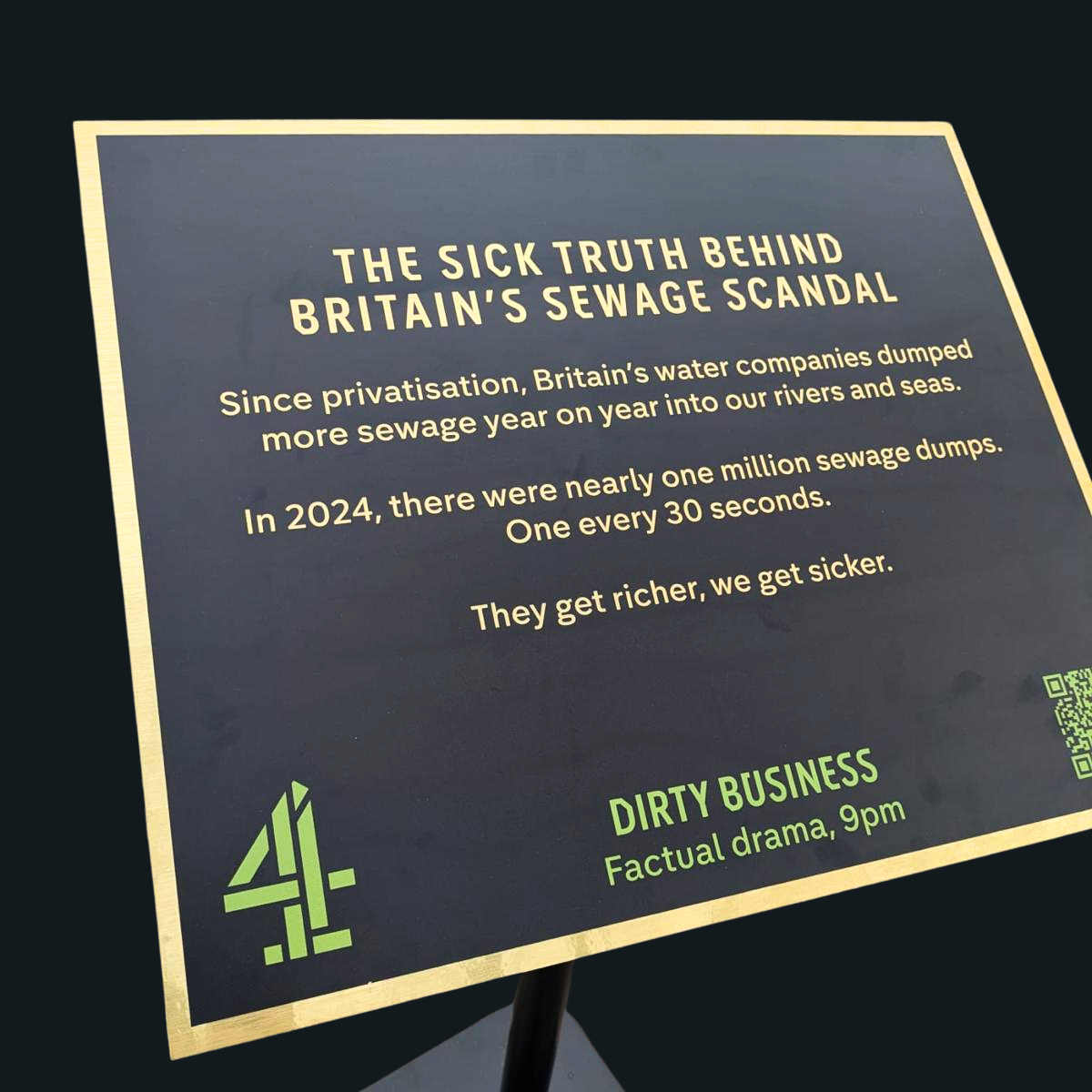
The figures alone are beyond belief. Sewage was dumped into UK waterways at least 585,000 times in 2024, that’s an average of more than 1,600 times a day, once every 54 seconds. In the same year shareholders of UK water companies were paid £1bn in dividends in 2023-24. I haven't spoken to anyone who can defend this track record or thinks this is acceptable. Surely this is an issue that all political parties can unite behind.
Grappling with economic mechanisms in our modern world can be confusing, but, for me, this isn’t complex. Releasing raw sewage at the level that is happening right now is illegal. The fact that this is happening at the same time as shareholder dividend payments are being made, and bonuses paid to water company bosses is impossible to justify. Water companies are being paid to pollute and we are the ones paying the price.
“Programmes like this are a vital part of a collective wake-up call. Now more than ever, we have an opportunity to demonstrate the value of freshwaters, the importance of keeping them clean and encourage people to care for them. And when we care, we protect and when we protect we all benefit – whether we are an aquatic macroinvertebrate, a mayfly, Arctic charr, kingfisher, beaver or a human being.”
So what next?
I truly hope this is a genuine watershed moment and that those with the power and authority to make change will step-up and re-invent this broken system. Many are calling for the renationalisation of our water system, there are calls too for a new regulator and for far more stringent monitoring and controls. There are united calls too for investment in infrastructure to protect our precious waterways and ourselves. The mechanics of policy change will be debated at length, but I am confident that this is an issue that will not go away for the government until they act decisively.
Here at the FBA we will do our part and continue to be a voice for freshwaters, drawing attention to its value and using our science and evidence to drive for a future where freshwaters thrive.
Let’s end on a positive. Many of the stories and themes exposed through Dirty Business are shameful, tragic and, let’s face it, deeply depressing, but there is hope here too. The public are becoming increasingly aware of what is going on and care deeply about it. The rise of open swimming, paddle boarding, canoeing and a whole range of water recreation has brought many of us closer, both physically and spiritually, to the water. This closeness has triggered an interest in what is going into this precious resource and therefore inadvertently into us.
Programmes like this are a vital part of a collective wake-up call. Now more than ever, we have an opportunity to demonstrate the value of freshwaters, the importance of keeping them clean and encourage people to care for them. And when we care, we protect and when we protect we all benefit – whether we are an aquatic macroinvertebrate, a mayfly, Arctic charr, kingfisher, beaver or a human being.
Interested in finding out more?
Streaming online: Dirty Business is available to view on Channel 4 catch-up.
The Guardian: Realtime pollution alerts needed on Windermere, campaigners say after boy nearly dies, 16 March 2026. Exclusive: Claire Earley’s son Rex spent six weeks in hospital after contracting E coli from contaminated lake.
Channel 4: How to Save Our Lakes, 18 March 2026. Sick people, dead fish and toxic algae are some of the by-products of sewage in Windermere. Lake Annecy in France was once heavily polluted and is now one of the cleanest in Europe. What can we do?
If you are moved, motivated or feel mobilised after watching Dirty Business, here are some of the organisations and campaigns you can connect to:
Windrush Against Sewage Pollution (WASP): www.windrushwasp.org