In conversation with Stuart Crofts: fisherman, entomologist and environmental campaigner
17 April, 2026
Here at the FBA we are passionate about riverflies and have the great privilege to partner with many incredible freshwater ecologists in our training opportunities, species recovery and citizen science projects.
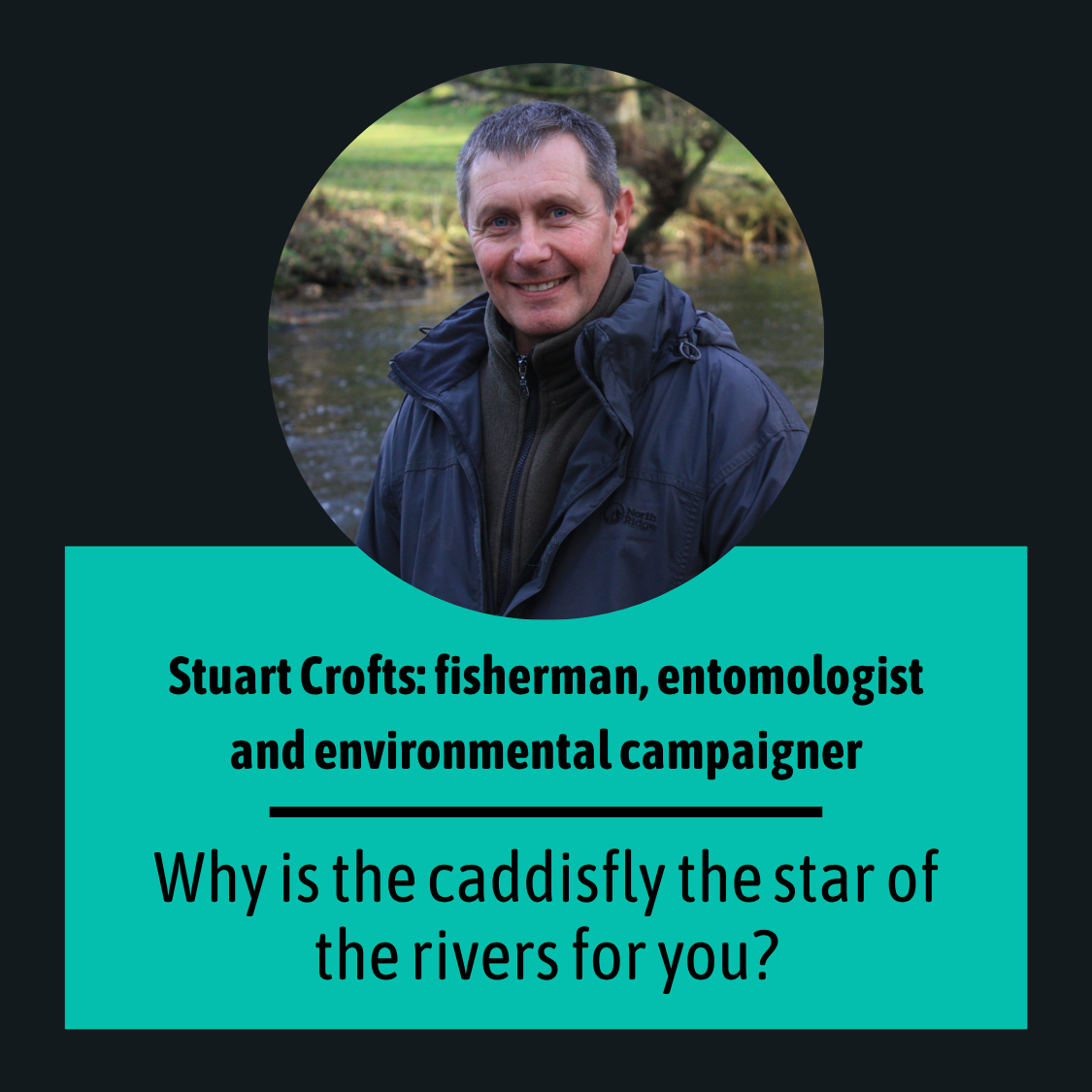
It has been an honour and absolute pleasure to work alongside entomological expert Stuart Crofts over the years at FBA. A fisherman, entomologist and environmental campaigner, Stuart is also an author, tutor and the dedicated driving force behind the Adult Caddisfly Occurrence Scheme.
Now in its 20th, and final, year we decided it was a most excellent time to catch up with Stuart to find out more about his caddisfly monitoring initiative, and delve deeper into his enthusiasm for riverflies and freshwater habitats.
Please could you give a little of your background in freshwater ecology.
I am not a professional entomologist or ecologist in any shape or form. I am simply an amateur with a lifelong passion for all things aquatic and it is this passion that keeps driving me forwards in a never-ending quest to observe, learn and understand.
You have been coordinating and publishing the Stuart Crofts Adult Caddisfly Occurrence Scheme for almost two decades, tell us more about this monitoring initiative.
As a keen fly fisherman, it was natural for me to look deeply at the invertebrates that the fish I was trying to catch were feeding on. Caddisflies are clearly a part of this picture, but I soon found that there was very little information, in fly fishing circles, on the distribution (and habits) on these amazing insects. Hence, I set up the recording scheme initially within the fly fishing community.
Like many ideas with simple beginnings it soon grew, and I started getting samples from all sorts of people from all over the UK (all the finer details are covered in my Annual Reports). Dr Ian Wallace is our National Trichoptera Recorder and, as you would expect, all my data is sent through to him for scrutiny and approval before being uploaded to the NBN Atlas.
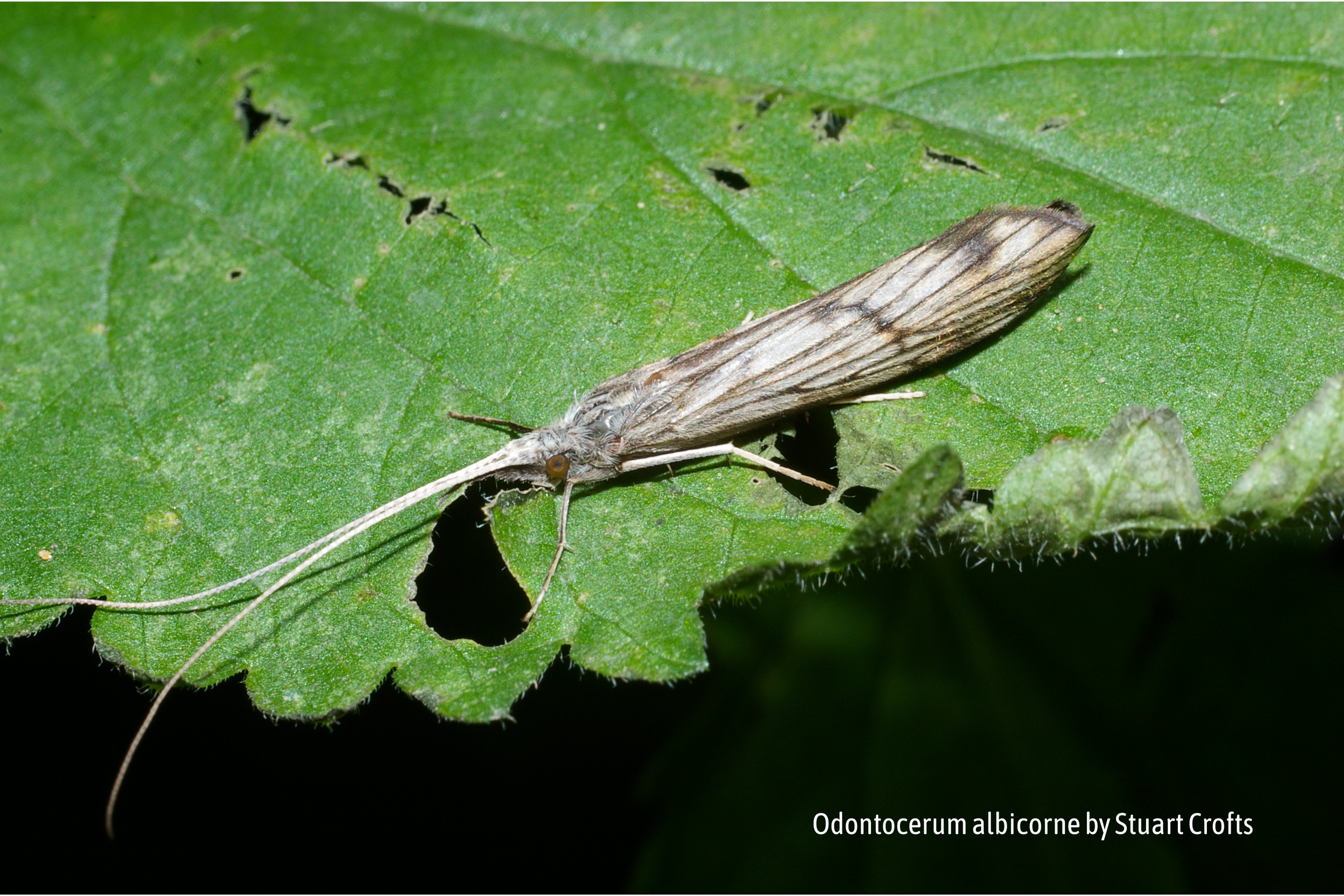
Odontocerum albicorne by Stuart Crofts.
And 2026 is going to be the twentieth and final year for the Stuart Crofts Adult Caddisfly Occurrence Scheme, do you have any plans to celebrate this amazing achievement?
Yes, this year will be the final year of this project but of course it will not be the end of my studies on caddisflies, as they will continue. The data set now contains over 20,000 individual records each of which has a full species level of identification, the capture location, the date of capture, how it was collected, and its sex, so you can imagine that is a lot of information and it will probably take me another 20 years to analyse it all. So, no celebration just more study – but that’s how I like it.
Of all the riverflies, why is the caddisfly the star of the rivers for you?
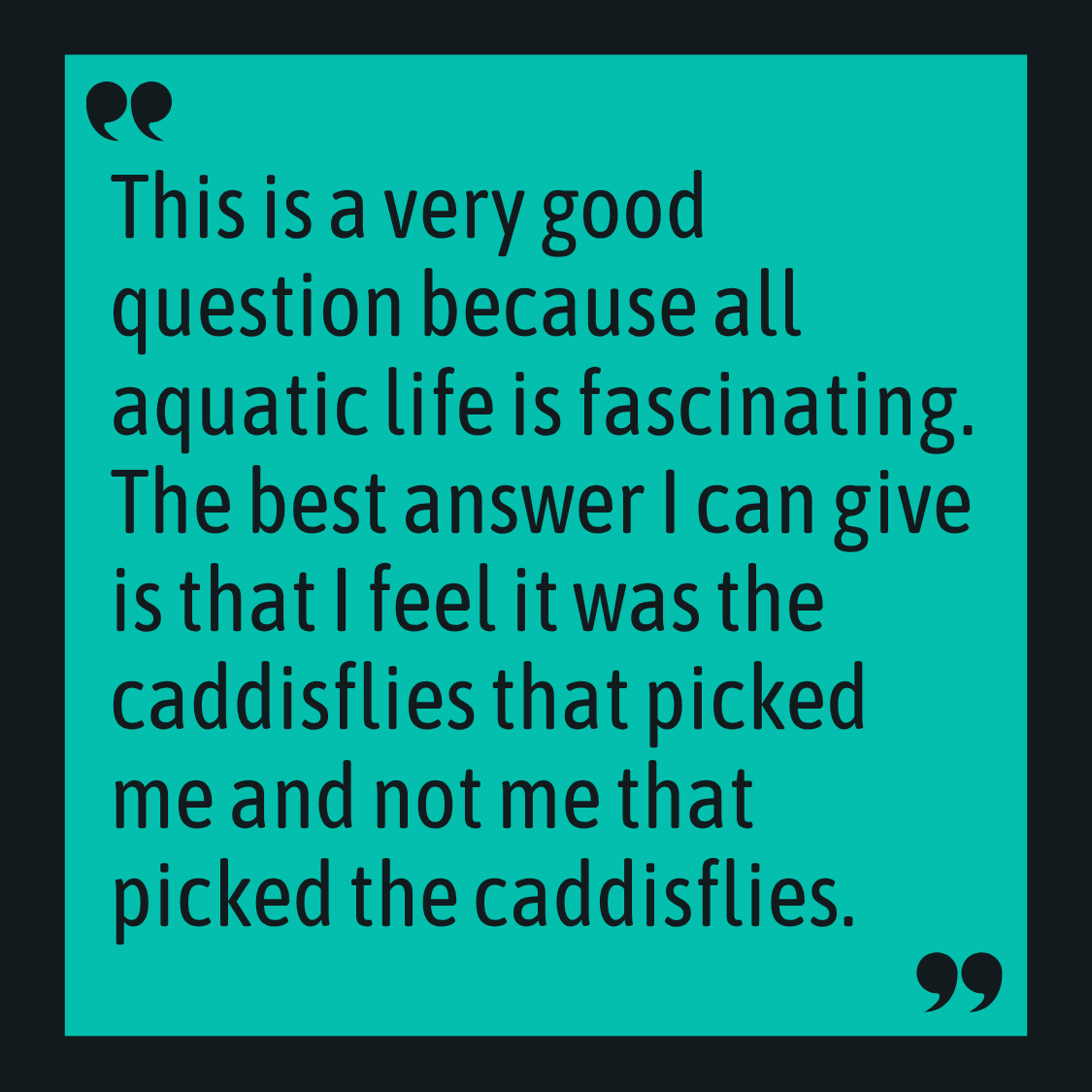
This is a very good question because all aquatic life is fascinating. The best answer I can give is that I feel it was the caddisflies that picked me and not me that picked the caddisflies.
Can you share any curious facts about caddisflies?
This is simply impossible to answer in just one paragraph because caddisflies are such complex and interesting creatures. In addition, there are still so many details on their habits and life histories that are not yet understood.
You describe yourself on the Floating Fly website as “one-third fisherman, one-third entomologist and one third environmental campaigner”. With so many years spent close to rivers, what are your thoughts on the issues facing freshwater ecosystems today?
I have grown up in an age of huge changes, not just with our watercourses, but with the entire ecosystem worldwide. In my humble opinion all issues facing freshwater ecosystems both today and in the past, can be summed up in just one word – humanity. Ever since we changed from hunter-gatherers to farmers we have changed and managed our environment for ourselves, and with each generation our ability to make ever greater changes has increased. This of course will continue and, as a civilisation, we will have to continually make choices, in some cases these choices can benefit freshwater ecosystems while others will damage our freshwater ecosystems.
Are we (humans) clever enough to sort it all out? Yes, we most certainly are. But are we willing to sort it out? Well, that one is not so easy to answer and of course that is where environmental campaigners and organisations can help by continually putting pressure on the powers that be.
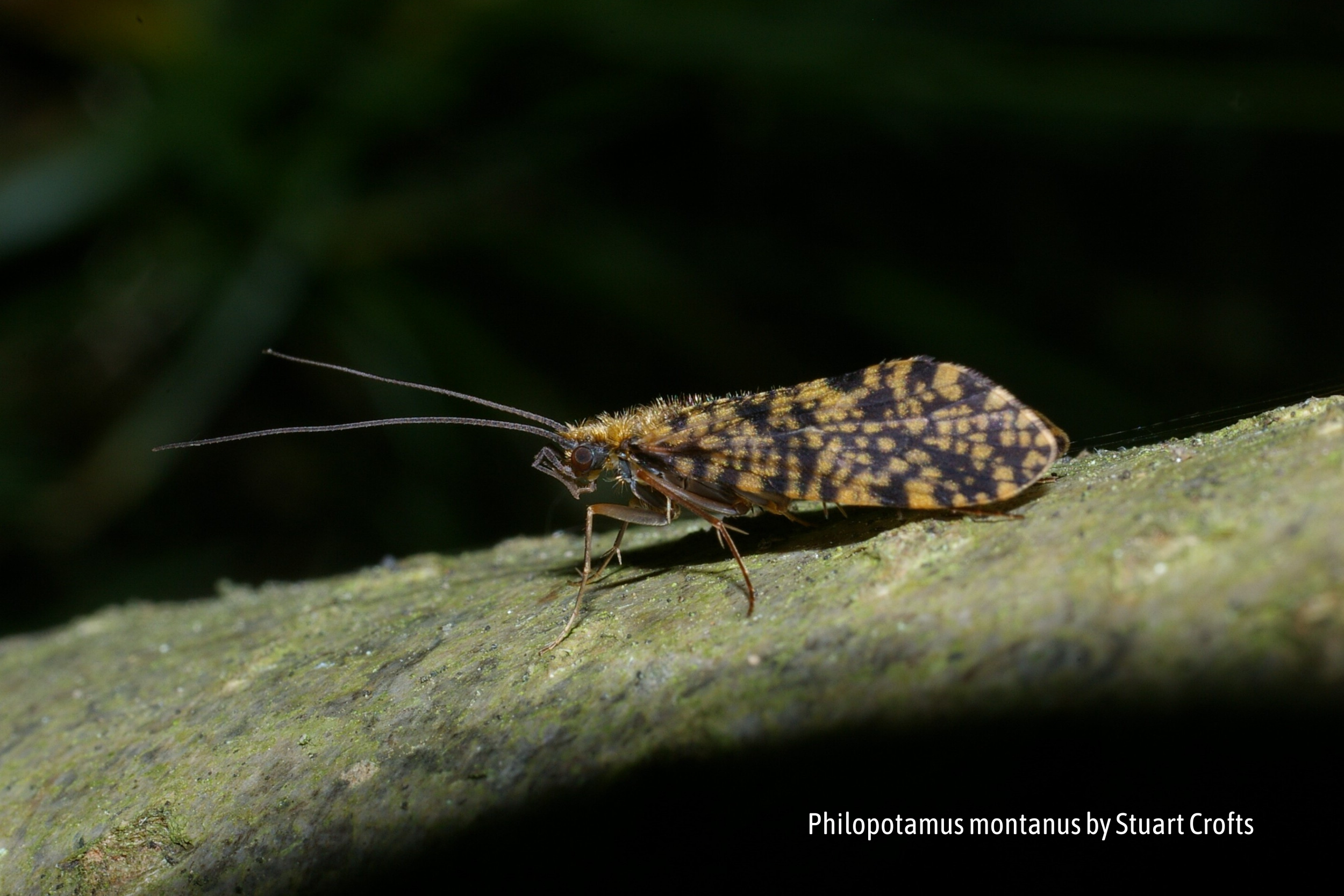
Philopotamus montanus by Stuart Crofts.
“In my humble opinion all issues facing freshwater ecosystems both today and in the past, can be summed up in just one word – humanity. Ever since we changed from hunter-gatherers to farmers we have changed and managed our environment for ourselves, and with each generation our ability to make ever greater changes has increased. This of course will continue and, as a civilisation, we will have to continually make choices, in some cases these choices can benefit freshwater ecosystems while others will damage our freshwater ecosystems.
Are we (humans) clever enough to sort it all out? Yes, we most certainly are. But are we willing to sort it out? Well, that one is not so easy to answer and of course that is where environmental campaigners and organisations can help by continually putting pressure on the powers that be.”
What would you like to see for freshwaters in the UK and globally in the future?
Clearly with my rose-tinted glasses I can see all freshwaters improving. BUT rose-tinted glasses are simply that, they just make things look nice and life is never that simple. In truth it is only by hard work, tireless campaigning and good will that changes are made.
We'd like to extend our heartfelt thanks for your incredible support with the FBA Entomology for Anglers course; any memorable moments you'd be happy to share?
This is another one that is impossible to answer in a single paragraph because there have been so many amazing moments over the years that Andrew Dixon and I have shared while delivering all the Entomology for Anglers courses. But my most memorable memories will be of the amazing people we have met along the way and seeing them having so much fun.
And finally we have to ask... do you have a favourite freshwater spot, that is a particularly sacred space for you?
I have no hesitation with this answer; it is sitting beside my local River Don here in South Yorkshire. When I was a young lad, this river was biologically dead due to numerous uncontrolled and insidious pollutions. This situation lit a fire in my belly to make changes, and as a spotty long-haired teenager, often with a bad attitude towards authority, I became a passionate campaigner for cleaner rivers.
Now, over 60 years later, we have a clean healthy river alive with trout and grayling along with dippers, kingfishers and otters. Yes, there are still occasional problems (like almost all our watercourses) but by keeping a close eye on things we have found we can spot potential issues early so they can be nipped in the bud and prevent problems escalating. The lesson of this story is that nature is incredibly resilient and given a chance it will heal what we (humans again!) try our best to destroy in the name of progress.
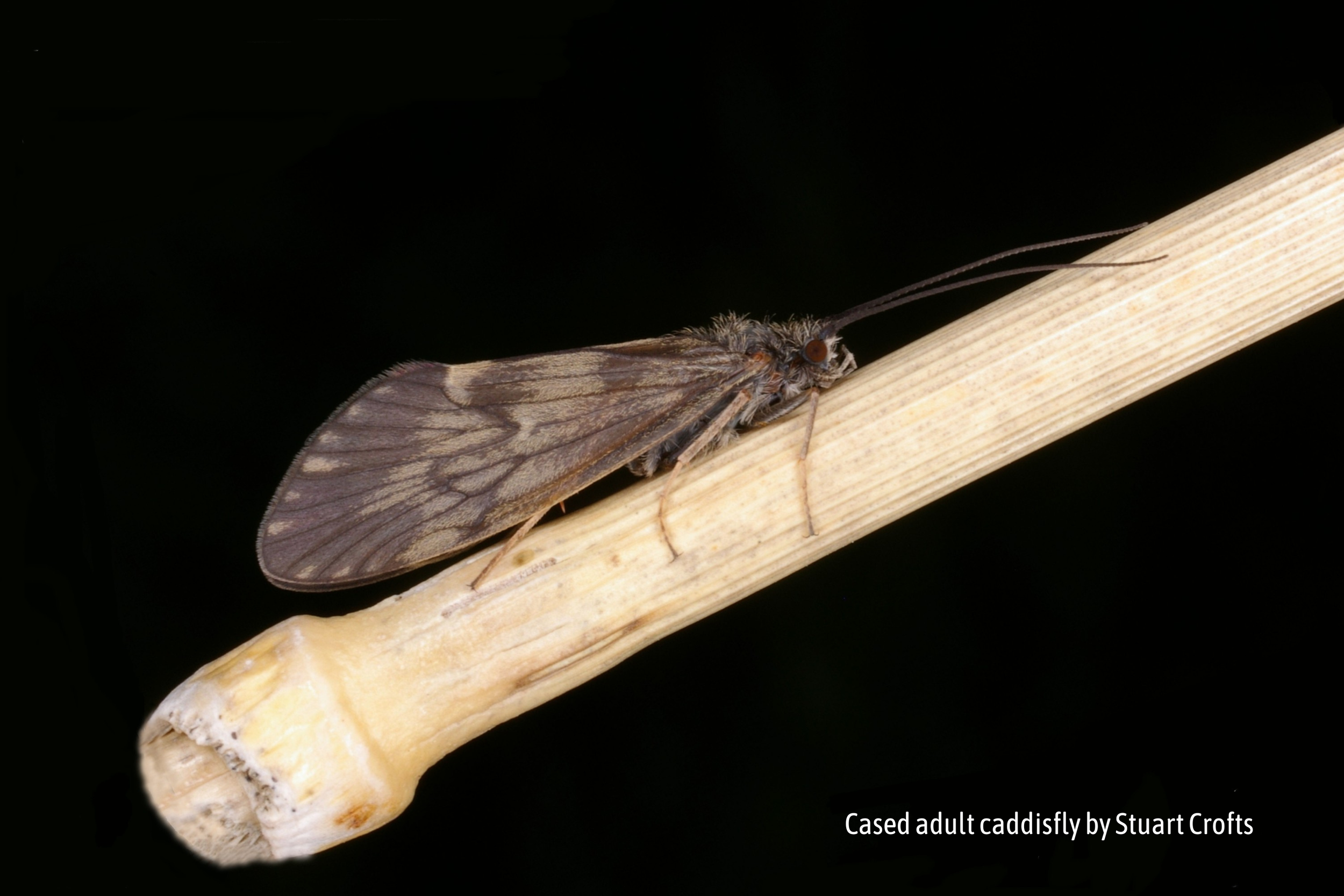
Cased adult caddisfly by Stuart Crofts.
The FBA would like to extend our heartfelt gratitude to Stuart Crofts, and Andrew Dixon, for their incredible generosity sharing time and knowledge running the FBA’s Entomology for Anglers course. This was an amazing opportunity helping fly fishers understand the lifecycles, and identification of insects to improve fishing success.
Wishing Stuart and Andrew all the very best in their future freshwater adventures!
Interested in discovering more?
You can download annual reports of the Stuart Crofts Adult Caddisfly Occurrence Scheme on the Riverfly Recording Schemes (RRS) webpage.
Caddisfly Adults (Trichoptera) of Britain and Ireland (2019) by Stuart Crofts, is available to purchase in the FBA shop.
Trichoptera, Caddisflies: Insects in the order Trichoptera are commonly known as caddisflies or sedges. There are 199 species of caddisfly in the UK. Cased caddis larvae make elaborate cases out of silk, which they adorn with pieces of vegetation, stones or other material. Adult caddisflies are moth-like insects which generally fly at night. They hold their wings above their body in a roof-shape when at rest. Find out more about Trichoptera on the Riverfly Partnership website.
The National Biodiversity Network Trust (NBN Trust) is a registered charity, championing the sharing of biological data in the UK since 2000, with the aim of improving the availability of high resolution and high quality data to provide the evidence base for all environmental decision-making in the UK.