Growing ambitions: a new chapter for the Riverfly Partnership
21 April, 2026
It’s been an inspiring start to the year for the Riverfly Partnership with the publication of their 2025 report, charting the increased success of this important initiative that is working to protect the water quality of our rivers; further the understanding of riverfly populations; and actively conserve riverfly habitats.
The year has seen the network continue to grow, reaching new geographical locations with new groups coming aboard from the rivers of Cornwall to the west coast of Wales, over to Northern Ireland and all the way up to the Highlands of Scotland.
The Riverfly Partnership HQ team is also expanding, and the FBA is thrilled to welcome Henry Marriner on board as the Senior Development Manager. A new face, launching an exciting new chapter for the Riverfly Monitoring Initiative (RMI) and the FBA.
Here we join Henry for a catch up to find out more about his previous adventures, ambitions for the Riverfly Partnership and hopes for freshwater ecosystems.
Great to welcome you to the Riverfly Partnership... could you share a little bit of your background that has led you here
I’ve enjoyed a blend of military, international NGO, and environmental charity work that has followed a slightly zig zaggy path to my current role managing the Riverfly Partnership. Conservation has been ever present in my adult life, starting with a marine placement in the Indian Ocean straight out of Uni. But it’s been during the last four years that I have been hyper focused on freshwater environments in the west country. This experience I believe has best prepared me for the work I now do with the FBA.
Last year was a particularly successful year for the initiative, can you provide a quick overview of the year
Well we set new records pretty much across the board. Over 1,000 new monitors were trained up on the RMI, growing our number of active citizen scientists to over 3,000. With the incredible support of dedicated monitors, it’s hardly surprising they were then able to record over 10,000 surveys in 2025. A phenomenal achievement!
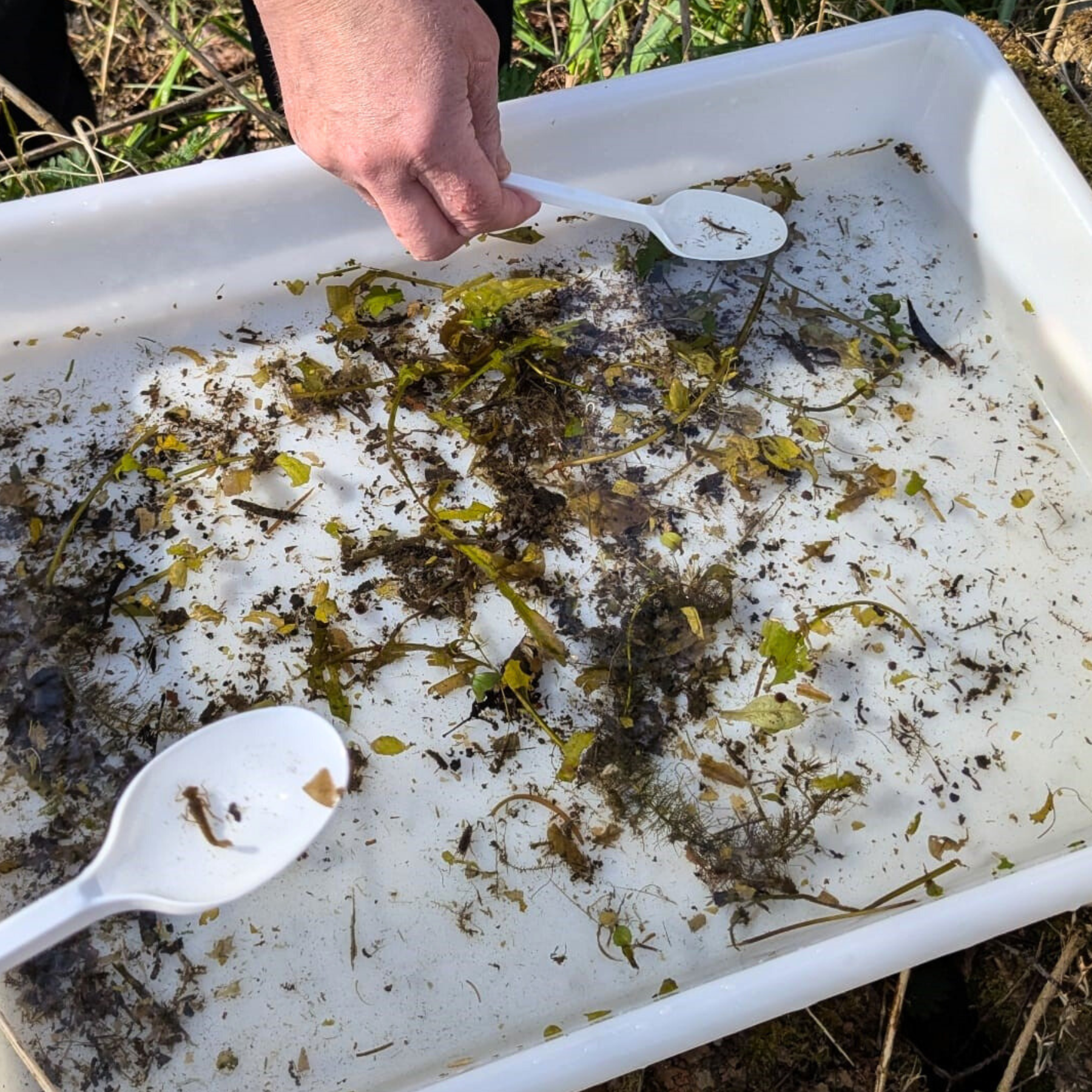
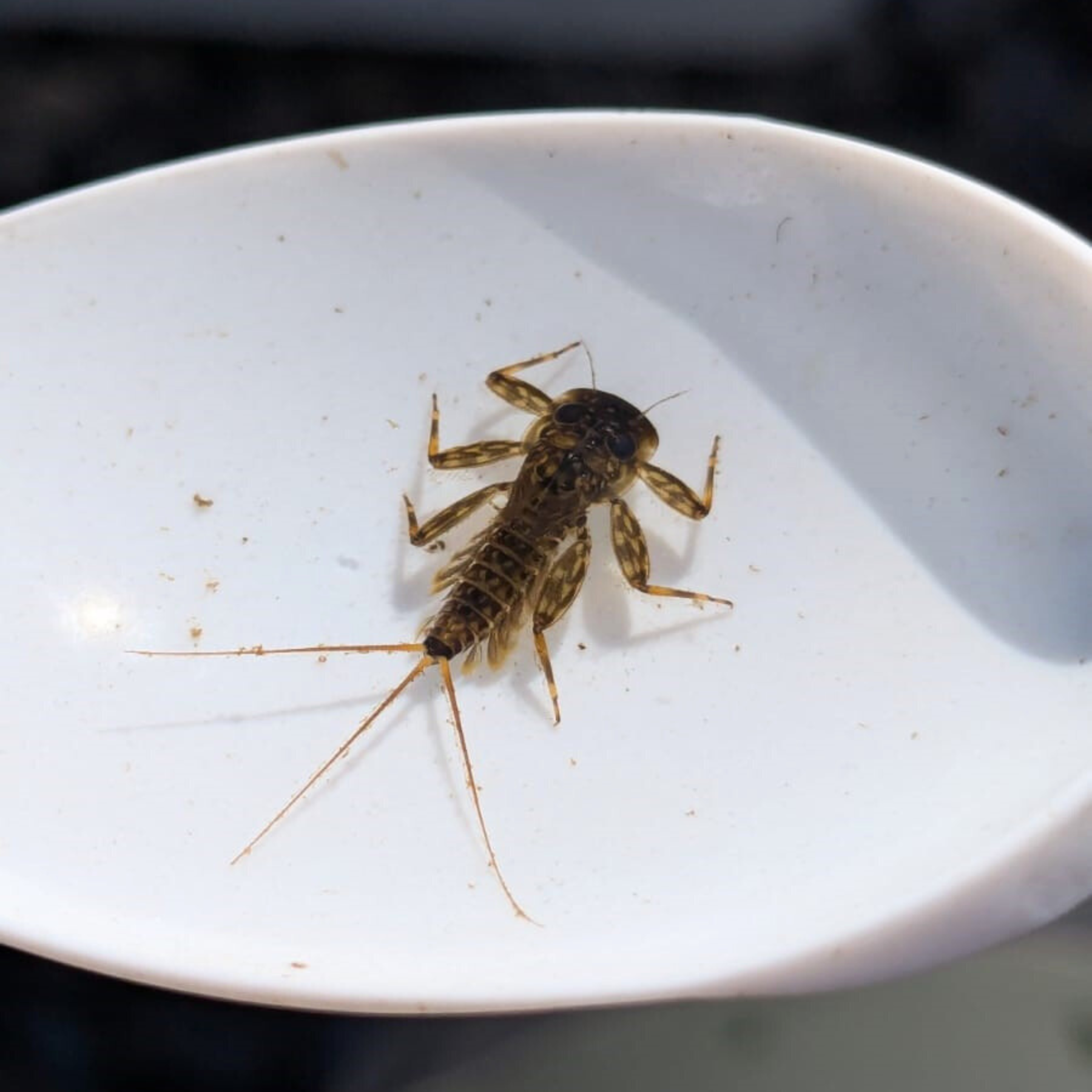
Riverfly monitoring in action: a tray sample identifying freshwater invertebrates.
The Riverfly Partnership 2025 in numbers:
Over 10K survey records uploaded!
1,182 records submitted to Cartographer
1,905 sites monitored across 820 rivers and 240 catchments
An estimated 3K+ active citizen scientists
1,104 people completed Riverfly training
522 new monitoring sites established
Read the Riverfly Partnership 2025 summary report here
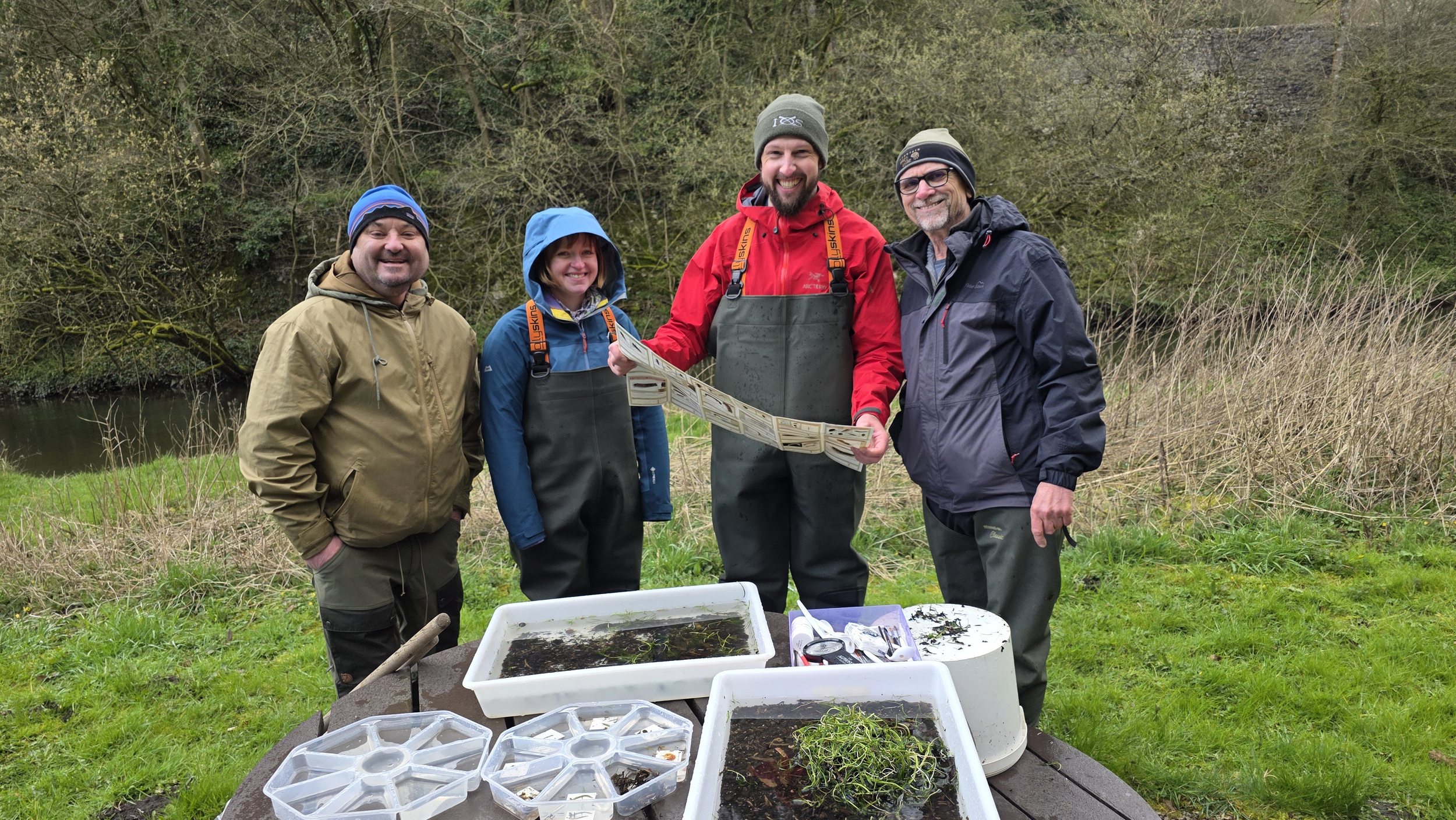
The Riverfly Partnership team from left to right: Co-Chair Simon Johnson, Co-ordinator Ellen Burton, Senior Development Manager Henry Marriner, and Co-Chair Steve Brooks.
“It’s been amazing to watch the growth of the Riverfly Partnership. Well over 10,000 Riverfly surveys were submitted last year, which is an astonishing rise from the roughly 6,500 that were submitted just two years prior – the year I joined the team. An ever-growing network of brilliant tutors and hub co-ordinators has worked with us here at Riverfly Partnership HQ to facilitate this staggering increase in data collection. I always feel proud when I open up the database and see the surveys that have popped up since I last looked, all submitted by dedicated citizen scientists, many of whom go out and survey whatever the weather!
It’s lovely to have a new face here at the FBA to help build on the Riverfly Partnership’s successes. 2026 has already seen some really positive developments for the initiative, and there are some very exciting ideas flying around… I’m confident Henry will rise to the challenge!”
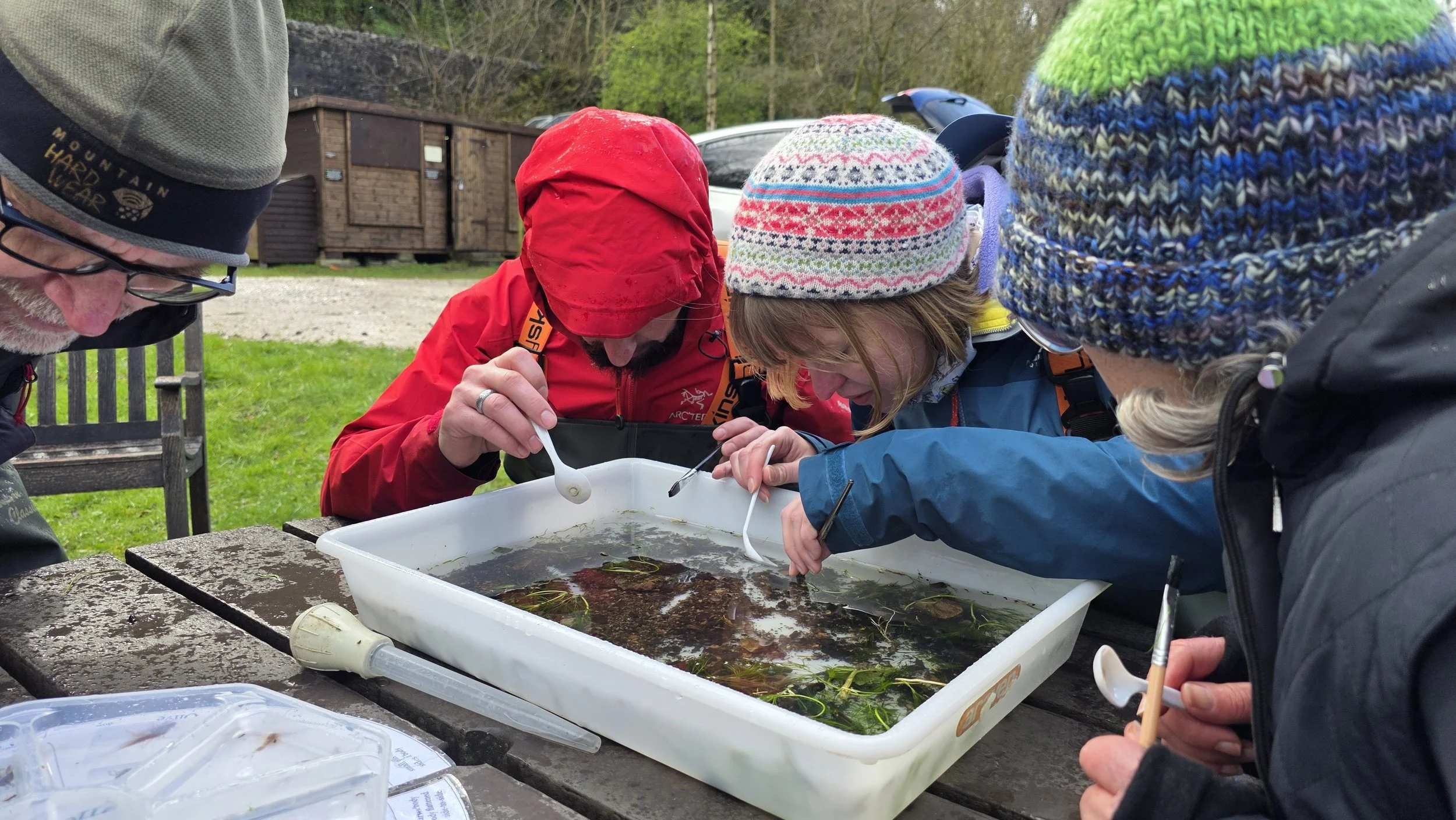
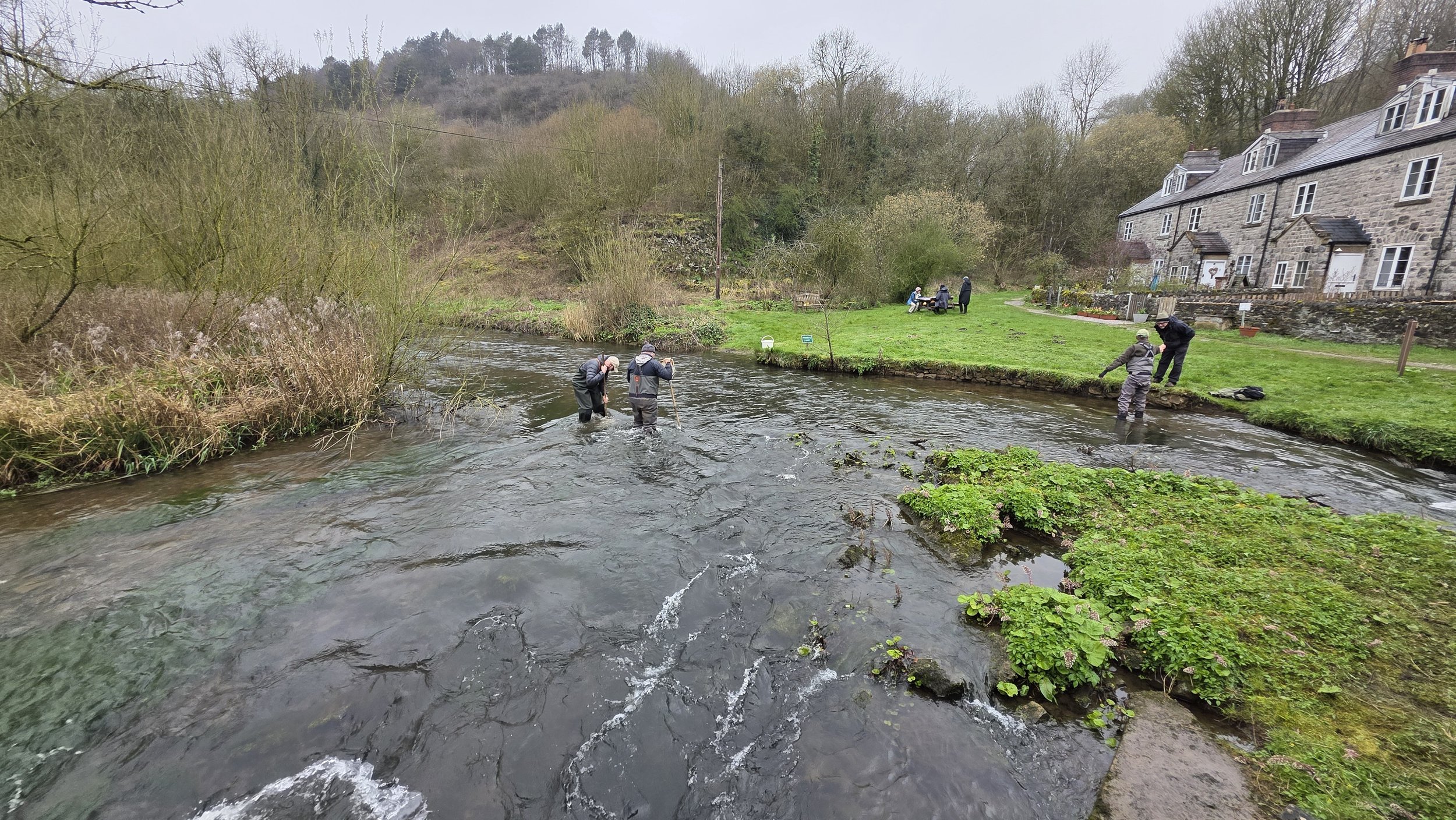
Monitoring in action with the Riverfly Partnership team, March 2026.
Do you have any specific hopes and/or aims for in your new role as Senior Development Manager at the Riverfly Partnership?
Growth! Growth in numbers (volunteers, surveys, catchments) but also growth in capability. The information gathered by our riverfly monitors has huge potential beyond its current output. I’d like to see our data used by more organisations to track river health and help inform largescale restoration of our freshwater systems. I’m excited to be working alongside the Riverfly Partnership team to achieve the future development and success of this important citizen science initiative.
“The information gathered by our riverfly monitors has huge potential beyond its current output. I’d like to see our data used by more organisations to track river health and help inform largescale restoration of our freshwater systems. I’m excited to be working alongside the Riverfly Partnership team to achieve the future development and success of this important citizen science initiative.”
And more generally what are your hopes and/or dreams for freshwater ecosystems?
The obvious answer is widescale restoration to a state where they can support the incredible abundance of flora and fauna that we have in this country. More specifically I’d say I’m looking for freshwater catchments that work more closely with local communities. People should be able to swim wild, dog walkers shouldn’t have to be restricted from certain areas. A healthy river should be something that can be enjoyed by all. The road to get there involves significant education on the negative impacts affecting these freshwater systems, and a healthy respect for nature from all users. It may not be an easy path to navigate, but for the scale of change we need, we will need to set ambitious targets.


Some cool freshwater invertebrates: (left) Just In Case - photo of a cased caddisfly Jonathan Plimmer, and (right) Perlodes mortoni - aka the orange-striped stonefly - by Neil Phillips.
Interested in discovering more?
The Riverfly Partnership is a dynamic network of organisations working together to empower citizens to protect their rivers.
Find out more about getting involved as a Riverfly Monitor on the Riverfly Partnership website.
Details about the Riverfly Monitoring Initiative.