
Arctic charr by Lindsay McCrae
Welcome to the 2024 – 2025 FBA Impact Report
It’s been quite a year at the Freshwater Biological Association and trying to sum it all up in a few words isn’t easy!
It feels like the tide is changing when it comes to awareness about the challenges facing freshwaters (and yes, rivers can have tides). This rise in public awareness will inevitably influence political thinking and eventually lead to both political pressure and stronger commitment to freshwater science and protection for our precious waters.
This can only be a good thing and time is very much of the essence. At this watershed moment the FBA will play a vital role as a voice for our freshwaters; continuing to use its science and influence to champion the importance of freshwaters.
A huge thank you to everyone who is playing their part in helping deliver a positive future for our freshwaters.
We are a voice for freshwaters and are dedicated to understanding and protecting freshwater ecosystems. Together we will continue to stand up for one of the most vulnerable ecosystems on the planet.
Welcome to our impact report for 2024 – 2025. You can read a snapshot here and download the full report below.
Our impact 2024 – 2025 at a glance
Species recovery: Freshwater Pearl Mussels
Freshwater pearl mussel species recovery:
50K+ freshwater pearl mussels being reared
5K+ juveniles released into 3 rivers
1K+ juveniles collected in 1 day from the Irfon mussels
130+ years – age of our oldest adult mussel
25 Welsh River Dee mussels in residence at the FBA Ark
3 knowledge exchange events
Species recovery: LD-CHARM project
The LD-CHARM project in numbers:
30 days obtaining & analysing 300 eDNA samples
Spawning habitat surveys using ROV and hydroacoustic equipment at 6 locations
Genetic investigations and genotyping of 400 scale samples from the FBA collection at NHM
£200K research funding
15+ team members from 8 partner organisations
1 Arctic charr Symposium: Conservation in a changing climate with 37 attendees at the Arctic charr Symposium
10 presentations & 2 special sessions
Interviews x2 for CHARR: a film by Dave George celebrating the Lake District fish
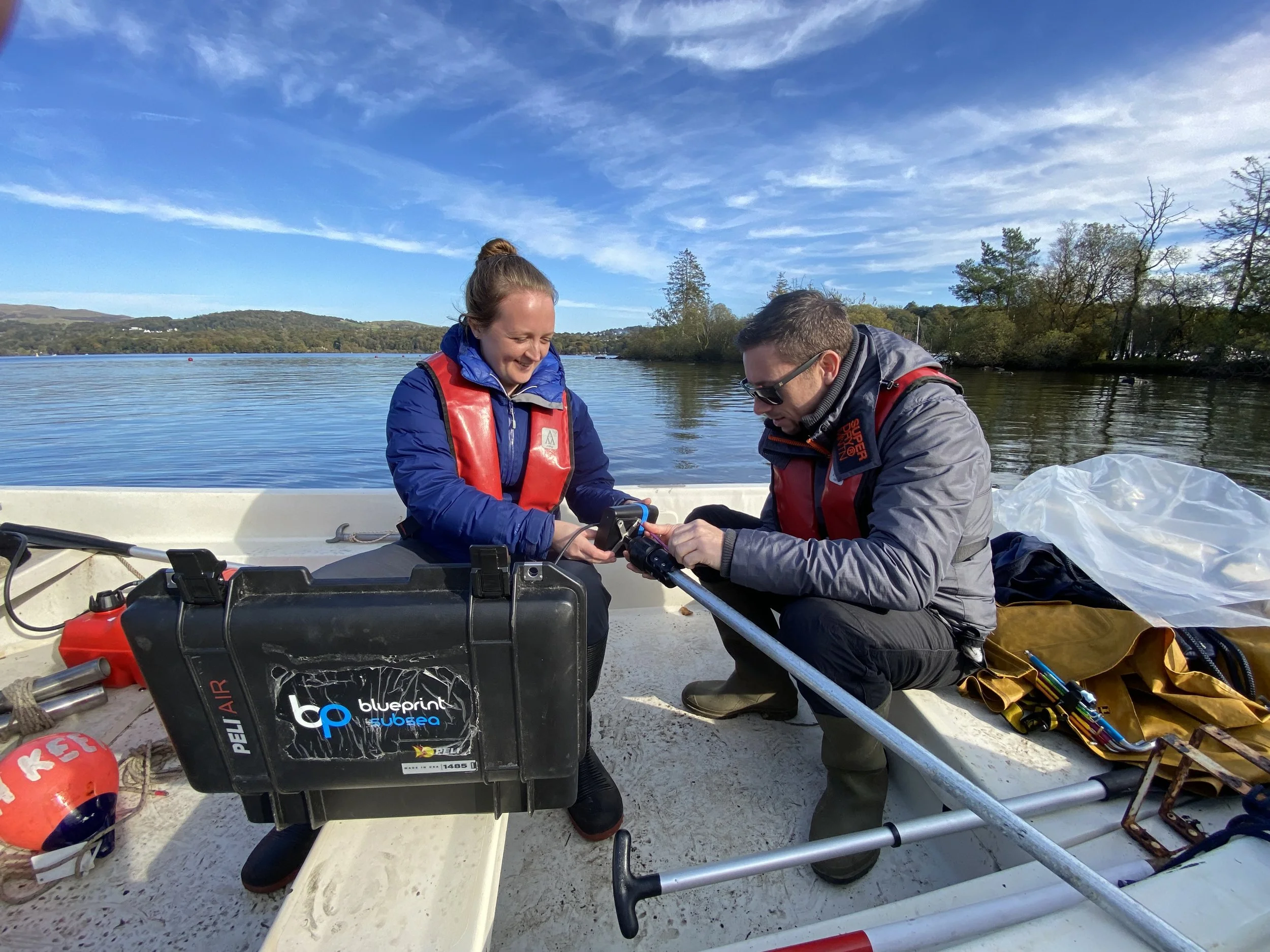
LD-CHARM team on Windermere
Citizen science: The Big Windermere Survey & two-year report
The Big Windermere Survey & two-year summary report:
110 locations sampled over 10 surveys
Approx. 5K bottles of lake water collected
1K+ samples analysed
300+ regular citizen scientists
1 BWS 2-year report launch with 35–45 million media coverage reach
3.7K page views on BWS related web content
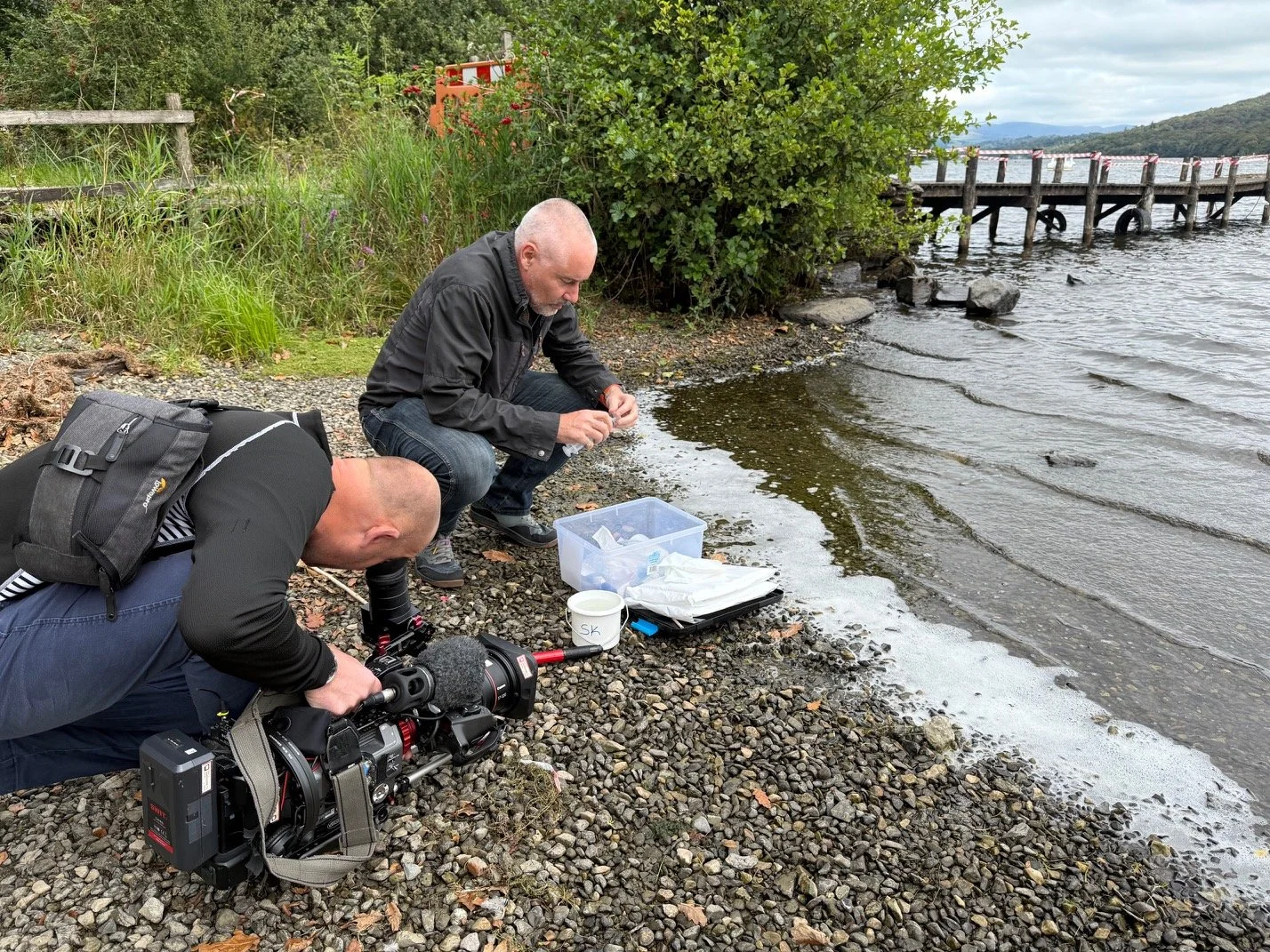
BWS Citizen Scientist being filmed in August 2025
Citizen science: The Riverfly Partnership
The Riverfly Partnership 2025 in numbers:
Over 10K survey records uploaded!
Almost 2K sites monitored across 820 rivers & 240 catchments
1K+ records submitted to Cartographer by an estimated 3K+ active citizen scientists
1K+ people completed Riverfly training & 522 new monitoring sites established

Citizen science: Lakefly pilot
Lakefly impact in 2025:
4 successful FBA pilot training sessions – at 3 waterbodies in the Lake District
43 trained volunteers, including members of the public, and staff from the Lake District National Park Authority, Natural England, the Environment Agency, and the Angling Trust
Volunteers carried out Lakefly monitoring at 14 different lakes across the UK
65 Lakefly surveys have been submitted

Advocacy & learning: A year of increased outputs & activity
FBA advocacy & learning outputs:
3.8K web page views of FBA Info Notes
2K+ copies of the Freshwater Biology and Ecology Handbook downloaded
3 reports published: BWS two-year summary report, State of Windermere report, and the Windermere Integrated Science Plan
10 knowledge exchange events
40 news & science articles circulated in FBA Voice
16K+ followers on social media channels & 2.5K subscribers to the FBA Voice e-newsletter

Advocacy & learning: Annual Scientific Meeting & FBA training
ASM 2025:
100+ attendees
10+ presentations & discussions
with 4 Keynote speakers
1 free event for early career scientists
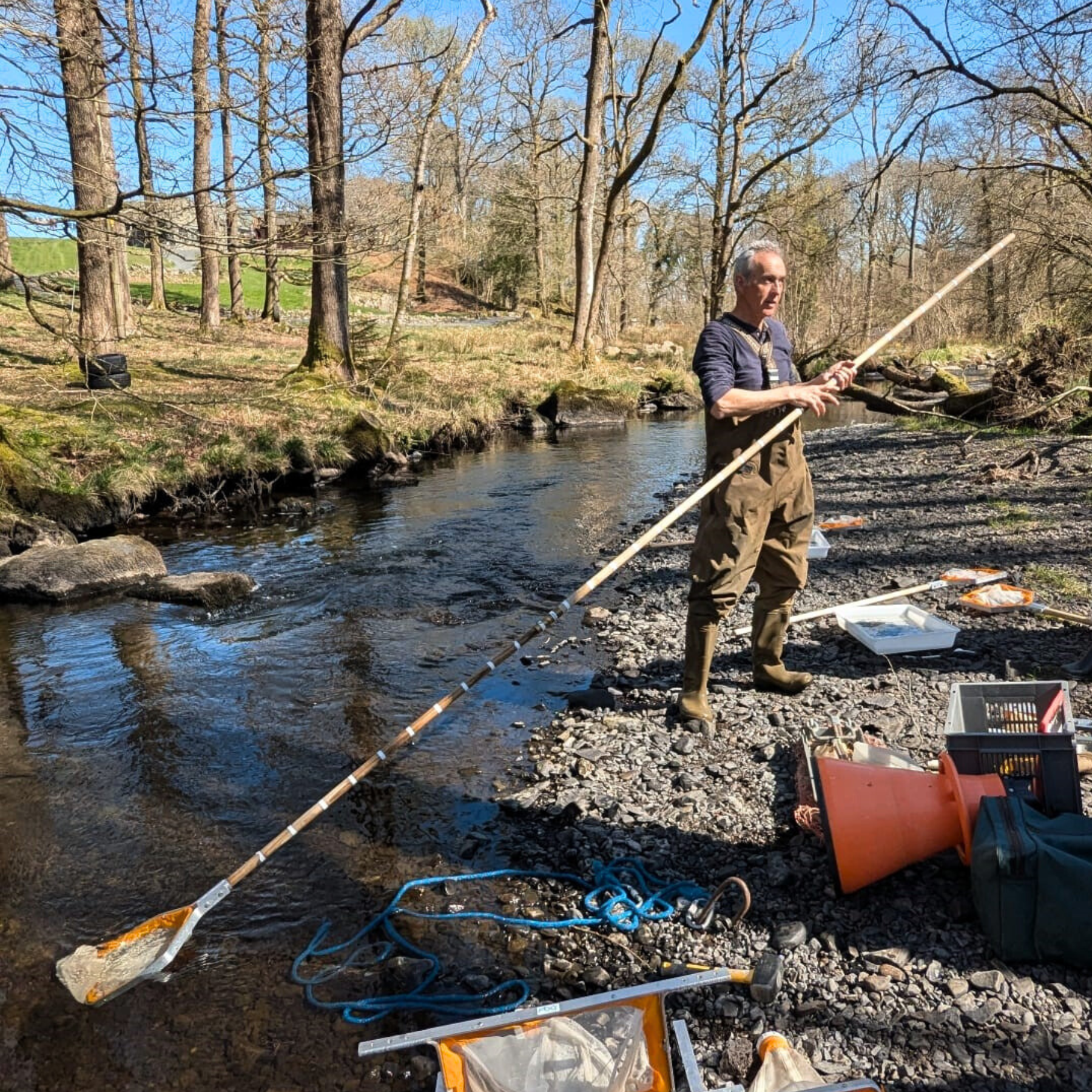
Our FBA freshwater courses in numbers:
12 FBA training courses throughout 2025 with 180 participants
What next?
The FBA is almost 100 years old, formed in 1929. During this period freshwater ecosystems around the world have experienced a well-documented, accelerated and as yet, unchecked period of catastrophic decline.
Freshwater ecosystems are facing a crisis. According to the WWF 2024 Living Planet Report, freshwater species populations have dropped an alarming 85% on average – the steepest decline of any biome. Habitat loss, fragmentation and alteration, pollution, unsustainable water use, and climate change are pushing rivers, lakes, and wetlands to the brink. The disruption of our precious freshwaters is endangering species from river dolphins and fish, to freshwater pearl mussels and the myriad of microorganisms essential for healthy ecosystems.
Our work is a showcase for how action-focused science can play its part in addressing the impacts of freshwater biodiversity crisis and climate emergencies on freshwater ecosystems. Current FBA projects connect a wide range of partners and stakeholders across the UK and Europe, who share our values and objectives to rejuvenate freshwaters for the benefit of nature and people.
What next?
“The FBA’s work over the last 4 years has enabled and improved our organisational resilience and impact. We are now ready to scale-up our efforts. 2026 will see the publication of our new 5-year organisational strategy to achieve this. By 2031, we wish to see the FBA, our partners and communities inspired to play a more active role supporting tangible sustainable outcomes for the conservation and regeneration of freshwater ecosystems.
We will continue to deliver this in 2026 (and beyond our centenary) through a highly-focused, passionate and connected programme of species recovery, citizen science, training and engagement initiatives.”
– Simon Johnson, Executive Director, FBA
Drone footage over Windermere in the Lake District, from Fell Foot.

Find out more about FBA’s impact since 2022
