10 November, 2026
The Freshwater Biological Association (FBA) is delighted to share the excellent news that the Riverfly Partnership has secured £288,600 in funding from the Esmée Fairbairn Foundation, strengthening the continued development of this important citizen science initiative over the next three years.
The new funding builds on the success of previous support from the Esmée Fairbairn Foundation, which has helped transform the Riverfly Partnership, expanding its volunteer network, extending its reach across the UK and establishing an open-access database of freshwater monitoring records.
The grant will support two key areas of development: improving how Riverfly data is used by organisations and decision-makers responsible for river management, and piloting a new regional approach to strengthen local partnerships and encourage greater participation in community-led monitoring.
Strengthening the value and impact of Riverfly data
The first area of work will focus on understanding how Riverfly monitoring data can better support those working to protect and manage rivers. This will involve engaging with water companies, Rivers Trusts, catchment partnerships and regulators to establish what information they value and how it can be used to inform decision-making. An important part of this work will be developing sustainable funding models, with the aim of securing greater support from organisations that benefit from the data.
The second work strand will involve a regional pilot in two contrasting areas of the UK. The pilot will explore how establishing a stronger local presence can help build partnerships, encourage more people to become involved in monitoring and attract additional local support.
“Esmée Fairbairn Foundation’s support over the past three years has been transformational, allowing us to grow our volunteer network, extend our reach across the UK, and build a trusted, open dataset that helps protect rivers. We are hugely grateful for this renewed commitment. The new funding will help us reach underserved regions, develop how our data is used, and secure the long-term future of community-led freshwater monitoring.”
The funding will also support the appointment of two Regional Development Officers during the first half of the programme's first year, helping to establish new monitoring groups and develop activity in an underserved region.
The Riverfly Partnership's day-to-day running will continue to be funded by the Environment Agency through Rod Licence income.
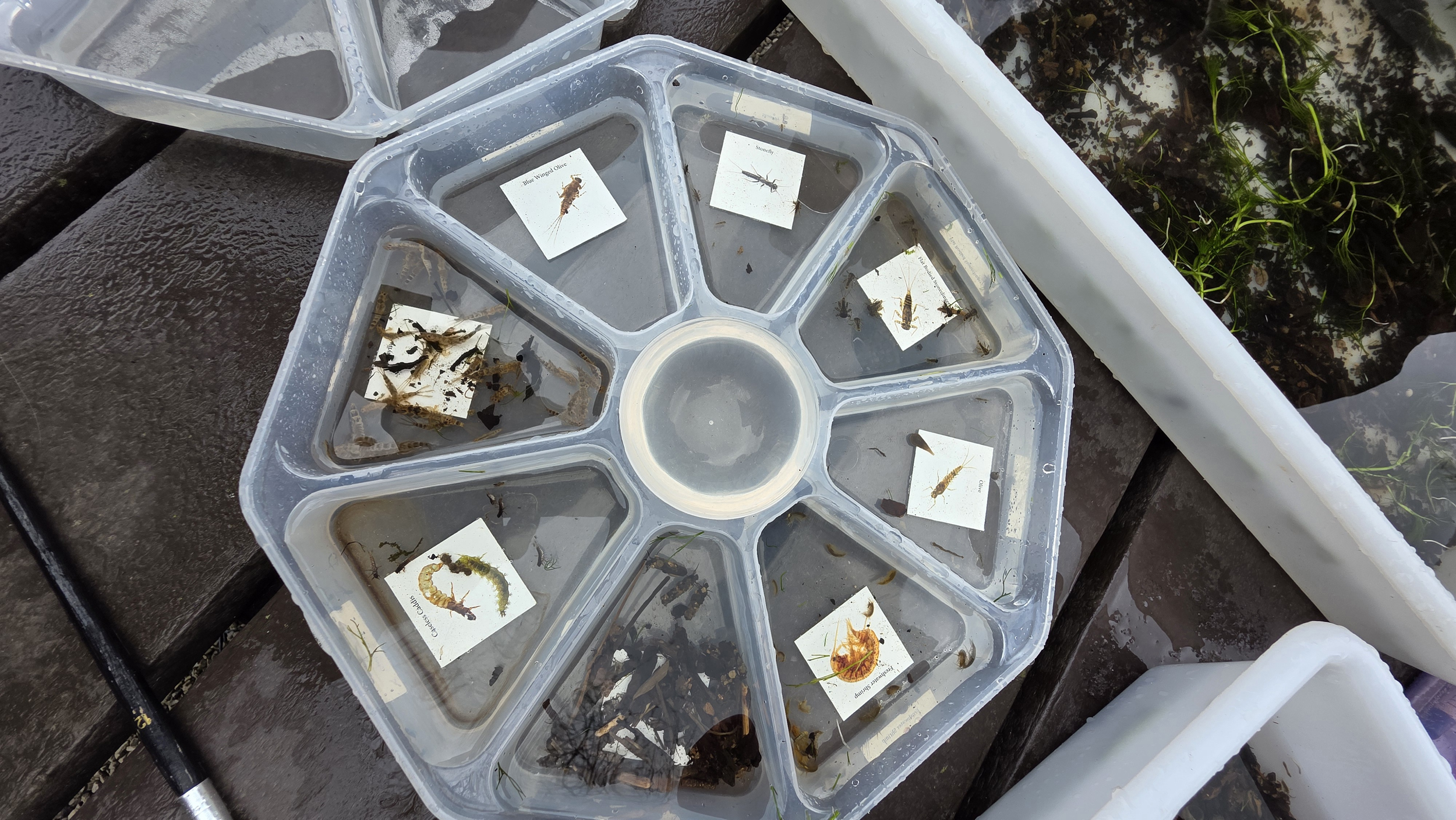
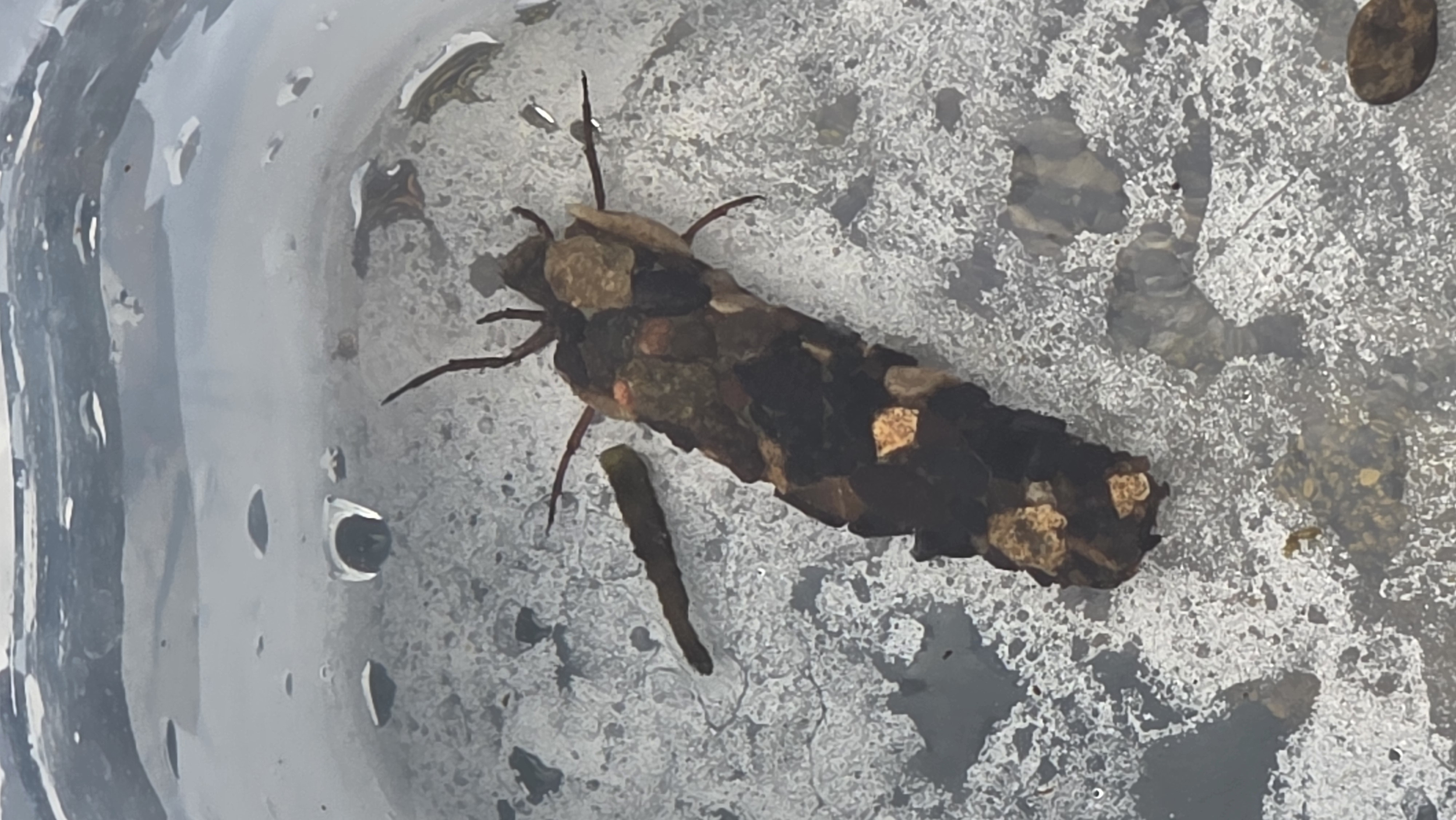
Riverfly monitoring in action: (left) a tray sample identifying freshwater invertebrates, and (right) a cased caddis.
A growing network making a difference to river health
Hosted by the FBA since 2017, the Riverfly Partnership is one of Europe's largest and longest-running freshwater citizen science programmes. It brings together trained volunteers, scientists, environmental organisations and statutory agencies to monitor the health of rivers across the UK.
Volunteers carry out standardised surveys of aquatic invertebrates – including mayflies, stoneflies and caddisflies – which are important indicators of freshwater health. Changes in the abundance and diversity of these organisms can provide an early warning of potential pollution incidents or other environmental pressures.
Each monitoring site has an agreed trigger level, established with the Environment Agency (EA). If survey results fall below this level, the EA is informed, prompting further investigation where necessary.
The Riverfly Partnership has secured £288,600 from the Esmée Fairbairn Foundation to build on the success of its UK-wide volunteer network, strengthen the use of community-collected river health data and support the long-term sustainability of freshwater citizen science.
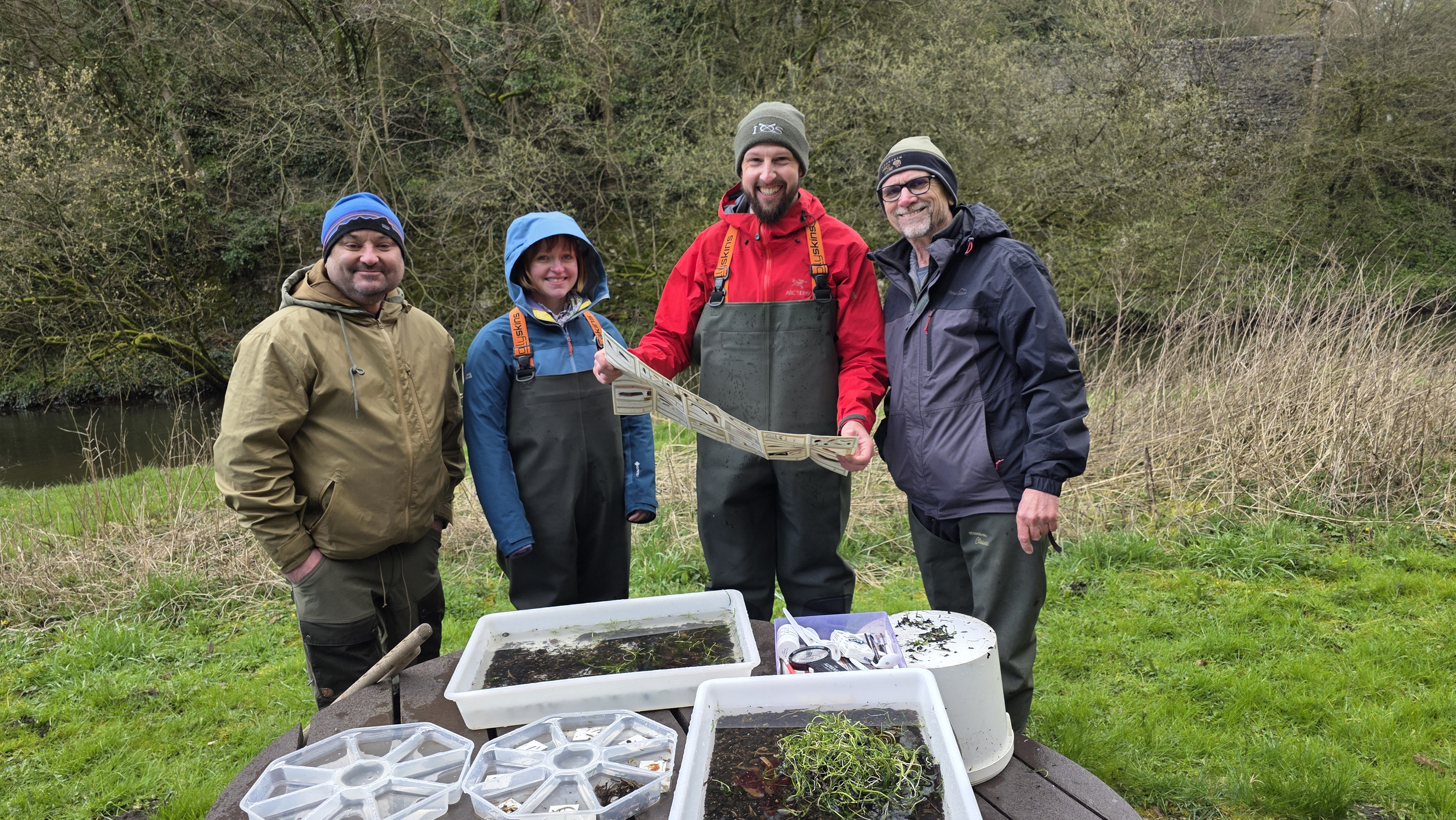
The Riverfly Partnership team in 2026 (from left to right): co-chair Simon Johnson, Riverfly Co-ordinator Ellen Burton, Senior Development Manager Henry Marriner, and co-chair Steve Brooks.
Impact of the Riverfly Partnership
The scale and impact of this work are reflected in the latest figures, covering April to September 2026:
» 1,999 active monitoring sites across 899 rivers and 282 catchments.
» 309 groups uploading monitoring data.
» 3,482 database members, including approximately 2,500 active surveyors.
» 56 confirmed trigger-level breaches flagged to the Environment Agency.
» More than 80,000 survey records held in the open-access Cartographer database.
» An estimated £819,480 worth of volunteer time contributed in a single year.
Riverfly monitoring data has already helped expose sewage pollution problems and contributed to the Environment Agency's drought monitoring, demonstrating the value of locally collected evidence in understanding and responding to pressures on rivers.
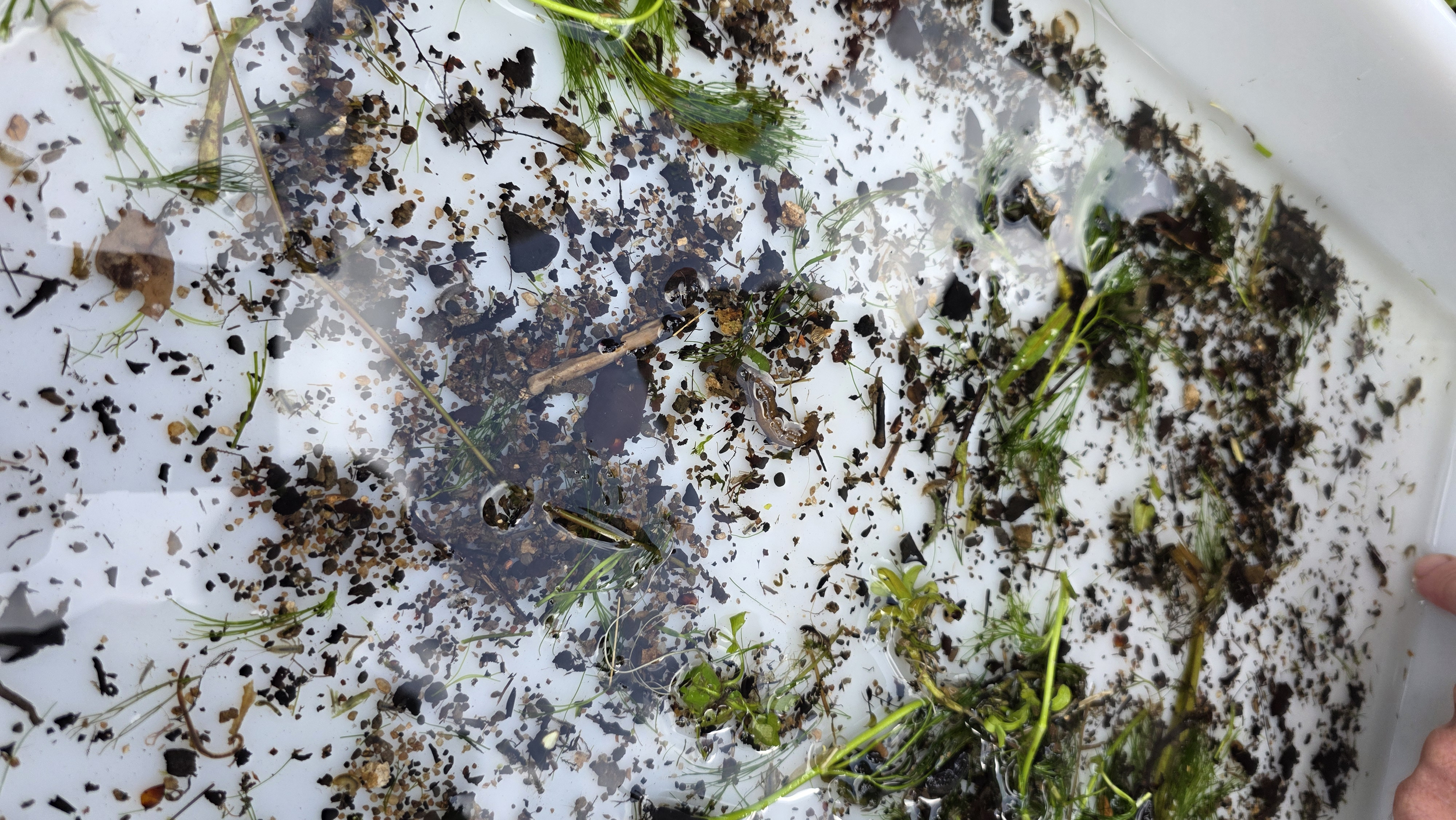
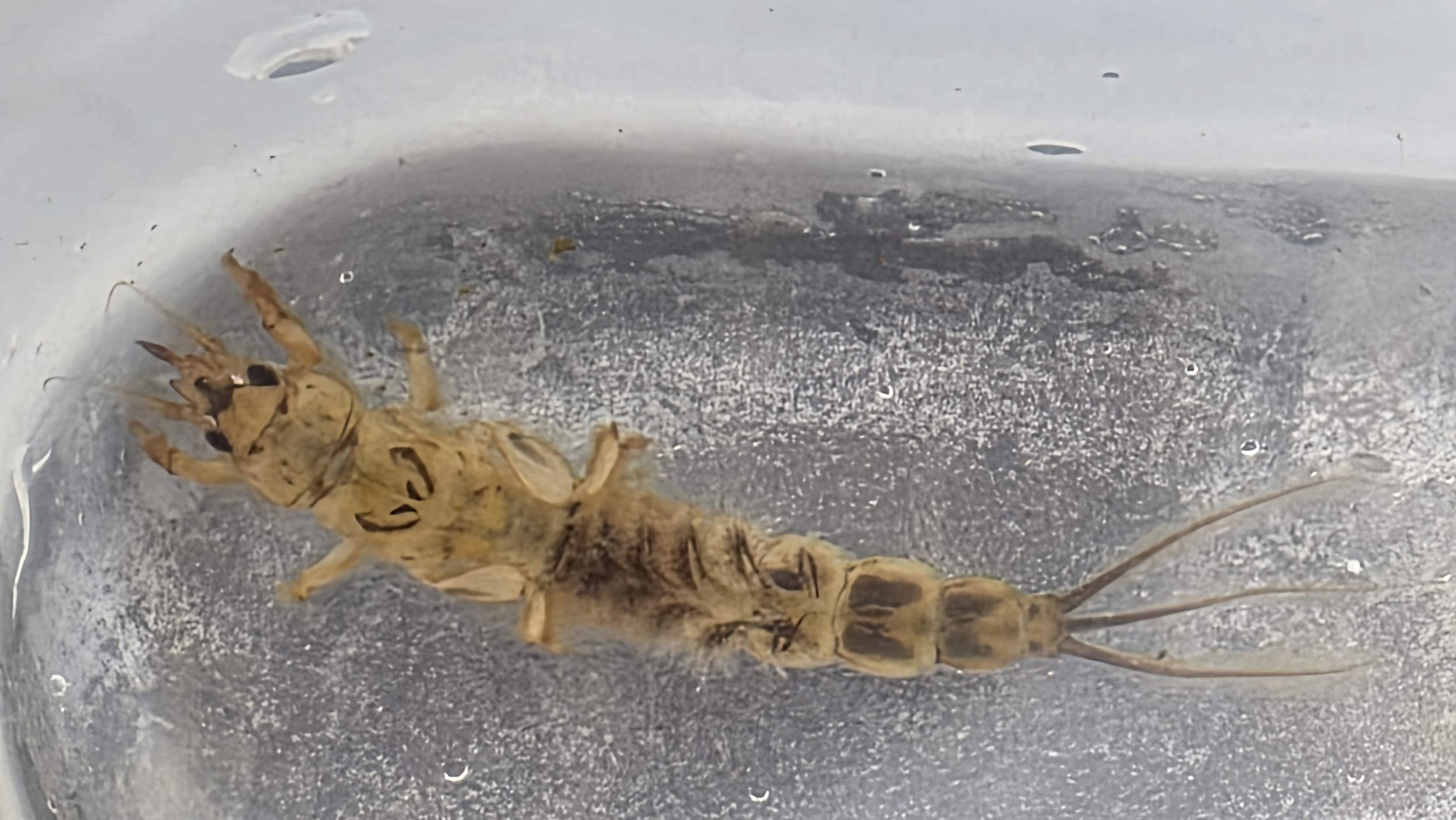
A Riverfly tray from a freshwater invertebrate monitoring session in spring 2026 (left), and a magnificent Mayfly (right).
Building on previous success to secure a sustainable future
This is Esmée Fairbairn Foundation's second major grant to the Riverfly Partnership, following an award of approximately £300,000 announced in January 2023.
The first grant enabled significant progress in expanding and strengthening the initiative. Active monitoring sites increased by 79%, while 3,254 volunteers were trained, exceeding the original target of 3,000. Other achievements included the development and launch of the Cartographer data platform, quality assurance of the survey method, and publication of peer-reviewed Targets and Triggers guidance in partnership with the Rivers Trust.
The funding also supported the establishment of 13 Urban Riverfly hubs, expansion of the network across Scotland, Wales and Northern Ireland, and the creation of a new four-nations Steering Group.
“Citizen Scientists are at the very heart of everything the Riverfly Partnership stands for and does. This transformational funding from the Esmée Fairbairn Foundation will enable the FBA and its partner organisations to do more to support an army of volunteers in England, Wales, Scotland and Northern Ireland. Critically, this next exciting development phase will enable volunteer monitors to better understand the quality of the river, beck and streams they care about. This knowledge will drive conservation action at scale to protect and improve many rivers that often fall through the net of statutory monitoring. Our new Regional Development Officer roles will also strengthen the Riverfly network to drive and sustain better and faster outcomes for freshwaters. I’m extremely proud to be co-chair of the Riverfly Partnership at this exciting time!”
Riverfly Partnership commitments over the next three years
While the first grant helped build the network and its capacity, the new funding will focus on ensuring its long-term sustainability and influence. This includes advancing work with the Rivers Trust to demonstrate how Riverfly Monitoring data can help predict the river-health scores used by regulators, with the longer-term ambition of developing a standard that regulators can adopt.
The Riverfly Partnership will also bring together organisations from across the freshwater citizen science sector to share practical guidance on making community-collected data credible, reliable and useful.
By strengthening the links between local monitoring, scientific evidence and environmental decision-making, the Riverfly Partnership aims to ensure that communities continue to play a vital role in protecting the UK's rivers for the future.

Massive thank you to all our amazing funders, supporters and dedicated citizen scientists, from the FBA and Riverfly Partnership!
Many thanks to the Esmée Fairbairn Foundation and the Environment Agency for being our generous funders and supporting the work of the Riverfly Partnership.
The FBA and the Riverfly Partnership would also like to extend sincere thanks to the dedicated citizen science volunteers, group coordinators and hub hosts whose time and commitment make this initiative possible. Their contribution represents an estimated £819,480 worth of volunteer time each year. An incredible impact for freshwater ecosystems!
We are equally grateful to our accredited Riverfly tutors, including the 12 new tutors accredited this year, whose skills and dedication help train and support our growing network. We would also like to recognise the continued support of the Environment Agency, our core funder; the Rivers Trust and the wider Rivers Trust network; CaSTCo (the Catchment Systems Thinking Cooperative); and members of the Riverfly Partnership's four-nations Steering Group.
Finally, we extend a huge thank you to Natural Resources Wales for supporting the expansion of Extended Riverfly training in Wales, and Buglife for its work to strengthen engagement with the Scottish Environment Protection Agency (SEPA). The continued commitment and collaboration of all these individuals and organisations are vital to the success of the Riverfly Partnership and its work to protect rivers across the UK.
Interested in discovering more?
Read: The Riverfly Partnership’s year of impact, 7 May, 2026.
Read: Growing ambitions: a new chapter for the Riverfly Partnership, 21 April, 2026.
Visit the Riverfly Partnership website.