
LD-CHARM Research Findings 2026
Arctic charr is one of England's oldest native freshwater fish species, having inhabited the Lake District since the end of the last Ice Age over 11,000 years ago.
Perfectly adapted to deep, cold, nutrient- poor lakes, they are an iconic part of the region's natural heritage and an important indicator of healthy freshwater ecosystems.
Today, Arctic charr face an uncertain future. Once present in eleven Lake District lakes, they are now restricted to just eight surviving populations, with three already lost.
To help reverse this decline, the Lake District Charr Recovery & Management (LD-CHARM) partnership carried out a programme of research funded by Natural England's Species Recovery Programme. The first phase brought together specialists to better understand the status of Arctic charr populations, the condition of their spawning habitats, and the genetic diversity that makes each population unique. These findings provide the foundation needed to develop England's first comprehensive conservation plan for Arctic charr.
Why do we care?
Arctic charr are more than just a rare fish. As a cold-water species, they are highly sensitive to changes in water quality and temperature, making them an important indicator of the health of our lakes. Protecting Arctic charr also means protecting wider freshwater ecosystems which support countless other plants and animals.
“Arctic charr remain one of England’s most threatened freshwater fish, but recovery is still possible. Evidence gathered through the LD-CHARM project provides the strongest scientific foundation yet for coordinated catchment scale conservation and management interventions. We would like to extend our thanks for the dedicated fishers and partners who have supported this research. With inspiring leadership, sustained investment, innovative partnerships and targeted restoration, there is a clear opportunity to secure the future of this unique fish. However, we only have a few precious years, to save this Ice Age survivor of ecological and cultural significance, that has lived in Windermere for over 11,000 years.”
Three strands of the LD-CHARM research
[1] WINDERMERE POPULATION STATUS: Where are Arctic charr spawning & how are populations changing?
[2] WINDERMERE HABITAT CONDITION: Are spawning habitats suitable for successful reproduction?
[3] GENETIC DIVERSITY: How distinct are populations and how can genetics inform conservation?
Why are populations of Arctic charr declining?
NUTRIENT ENRICHMENT: Impacts food webs & lake chemistry, accelerates habitat deterioration.
HABITAT DEGREDATION: Increased fine sediment & algae on spawning grounds = lower egg survival.
INVASIVE SPECIES: Introduced fish compete with & prey upon Arctic charr at all life stages.
CLIMATE CHANGE: Warmer lakes hold less oxygen, cause physiological stress and affect egg development.
Dr. Louise Lavictoire, Head of Science at the FBA, on conservation action for Arctic charr in the Lake District
Download the LD-CHARM summary report 2026
England’s Ice Age Survivor: Conserving Arctic charr in the Lake District
‘England’s Ice Age Survivor: Conserving Arctic charr in the Lake District’, is the summary report of findings from the Lake District Charr Recovery & Management (LD-CHARM) partnership’s Phase 1 research. You can download a pdf of the report below.
[1] WINDERMERE POPULATION STATUS: Assessing the status of Arctic charr populations
What does our eDNA surveys reveal about Arctic charr in Windermere and beyond?
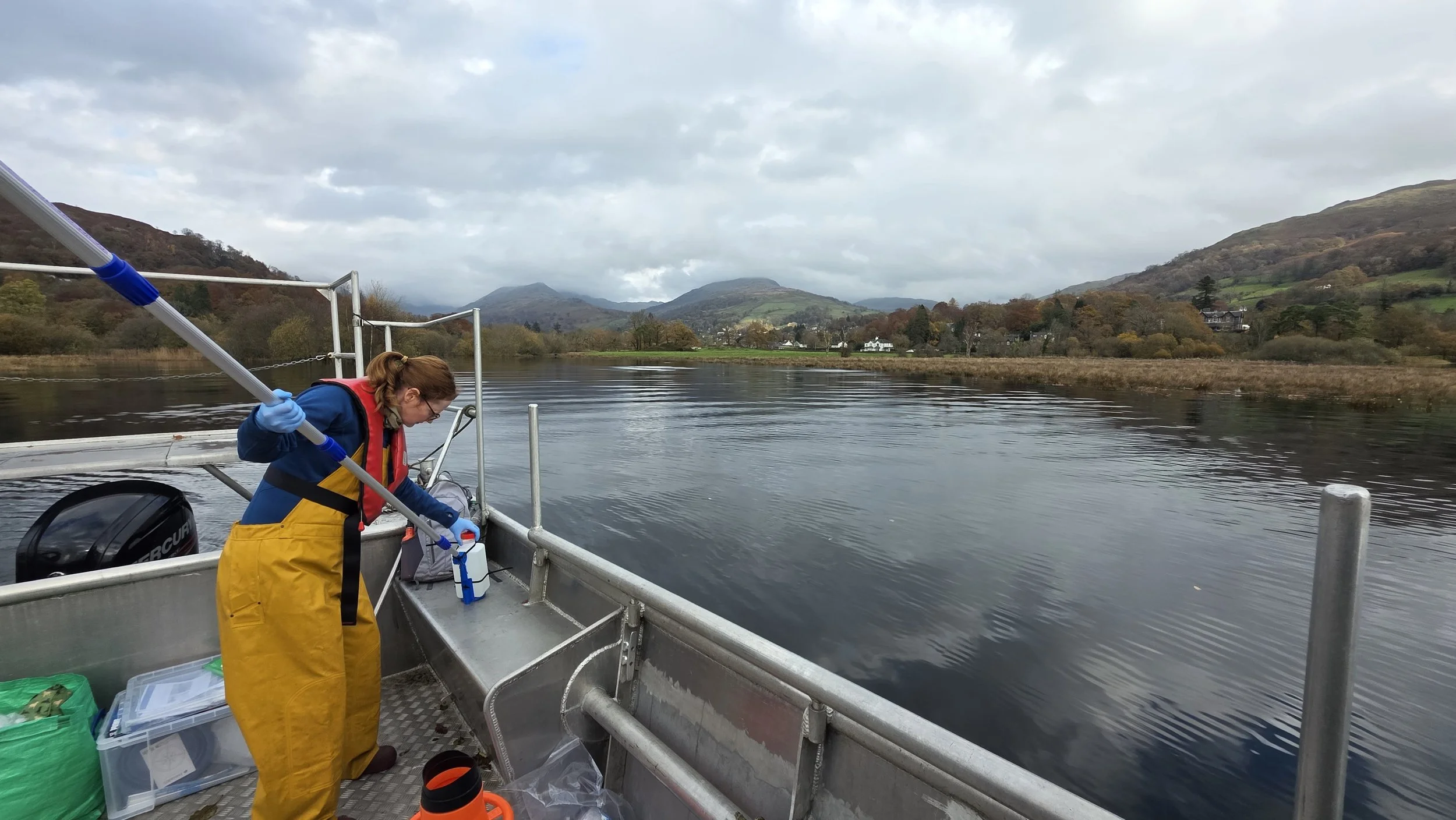
Understanding where Arctic charr are still spawning is essential for protecting and restoring populations. Using environmental DNA (eDNA) methods, which detect fragments of fish DNA in the water, known and potential spawning grounds in Windermere and nearby waterbodies were surveyed to determine presence of Arctic charr. In Windermere there are separate autumn (November–December) and spring (January–March) spawning populations, and there is no interbreeding between the two. By comparing these results with previous surveys in 2017, we can track how populations have changed over time.
Dr. Lori Lawson Handley, Freshwater Molecular Ecologist at UKCEH, on eDNA research studying Arctic charr and wider fish populations in the Lake District
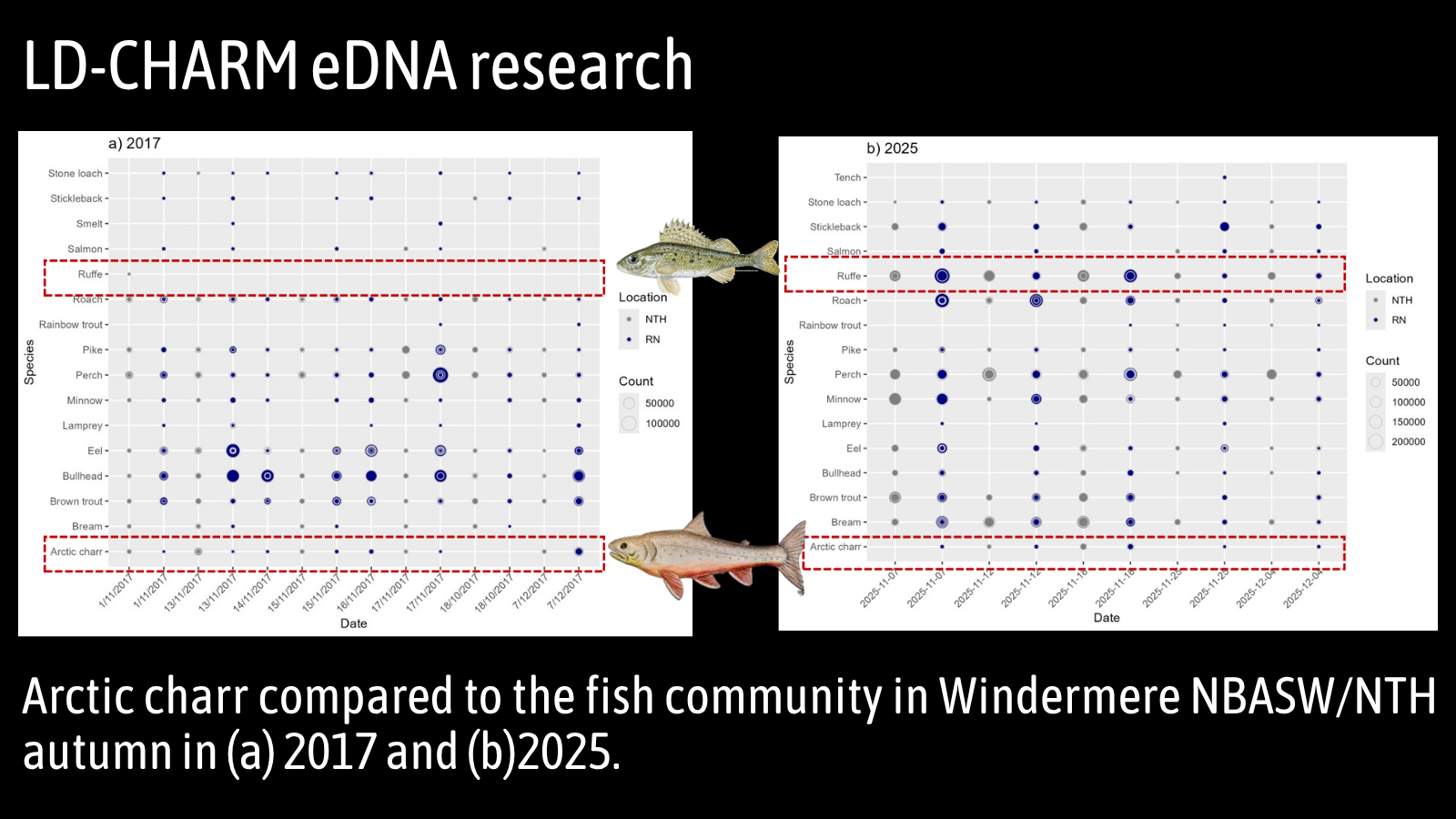
FISH COMMUNITY 2017 vs 2025 (Windermere North Basin)
What did the eDNA sampling detect in 2025, in Windermere North Basin, compared to the data from 2017?
Environmental DNA (eDNA) sampling detected Arctic charr on fewer sampling occasions in 2025 than in 2017, while detections of introduced ruffe and roach were more frequent and showed stronger eDNA signals in 2025. Circle size represents the amount of species-specific DNA detected in each sample; NTH and NBASW are different spawning sites in the North basin. Although eDNA signal strength is not a direct measure of fish abundance, the results suggest a shifting fish community between 2017 and 2025, with Arctic charr becoming less prominent relative to some other species.
KEY FINDINGS: status of Arctic charr populations in Windermere & beyond
Continued decline. Fewer detections and poorer eDNA signals in 2025.
Restricted to the North Basin. No Arctic charr detected in the South Basin. Autumn spawners only detected at a few sites.
NO spring spawning detected. No Arctic charr DNA detected at historic spring spawning sites.
Invasive species on the rise. Ruffe and roach were more abundant and widespread.
Hope in the River Brathay. Arctic charr were detected in the Brathay during autumn.
No Arctic charr DNA was detected in any of the other waterbodies surveyed. Arctic charr once found in Rydal Water and Goat’s Water were not detected, and speculative checks of Ghyll Head Reservoir and Seathwaite Tarn showed no presence either.
[2] WINDERMERE HABITAT CONDITION: Assessing the condition of Arctic charr spawning habitat
The LD-CHARM research has delivered data to provide an understanding of spawning habitat decline for Arctic charr in the Windermere
Good spawning habitat condition is essential for successful Arctic charr reproduction. Good quality spawning habitat is somewhat similar to that of salmon and trout, with clean cobble/pebble/gravels needed to ensure good waterflow over the eggs during incubation. Hydroacoustic surveys of the lakebed can tell us whether these hard substrates are present, or if they are being choked by softer silt and organic material which would smother eggs. Photographic surveys help to ground-truth findings. The results show widespread deterioration in habitat quality, with softer substrates, increased fine sediment and algal growth likely reducing egg survival and development.
How does hydroacoustics provide data about the condition of a lakebed?
We used hydroacoustics to measure lakebed hardness. Sound waves are sent from our boat down to the lakebed. The strength of the resulting echo tells us how hard the lakebed is. Strong echoes back mean the substrate is hard, whereas softer substrates absorb the sound more, resulting in quieter echoes.
Dr. Iain Hill, Freshwater Ecologist at UKCEH, on the importance of good habitat conditions for Arctic charr spawning in the Lake District
Underwater photographic surveys showing habitat deterioration between 2017 and 2026
Underwater photographs at Holbeck Point spawning ground for (a) 2017 and (b) 2026.
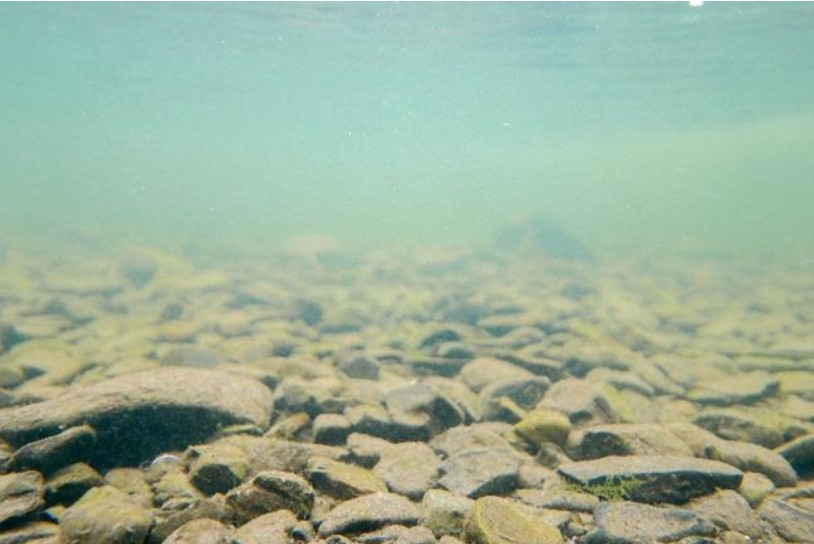
(a) Holbeck Point 2017
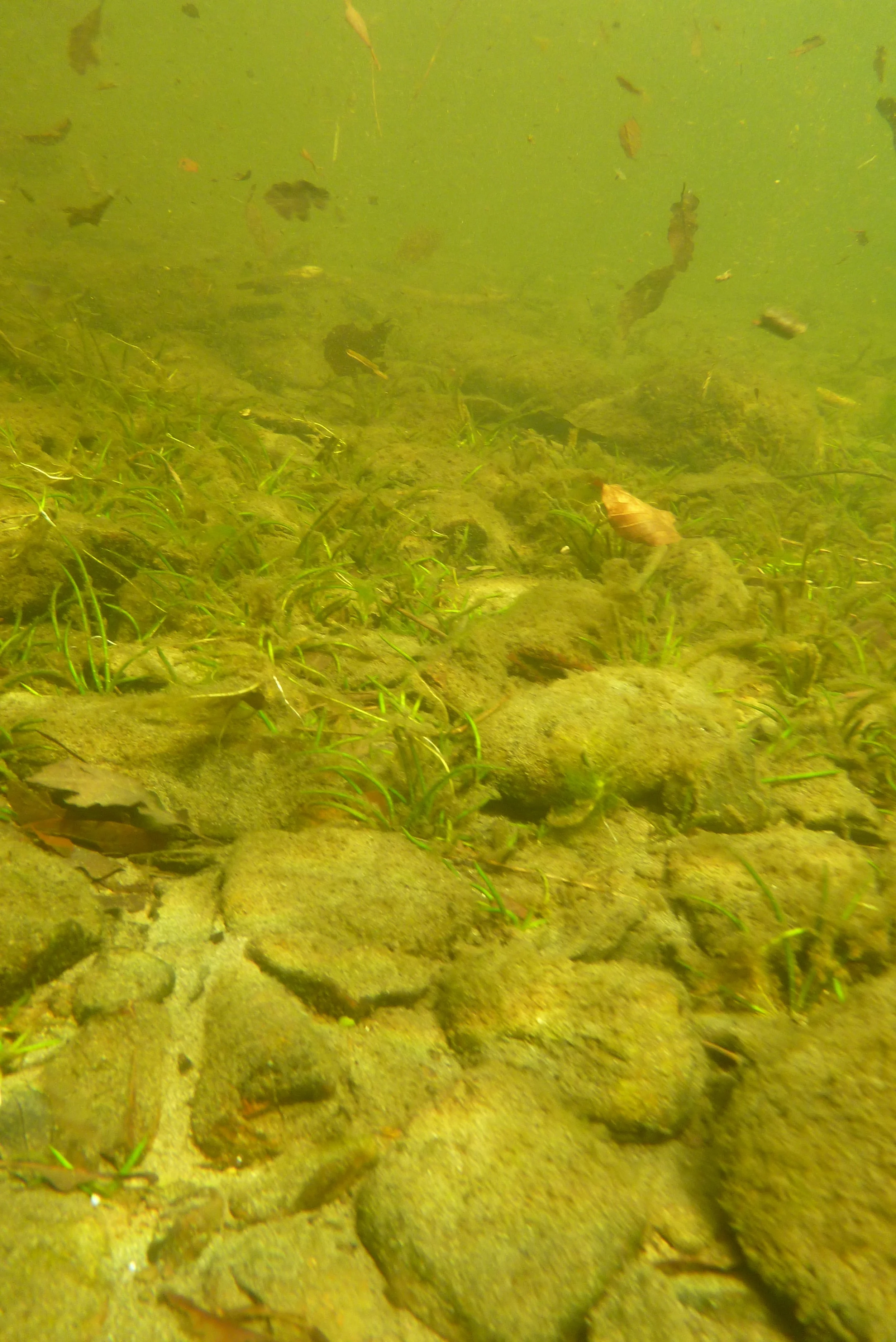
(b) Holbeck Point 2026
Underwater photographs at Red Nab spawning ground for (a) 2017 and (b) 2026.
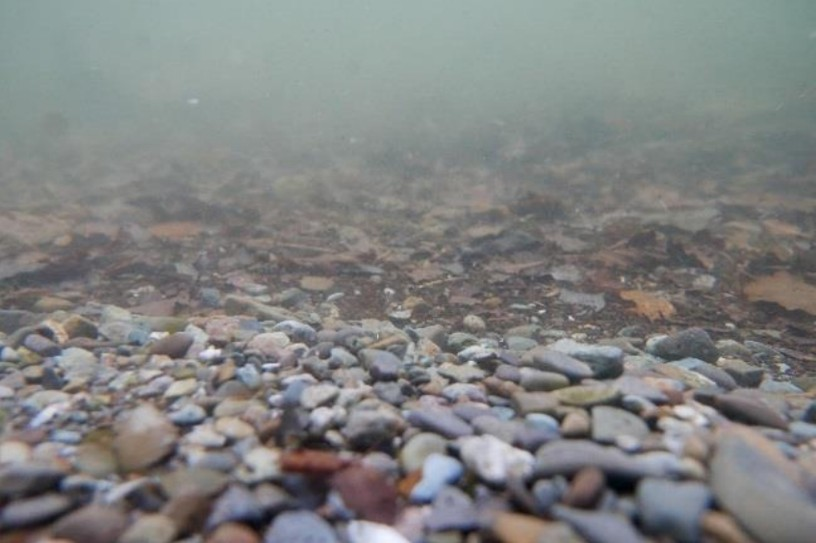
(a) Red Nab 2017
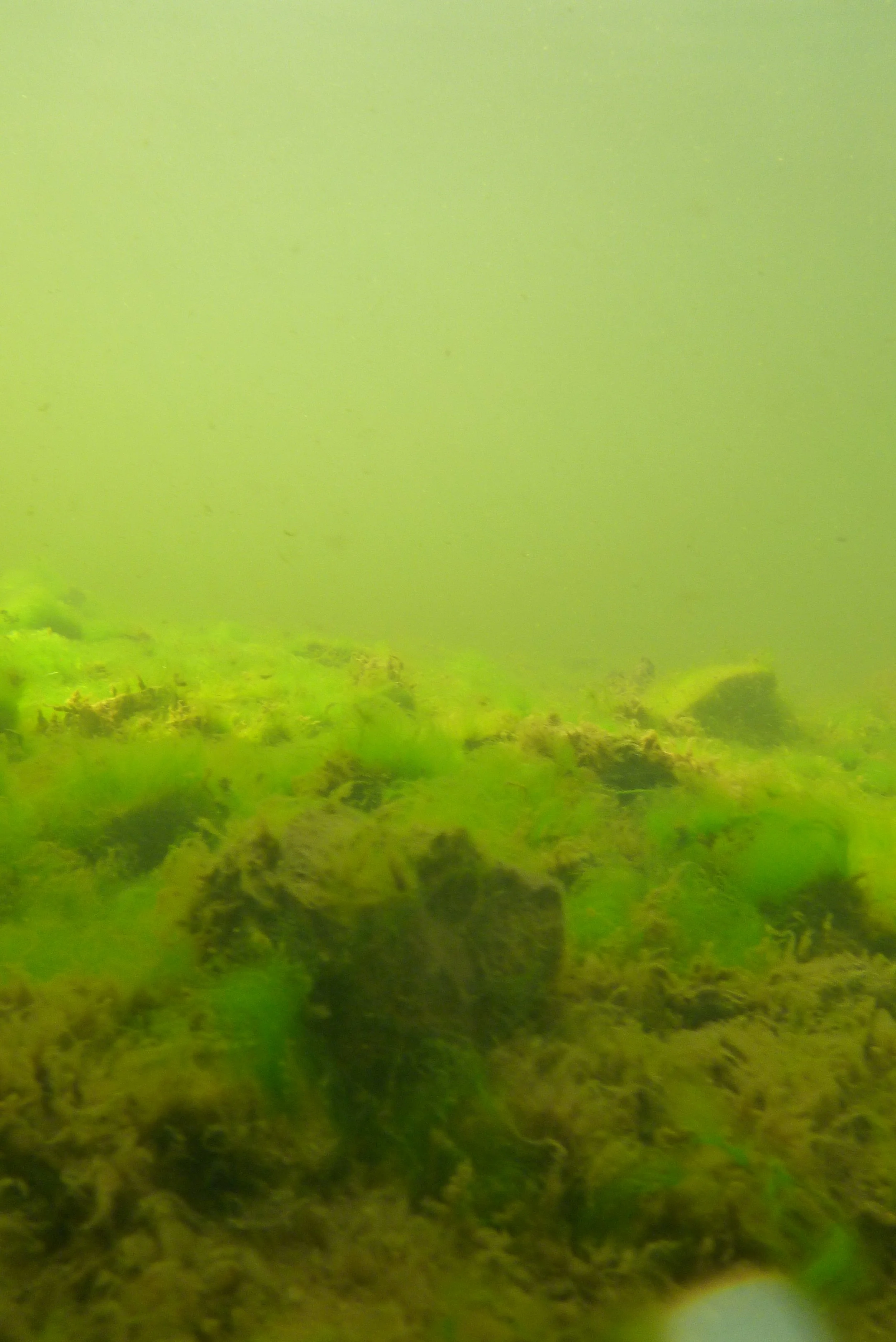
(b) Red Nab 2026
KEY FINDINGS: condition of Arctic charr spawning habitat
What did the hydroacoustic data from 2026 reveal about the condition of the lakebed in Windermere, compared to the data from 2017?
The surveys revealed a marked decline in spawning habitat quality at both spring and autumn spawning sites, with evidence that conditions for successful reproduction have deteriorated since 2017.
Spawning grounds are increasingly affected by fine sediment and algal accumulation, reducing the availability of the clean substrates needed for successful egg development.
These findings identify habitat degradation as a major factor contributing to the decline of Arctic charr and highlight habitat restoration as an urgent conservation priority.
Spawning habitats have deteriorated
60% habitat softening over 8 years
Silt and algae have increased
Poor conditions threaten egg survival
Habitat decline mirrors population decline
Better habitats are near river inflows
Spawning habitat quality has declined markedly since 2017. Restoring clean, hard spawning substrates is a high priority for Arctic charr recovery in Windermere.
[3] GENETIC DIVERSITY: Investigating the genetic diversity of Arctic charr populations in the Lake District
How can understanding Arctic charr genetic diversity help inform conservation of populations in the Lake District?
Species conservation must consider the genetics of different populations to ensure important differences are maintained, and that populations which have evolved in a specific way are protected. We can use historic archives like the FBA fish scale collection, dating back to the 1940s, to investigate population genetics of Arctic charr and how it has changed over time. This provides us with critical evidence for how populations of Arctic charr could, and should, be managed and conserved.
Dr. Louise Lavictoire, Head of Science at the FBA, on Arctic charr population genetics in the Lake District
KEY FINDINGS: genetic relationships between Arctic charr populations in the Lake District
What did the LD-CHARM research reveal about the genetic relationships between Arctic charr populations in the Lake District?
Genetic analyses showed that nearly every remaining Lake District Arctic charr population represents a distinct evolutionary lineage isolated since the end of the last Ice Age. Windermere contains genetically distinct spring- and autumn-spawning populations. The Thirlmere population looks to have been introduced from Windermere spring-spawning individuals, providing a unique opportunity to conserve this failing population in Windermere. These findings provide key evidence to guide conservation activities, and to inform any future stocking programmes while safeguarding each population's unique genetic identity.
Most Lake District populations are genetically unique. The genetically unique Lake District Arctic charr populations should be managed separately.
Windermere spring & autumn spawners are genetically distinct. The river-running population which spawns in the River Brathay is not different to the autumn spawners which spawn in the lake.
Thirlmere may preserve a disappearing lineage. Thirlmere charr appear to be descendants of Windermere North Basin spring-spawners and could therefore provide an ark population.
River Brathay remains a recovery opportunity. Arctic charr in the River Brathay are genetically identical to Windermere autumn spawners, suggesting river spawning could recover if suitable habitat is restored.
WHERE TO NEXT?: Conservation outcomes and next steps for the LD-CHARM partnership
This initial research carried out by the LD-CHARM partnership has provided key evidence for drivers behind the decline of Arctic charr populations in Windermere and has given us insights into the unique genetic diversity that underpins long-term survival of the species. Next we need to understand what the picture looks like for the other seven populations Lake District. Most importantly however, we need to urgently address key pressures being posed by nutrient enrichment, invasive species, and rising water temperatures.
Surveys have revealed continuing population declines in Windermere, caused by widespread deterioration of spawning habitat, increasing pressures from invasive species, and rising water temperatures driven by climate change.
Our understanding of the genetic diversity and differentiation of populations has informed how we might manage and conserve different populations.
Together, these findings provide the evidence needed to prioritise conservation actions and guide the next phase of Arctic charr recovery.
Is recovery possible for Arctic charr populations in the Lake District?
Arctic charr remain one of England’s most threatened freshwater fish, but recovery is still possible.
Evidence gathered through the LD-CHARM project provides the strongest scientific foundation yet for coordinated conservation. With sustained investment, collaborative partnerships and targeted restoration, there is a clear opportunity to secure the future of this iconic Ice Age survivor.
Partners on the LD- CHARM research findings 2026
With thanks to Natural England for funding this work through their Species Recovery Programme, the Environment Agency for additional funding and to local charr fishermen for supporting the project. Many thanks to Lindsay McCrae for the amazing Arctic charr photography.
The LD-CHARM partnership
LD-CHARM is a partnership working together for the future of Arctic charr in the Lake District. A unique collaboration between the FBA, Natural England, UK Centre for Ecology & Hydrology, University of the Highlands and Islands (UHI Inverness), University of Glasgow, Environment Agency, Lake District National Park Authority, Institute of Fisheries Management and industry specialists, alongside invaluable contributions from local fishers and communities.
By combining state-of-the-art science, decades of data and expertise, and local knowledge, the partnership is uniquely positioned to deliver meaningful conservation outcomes for the Arctic charr.
Find out more about the LD-CHARM project and partnership.
About the Natural England Species Recovery Programme
Natural England’s Species Recovery Programme (SRP), launched in 1991 and funded by Defra, is one of England’s longest-running conservation initiatives. It has helped recover over 70 endangered species, including the large blue butterfly, red kite, and pool frog. The programme delivers targeted conservation through partnerships with academics, NGOs, landowners, and local communities.
If you would like to support our work to help conserve Arctic charr in the Lake District, please consider donating to this project.
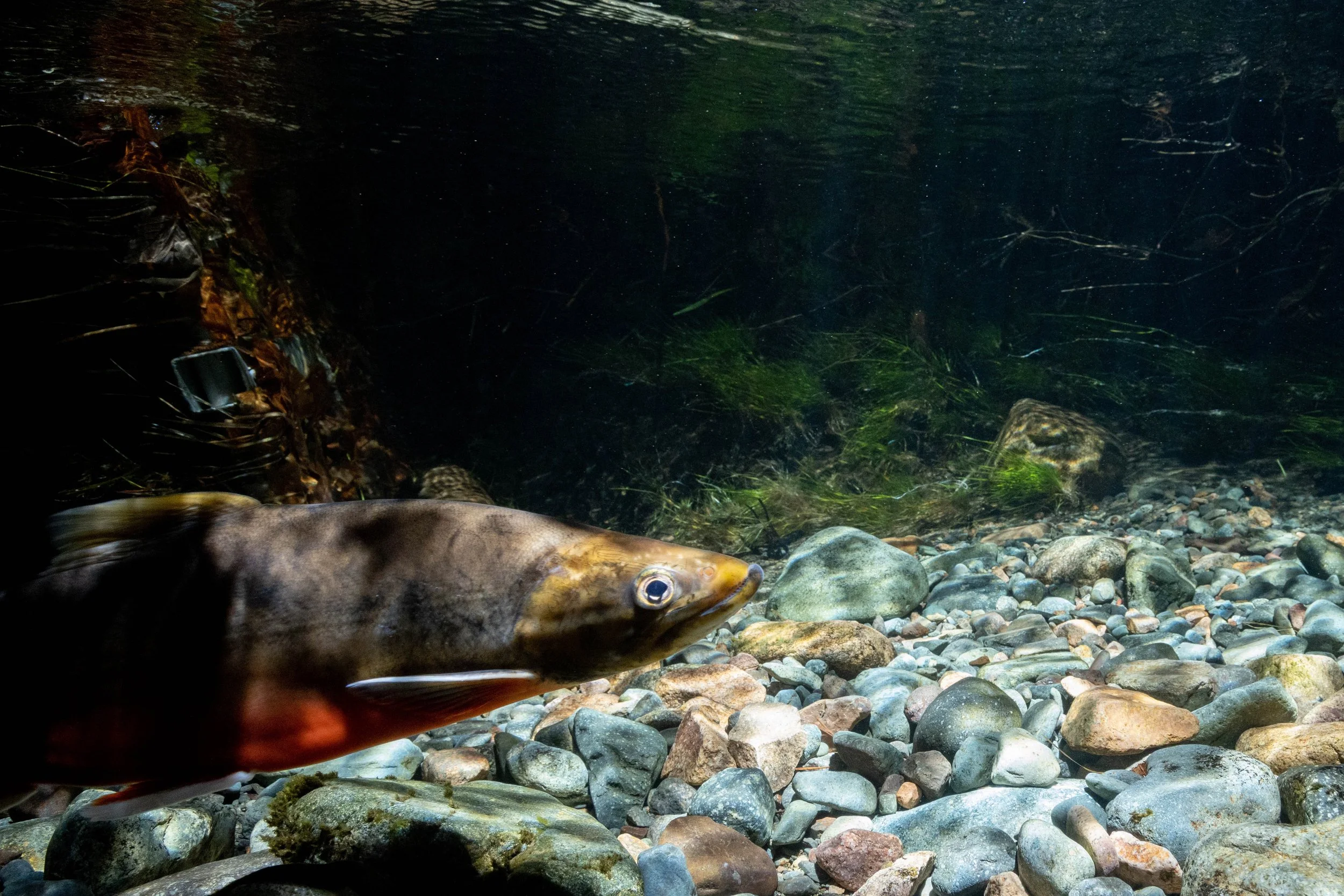
Underwater photograph of a Lake District Arctic charr by Lindsay McCrae.