
29 October, 2026
The Freshwater Biological Association (FBA) is over the moon to announce that funding has been secured from Natural England’s Enabling Nature Recovery programme to support the conservation of this fascinating, often misunderstood species in western and northern Cumbria.
Despite its spooky, bloodsucking reputation, the medicinal leech is an important part of Cumbria’s freshwater ecosystems. However, populations have declined across Britain due to overharvesting, habitat loss, changes in land management and deteriorating water quality. There’s still much we don’t know about where medicinal leeches survive in Cumbria and what they need to thrive.
Working with Freshwater Habitats Trust, Buglife and Cumbria Wildlife Trust, the FBA will begin by investigating historical records and habitat data to identify potential sites for future surveys. We’ll also visit ponds and tarns to assess habitat condition and deploy light and temperature sensors to help us understand the environmental conditions that influence medicinal leech activity.
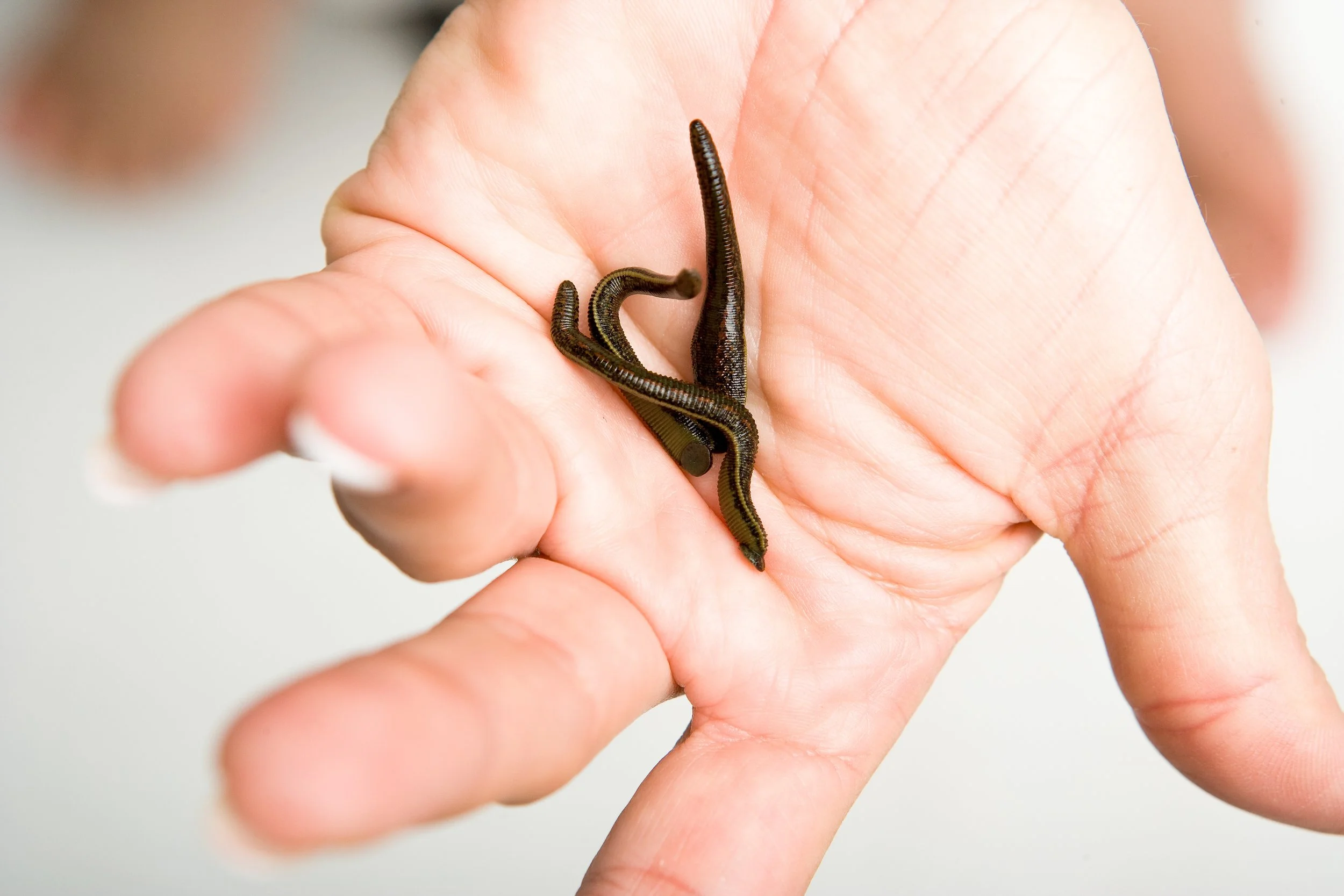
Meet the medicinal leech: an overlooked species of Cumbria’s freshwater habitats
The medicinal leech (Hirudo medicinalis) is the UK’s largest native leech, recognisable by the distinctive reddish-orange and yellow stripes along a dark back. Classified as Near Threatened on the IUCN Red List, the species is declining and depends on clean freshwater habitats, including unpolluted ponds, lochs, marshes and slow-flowing streams. The species is fully protected under Schedule 5 of the Wildlife and Countryside Act 1981, highlighting the importance of conserving its populations and the freshwater habitats on which it depends.
It is a most intriguing freshwater species, with five pairs of eyes and a highly flexible, segmented body that enables them to move with remarkable agility through water. Another fascinating feature of the medicinal leech is how they breathe through their skin, making them particularly vulnerable to water pollution.
“Medicinal leeches have captured people’s imaginations for centuries, featuring in folklore, medicine and more than a few spooky stories. Yet beyond their reputation, they are a fascinating and important part of our freshwater wildlife. Despite this, we still know surprisingly little about where they occur in Cumbria and what they need to thrive. This project is a great opportunity to fill some of those gaps and help protect these remarkable animals and the habitats they depend on.”
Did you know that medicinal leeches are hermaphrodites with multiple jaws?
These remarkable freshwater leeches possess both male and female reproductive organs, located near the head. However they are not able to self-fertilise, so reproduction requires two individuals.
Perhaps best known for their blood-feeding behaviour, it is impressive to observe that they use three jaws equipped with around 100 tiny teeth in each jaw, to make a precise incision in the skin. Their bite typically leaves a distinctive Y-shaped or inverted Y-shaped mark, often surrounded by a small circular imprint. Although their feeding behaviour may seem frightful, compounds in their saliva, including anticoagulants that prevent blood clotting and substances with anaesthetic effects, help make the bite largely painless. So much less terrifying, and actually pretty awesome!
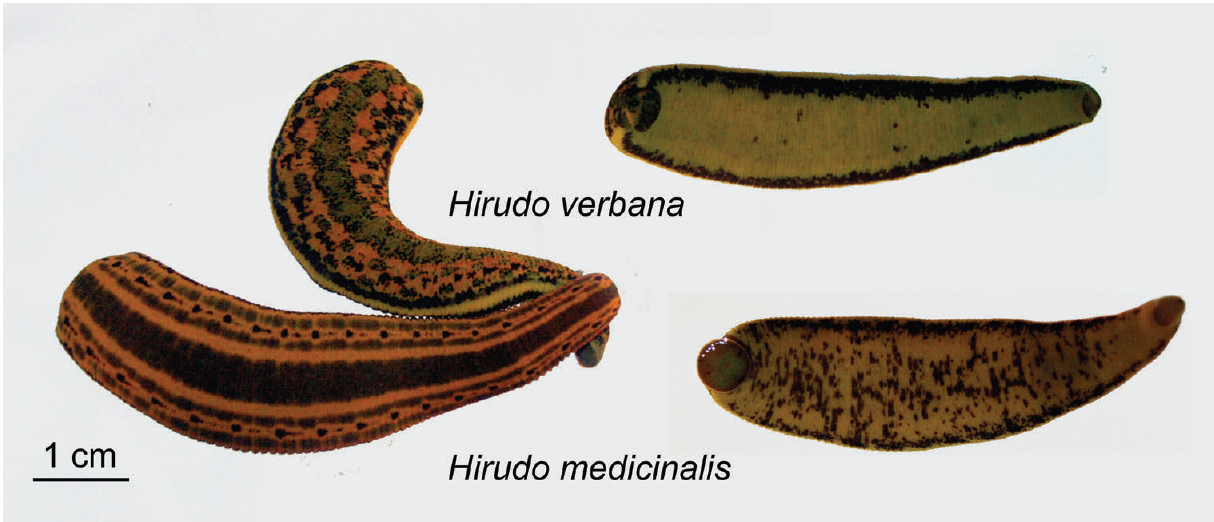
The markings on live adults of Hirudo medicinalis and Hirudo verbana in dorsal and ventral views (left and right respectively). Photo: Ulrich Kutschera. From Freshwater Leeches of Britain and Ireland: Keys to the Hirudinea and a Review of their Ecology by J. M. Elliott and Michael Dobson.
Did you know that one of William Wordsworth’s poems was inspired by a Lake District leech-gatherer?
“The Leech-Gatherer” formally titled “Resolution and Independence”, was written by the English Romantic poet William Wordsworth in 1802. Published in 1807, the poem is describes Wordsworth's encounter with a leech-gatherer near his home at Dove Cottage, Grasmere, in the Lake District.
Read “Resolution and Independence” by William Wordsworth on the Poetry Foundation website.

Woodcut print of a woman applying a medicinal leech to her forearm, from a 1639 treatise titled Historia medica, in qua libris IV. animalium natura, et eorum medica utilitas exacte & luculenter tractantur by Guillaume van den Bossche.
Can you help us uncover Cumbria’s hidden medicinal leeches?
As part of this project, we’re keen to hear from members of the public who know of ponds, tarns or wetlands in Cumbria where medicinal leeches have been spotted, either recently or in the past. We’d also love to hear about wetlands that you think could provide suitable habitat for this elusive species.
Have you seen a medicinal leech, or know of a pond or wetland that might be worth investigating? We’d love to hear from you! Please get in touch with Dr Sarah Raubenheimer at the Freshwater Biological Association and share any records, sightings or local knowledge that could help guide our work.
Every clue could help us uncover more about where this fascinating species survives and how we can help it recover!
Copies of Freshwater Leeches of Britain and Ireland available in our shop
If you'd like to discover more about leeches, we're delighted to let you know that our Freshwater Leeches of Britain and Ireland: Keys to the Hirudinea and a Review of their Ecology by J. M. Elliott and Michael Dobson is available in our shop.
This new, updated edition of an identification key to freshwater leeches, is an extensive advancement from the last version which was published in 1979, and provides an approachable publication for those less acquainted with the leech. Find out more and get stuck into a copy today!
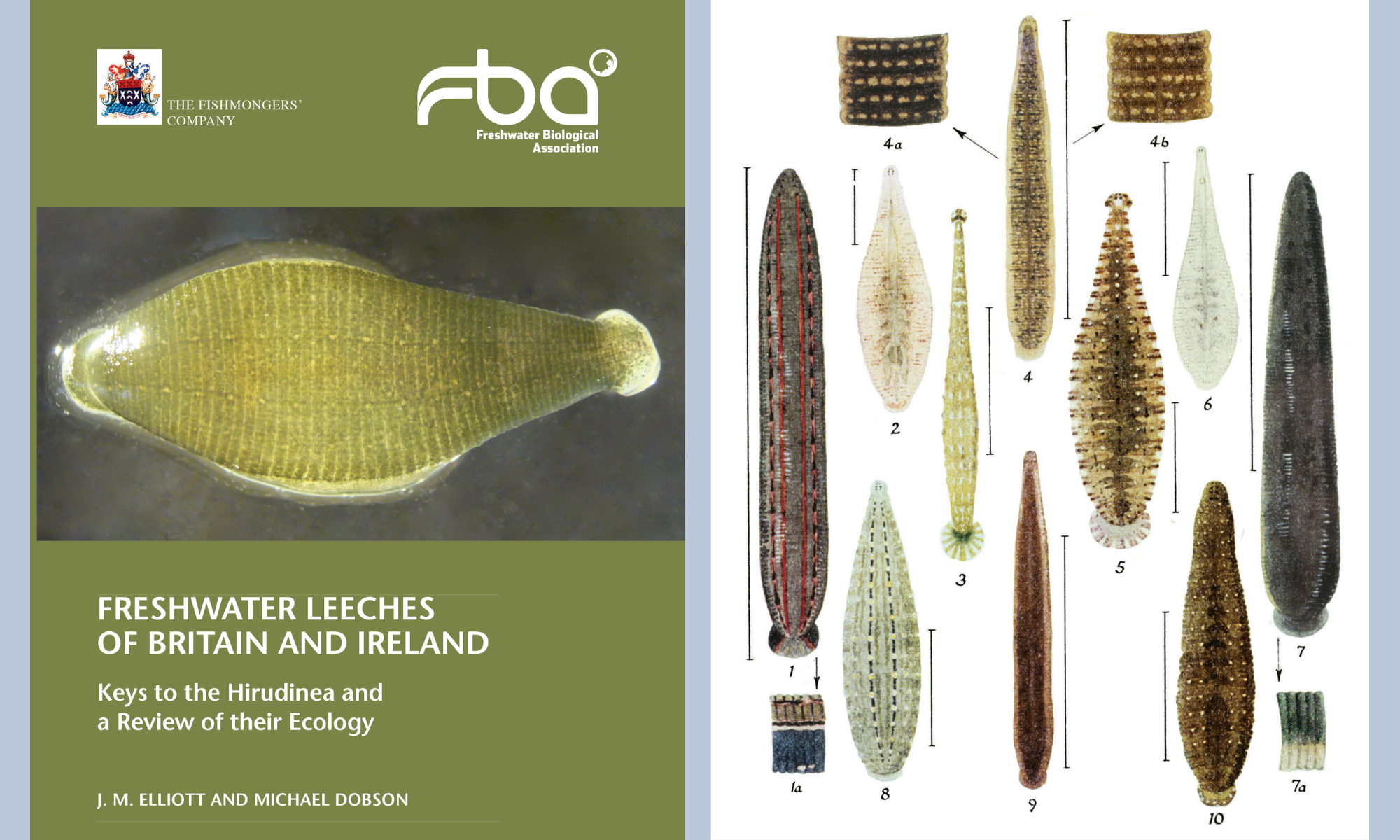
Cover (left) of Freshwater Leeches of Britain and Ireland: Keys to the Hirudinea and a Review of their Ecology by J. M. Elliott and Michael Dobson. Plate 1. (right) 1. Hirudo medicinalis. (1a, a few annuli in lateral view). 2. Alboglossiphonia heteroclita. 3. Piscicola geometra. 4. Erpobdella octoculata. (4a and 4b, a few annuli in dorsal view, enlarged to show variation in the amount of black pigment present). 5. Hemiclepsis marginata. 6. Helobdella stagnalis. 7. Haemopis sanguisuga. (7a, a few annuli in lateral view). 8. Glossiphonia complanata. 9. Erpobdella testacea. 10. Theromyzon tessulatum.
Beyond the bloodsucking reputation… here’s some fascinating facts and features of Hirudo medicinalis
The UK’s largest native leech: The medicinal leech is the largest leech native to the UK, recognisable by its dark brown or black body with distinctive reddish-orange and yellow stripes along its back.
Conservation status: The species is classified as Near Threatened on the IUCN Red List and is reported to be declining, highlighting the importance of conserving its populations and freshwater habitats.
Protected by law: The medicinal leech is protected under Schedule 5 of the Wildlife and Countryside Act 1981. It is an offence to handle the species without the appropriate licence.
Habitat requirements: Medicinal leeches are typically associated with clean, freshwater habitats, including lochs, ponds, marshes and slow-flowing streams. They are vulnerable to pollution because they breathe through their skin.
Distinctive anatomy: The medicinal leech has five pairs of eyes and a highly flexible body divided into approximately 33–34 segments, which contribute to its remarkable ability to change shape.
Agile freshwater moves: Leeches can stretch and flatten their bodies into a wave-like shape when swimming. They use their rear sucker as a paddle, helping them move efficiently and elegantly through the water.
Remarkable reproduction: Medicinal leeches are hermaphrodites, possessing both male and female reproductive organs. However, they cannot self-fertilise, so reproduction requires two individuals.
Specialised feeding adaptations: The medicinal leech has three jaws equipped with tiny teeth, which it uses to make an incision when feeding on blood. Its saliva contains anticoagulants that prevent blood from clotting, as well as substances with anaesthetic effects that can make the bite difficult to detect.
Importance of freshwater conservation: The species’ association with clean, unpolluted habitats makes it a useful focus for raising awareness of freshwater biodiversity and the need to protect sensitive wetland and aquatic environments.
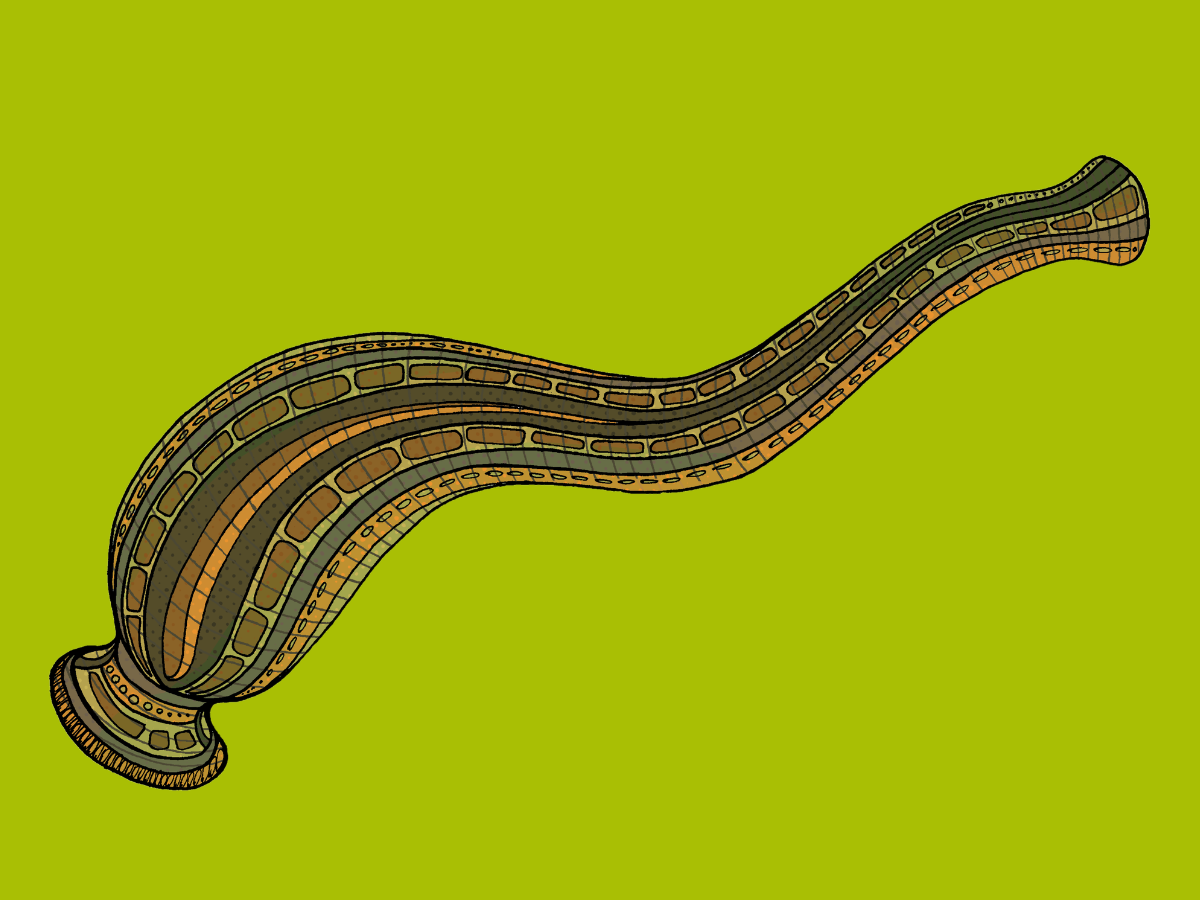
Illustration of Hirudo medicinalis… the magnificent medicinal leech.
Interested in discovering more?
Natural England leads the rollout of England's The Nature Recovery Network, which aims to restore wildlife habitats, halt species decline, and build climate resilience.
Find out more about the medicinal leech in Buglife’s Bug Directory.
Explore the Freshwater Habitats Trust: Medicinal Leech Recovery Project.