
Talking entomology and rare caddisflies with Sharon and Peter Flint
20 October, 2026
The FBA is excited to be embarking on a new species recovery project for the Malham Sedge (Agrypnetes crassicornis) this year.
This partnership project, funded by Natural England’s Species Recovery Programme (SRP), is led by the Species Recovery Trust and delivered in collaboration with the FBA to help secure the future of this critically endangered caddisfly.
The Malham Sedge is an incredibly rare, and rather elusive, caddisfly in Britain that is found exclusively at Malham Tarn in North Yorkshire. Much of what we currently know about this caddisfly comes from the dedication of local entomologists Sharon and Peter Flint, whose passion for Malham Tarn and its unique wildlife has helped transform our understanding of this remarkable species.
We were delighted to have the opportunity to catch up with Sharon and Peter to find out more about their interest in insects, and enthusiasm for the study of Agrypnetes crassicornis in the Malham Tarn National Nature Reserve (NNR).
Please could you tell us a little about your background… and what led you to the field of entomology?
Peter Flint’s father became interested in insects as a young boy, and entomology became a lifelong hobby which he shared with other members of his family. This meant that Peter was born into an entomological home environment where he was, from the age of three or four, frequently in the company of highly skilled and knowledgeable entomologists, and other field naturalists, who were his parents’ friends.
By the age of thirteen he had become a competent entomologist having served what amounted to an entomological apprenticeship, and at the age of twenty one had the good fortune to turn this hobby into a professional career, spending the next forty four years in the Biology Department at Lancaster University as curator of the teaching collections.
Sharon Flint became interested in insects when, as a little girl, she came across an ant and, rather than being put off, was intrigued by it. Her interest was sufficiently aroused for her to want to learn more about ants and other insects. Being unable to find anyone who could tell her all she wanted to know, this extremely knowledge thirsty girl set out to find out for herself all she could about the world around her, eventually securing a place at Lancaster University where she obtained a degree in ecology and an entomologist husband. She went on to do research on mayflies, stoneflies and caddisflies at Manchester Metropolitan University becoming a highly skilled and knowledgeable entomologist with a particular personal interest in caddisflies.
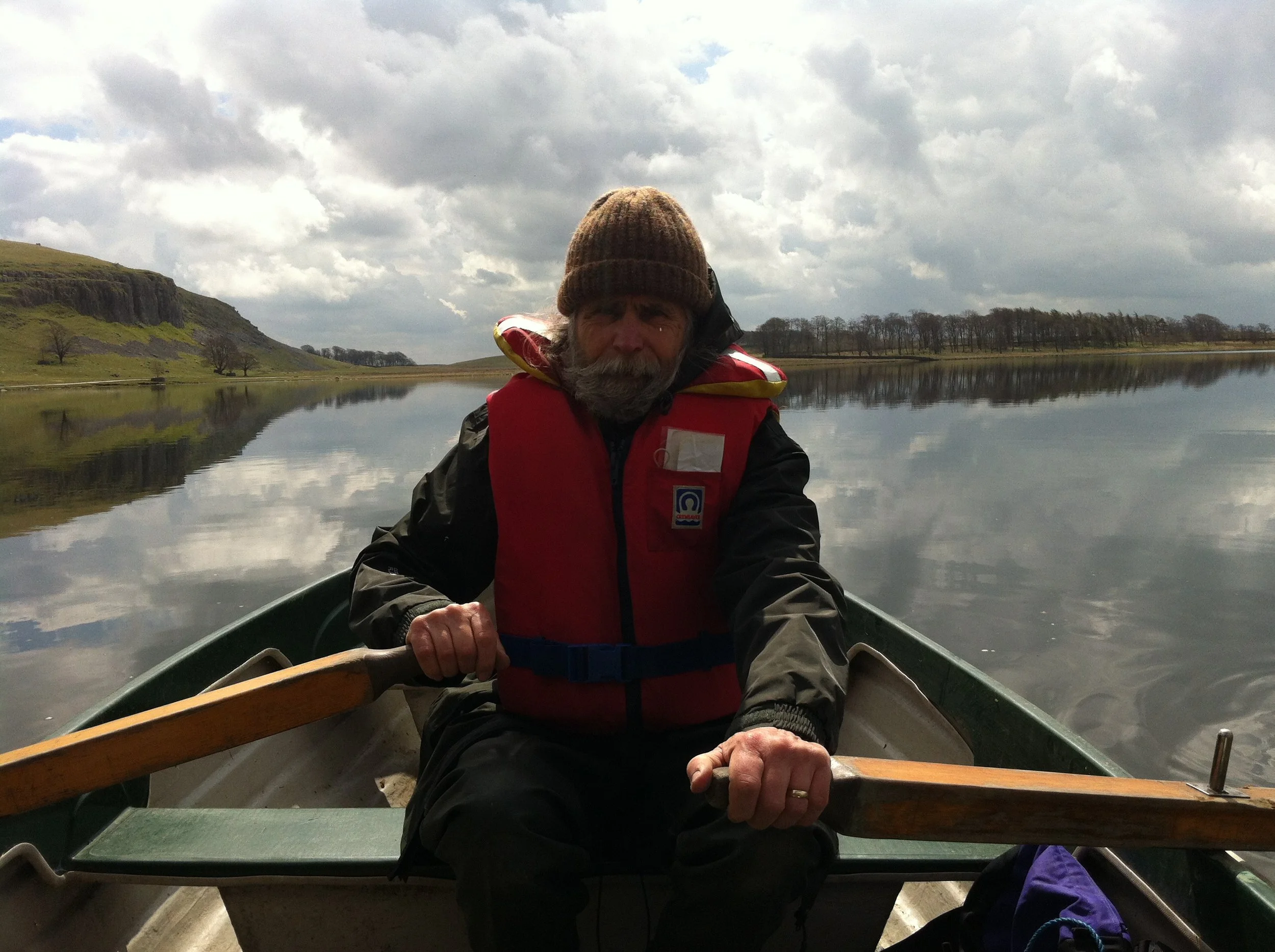
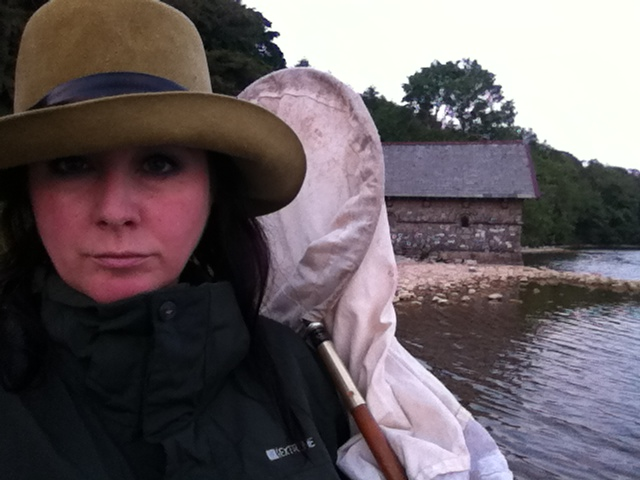
Peter Flint rowing a boat on Malham Tarn during a survey for Agrypnetes crassicornis (left), and Sharon Flint at Malham Tarn with a sweep net.
And how did this lead to your dedicated studies of this rare caddisfly in Yorkshire?
For some years we were Associate Tutors with the Field Studies Council (FSC), teaching courses on aquatic entomology at the Malham Tarn Field Centre until its closure in 2020. It was this teaching which introduced us to the fauna of the Malham Tarn NNR which we came to know through teaching field techniques to course participants and including specimens from the reserve in our teaching.
One of the highlights of the courses, for those participants who were interested in caddisflies, was the opportunity to see live specimens of the caddisfly Agrypnetes crassicornis (McLachlan, 1876); which has recently been given the vernacular (English) name ‘The Malham Sedge’; and who’s only known British breeding site is Malham Tarn.
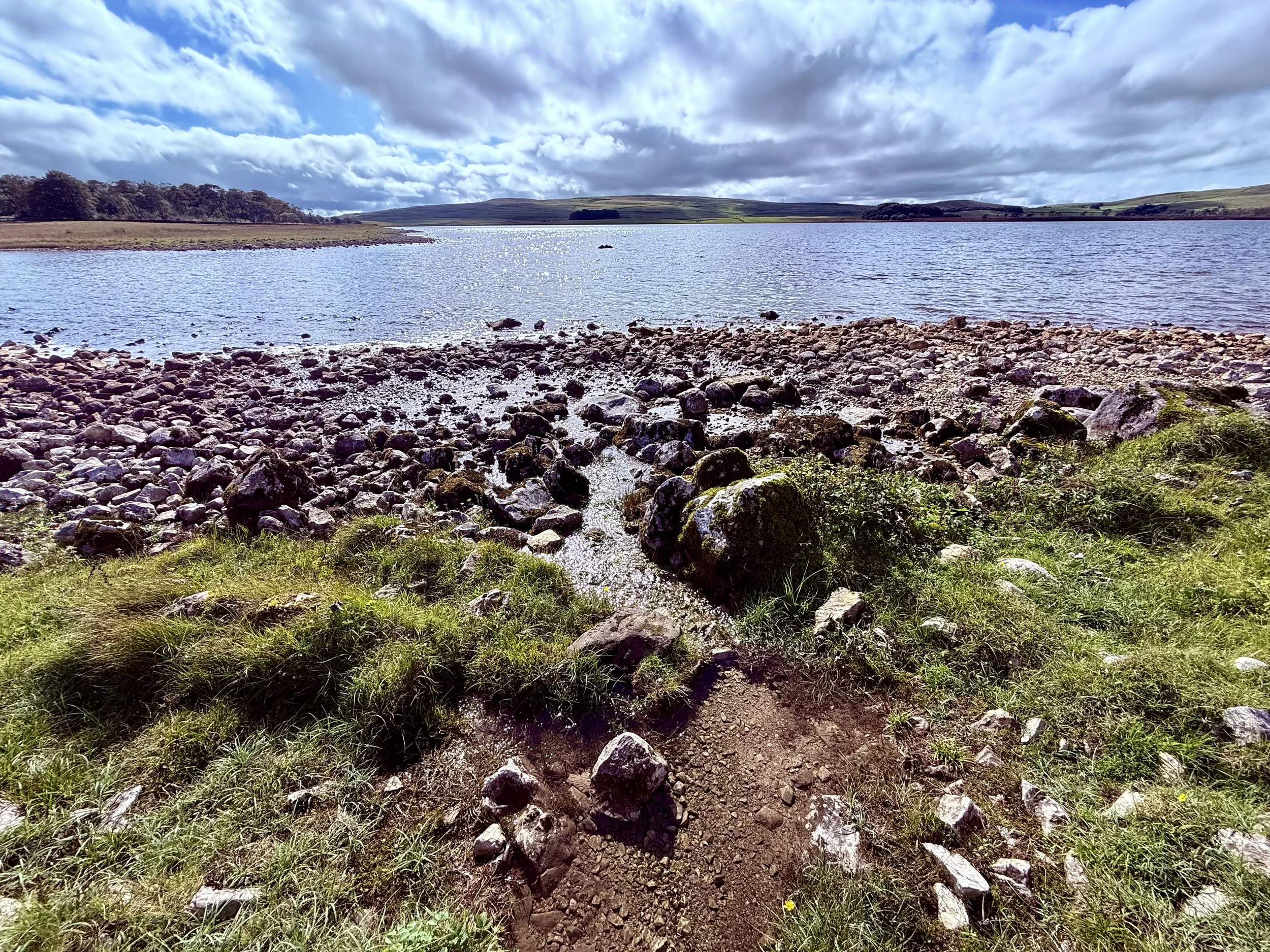
The Malham Tarn National Nature Reserve in the Yorkshire Dales, is managed by the National Trust.
Do you have any details on the first discovery of the Malham Sedge at Malham Tarn?
This caddisfly was discovered at Malham Tarn in the 1950s by Paul Holmes, who was the first FSC Head of Centre, and who happened to be both a keen fisherman and a caddis collector. Paul was out one night fishing on the tarn and noticed that there were adult caddisflies running about on the water’s surface. He was intrigued to see that some of them appeared to run much faster than others, so he caught some and on examining them found that there were two different species. One of which he was unable to identify and this turned out, when submitted to the British Museum, to be Agrypneses crassicornis, a new species for Britain though occurring in widely scattered localities across the Palearctic.
During the 70 or so years since this species was added to the British list several entomologists have visited Malham Tarn in the hope of seeing it, but there have been very few sightings actually reported and there was concern about its population status. We decided, in 2011, that as we were spending quite a bit of time at Malham in connection with our teaching we had the opportunity to spend time looking for Agrypneses crassicornis.
Using a grapnel from a rowing boat is a laborious and time-consuming exercise; it is also destructive of the vegetation which is being sampled. We were able to confirm that larvae of the Malham Sedge were present in the tarn and set our sights on looking for the adults, even though the adult activity season was said to be very short, as we felt that this would be less disruptive of the population and the habitat.
When we started looking the known activity season for Malham Sedge adults extended from mid-June to mid-July. We have been able to report seeing adult activity all the way through July and August right up to the 1st September. We have also enjoyed watching Agrypneses crassicornis running on the tarn surface at night and confirming Paul Holmes’ observation that they run far faster than the other species.
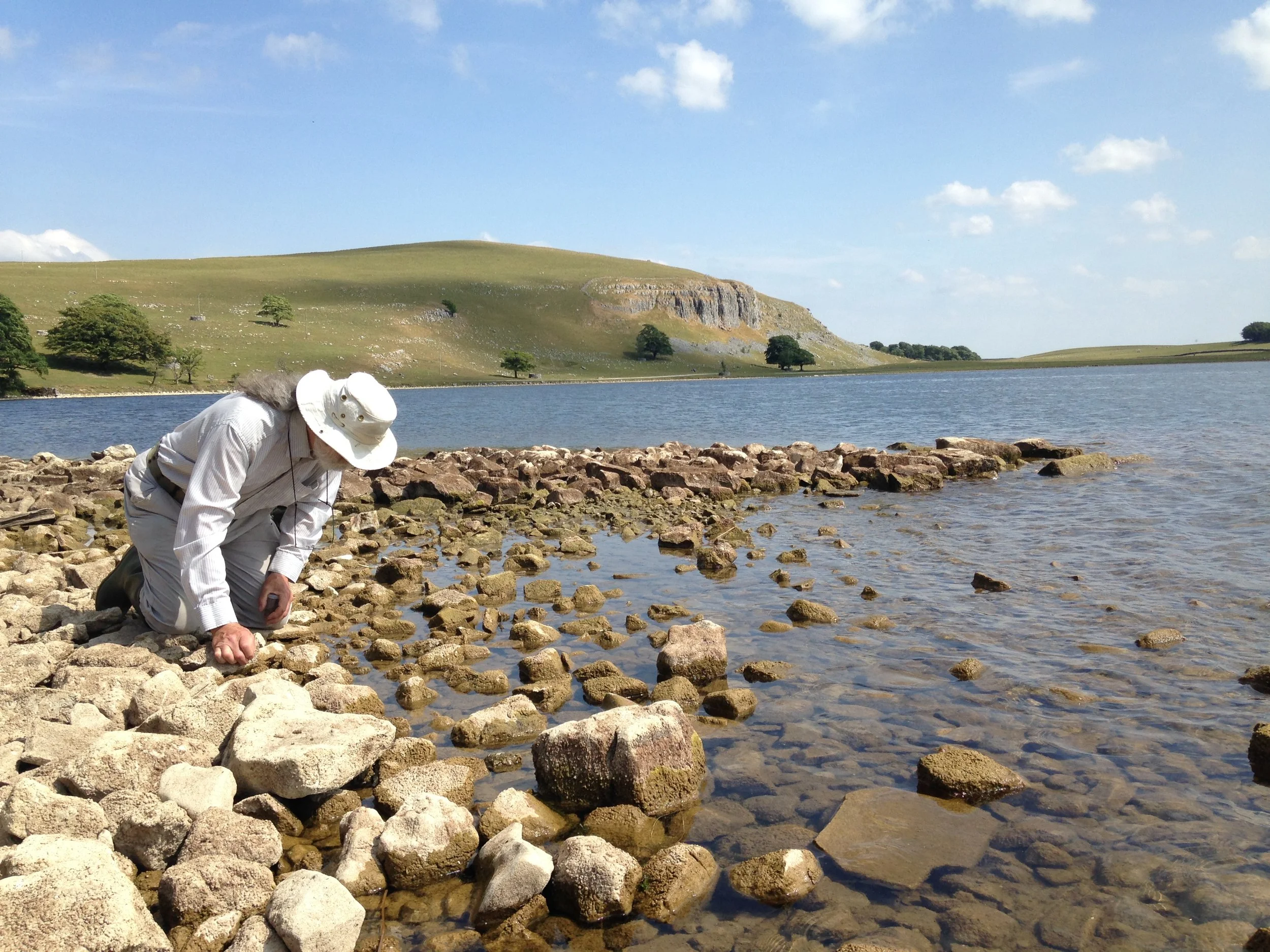
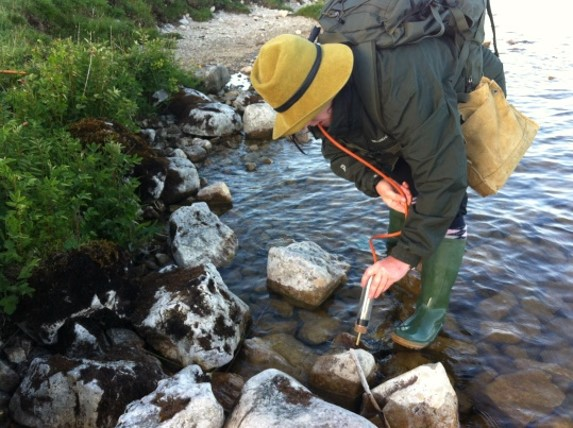
Peter Flint looking for caddis cast skins at Malham Tarn (left), and Sharon Flint pootering micro caddis in Malham Tarn (right).
“When we started looking the known activity season for Malham Sedge adults extended from mid-June to mid-July. We have been able to report seeing adult activity all the way through July and August right up to the 1st September. We have also enjoyed watching Agrypneses crassicornis running on the tarn surface at night and confirming Paul Holmes’ observation that they run far faster than the other species.”
Why do you think the Malham Sedge is only found in this one location in the UK?
Why Agrypneses crassicornis has not been seen anywhere else in Britain is very difficult to say. Adults are not easy to find at Malham Tarn, unless you know where to look, so the search effort required may be one reason why it is unrecorded elsewhere. The main reason Agrypneses crassicornis is classified, in Britain, as Critically Endangered is that it is only known from a single British locality.
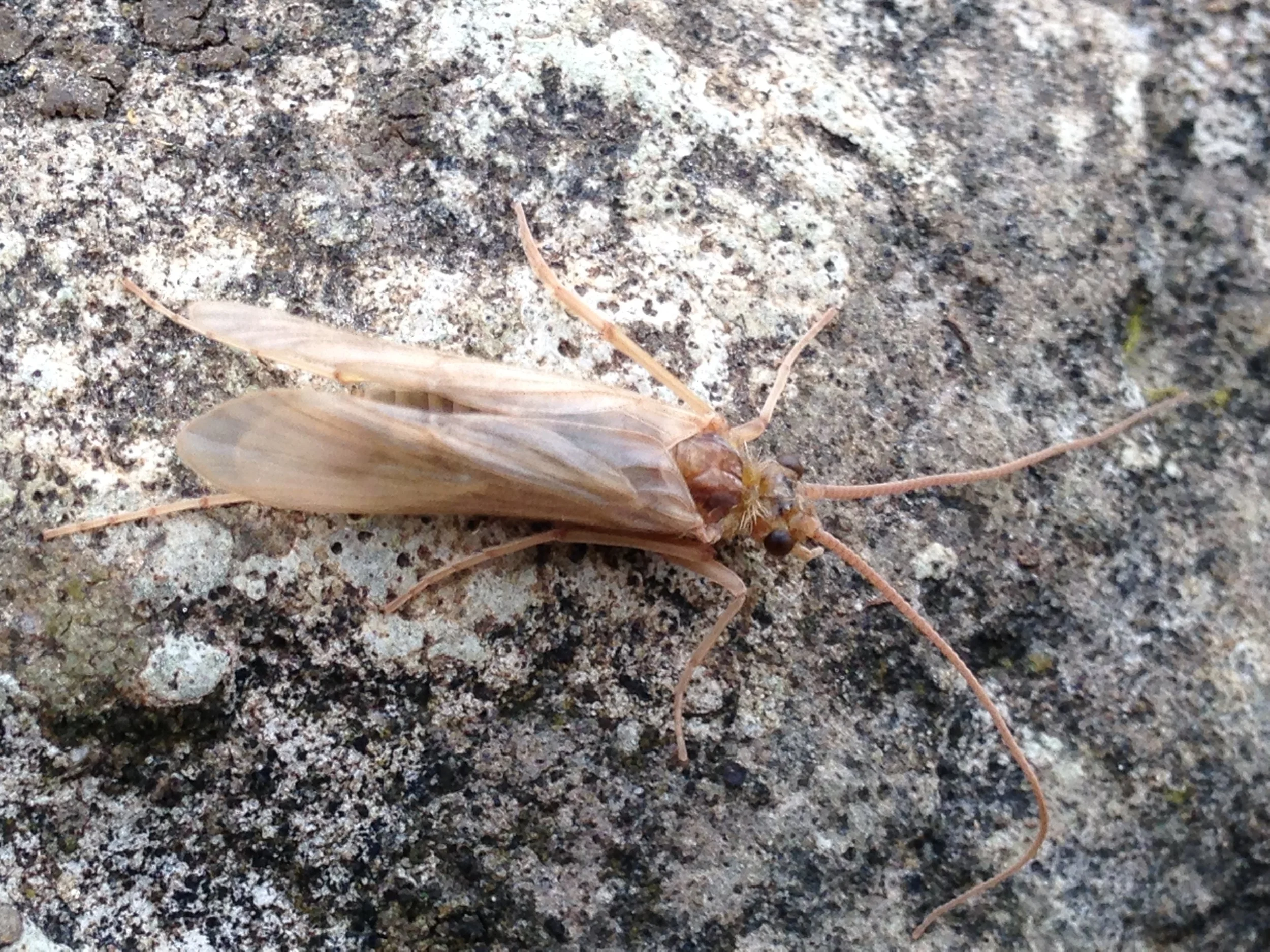
A rare sighting of the remarkable Malham Sedge, at Malham Tarn (photo credit Sharon Flint).
And could you tell us a bit about the uniqueness of this caddisfly and why does this species reside only in the freshwater ecosystem at Malham Tarn?
One unique feature of this species, which may contribute to its isolation, is that it does not fly. It is described as being flightless, but it has fully developed wings and we have seen one specimen actually flutter when falling from a height, though this observation could not be described as flying.
There are two reports of this species being found as sub fossil specimens in core samples, one near London and one near Windermere, so it is possible that it was once more widespread and common. What it is about Malham Tarn that attracted this species into residence is difficult to say but the high ionic content of the water seems to be a feature common to its other Palearctic sites.
The Malham Sedge is one of Britain's rarest insects and is currently known from just a single location: Malham Tarn in North Yorkshire.
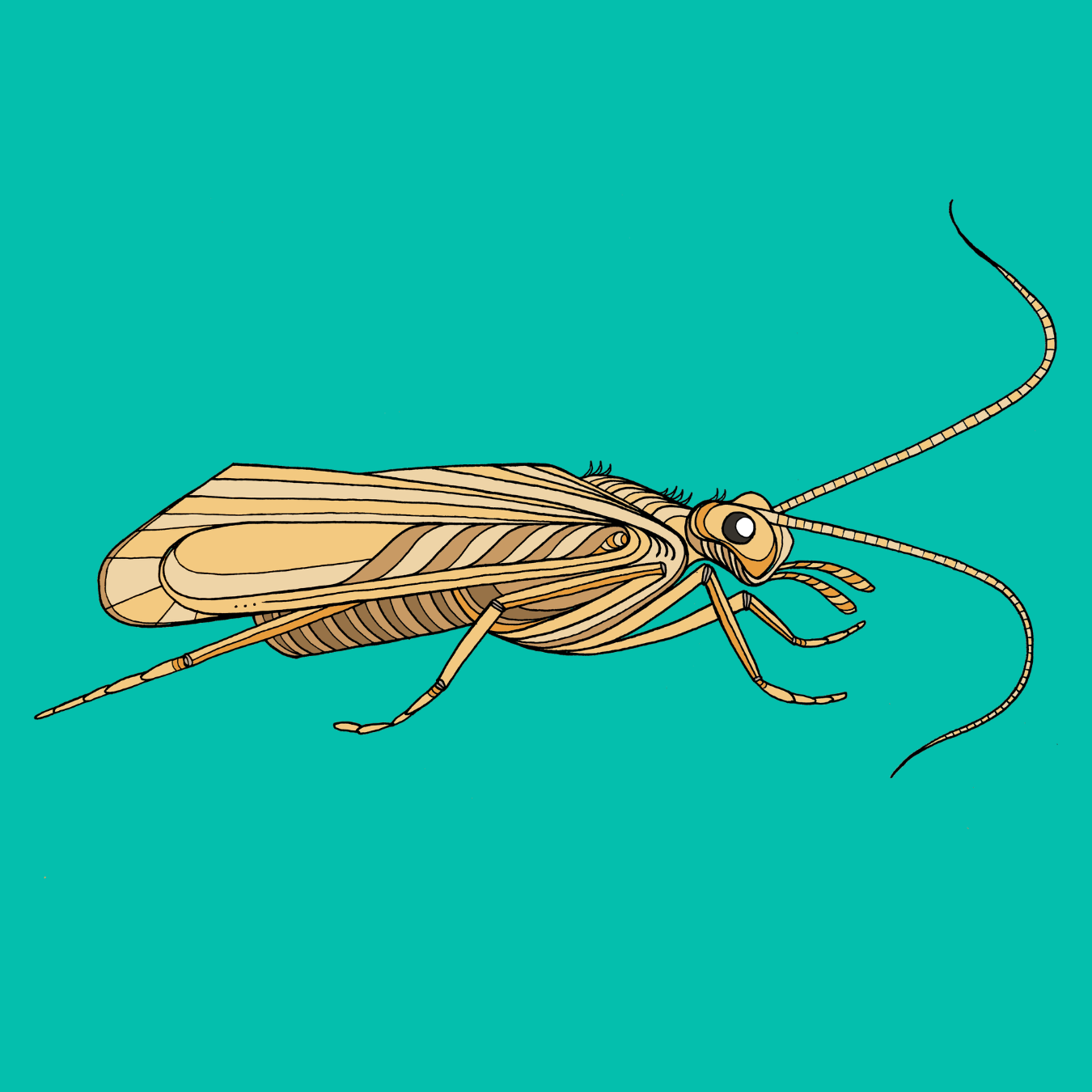
This unusual caddisfly has attracted the attention of researchers because adults are largely unable to fly and instead move across the water surface in a behaviour known as "skating".
Interested in discovering more?
Read the FBA article: New project aims to secure the future of the critically endangered Malham Sedge, 2 October, 2026.
Listen on BBC Sounds, Radio 4: Malham Caddisfly, 21 Aug 2011 (22 mins). Paul Evans travels to Malham and joins Ian Wallace for a different Living World podcast, attempting to re-locate this caddisfly while along the way testing and devising acceptable monitoring techniques for future research.
About the Natural England Species Recovery Programme
Natural England’s Species Recovery Programme (SRP), launched in 1991 and funded by Defra, is one of England’s longest-running conservation initiatives. It has helped recover over 70 endangered species, including the large blue butterfly, red kite, and pool frog. The programme delivers targeted conservation through partnerships with academics, NGOs, landowners, and local communities.
The Species Recovery Trust
The Species Recovery Trust is a charity devoted to saving some of Britain’s most endangered species, committed to preventing the loss of some of the rarest plant, insect and animal species in the UK. Their primary aim being to remove 50 species from the edge of extinction by 2050. Work involves producing dynamic conservation strategies informed by detailed scientific knowledge, and making sure they are carried out effectively throughout their conservation sites.