New project aims to secure the future of the critically endangered Malham Sedge
2 October, 2026
A new partnership project, funded by Natural England’s Species Recovery Programme (SRP), has been launched to help secure the future of some of the UK's rarest invertebrates, including the critically endangered Malham Sedge (Agrypnetes crassicornis).
Led by the Species Recovery Trust and delivered in collaboration with the Freshwater Biological Association (FBA), Buglife, Natural England, Lincolnshire Wildlife Trust, Forestry England and the National Trust, the project will focus on five highly threatened invertebrate species found only in Yorkshire and North Lincolnshire.
The Malham Sedge is one of Britain's rarest insects and is currently known from just a single location: Malham Tarn in North Yorkshire. This unusual caddisfly has attracted the attention of researchers because adults are largely unable to fly and instead move across the water surface in a behaviour known as "skating".
The Malham Sedge (Agrypnetes crassicornis) is one of Britain's rarest insects and is currently known from just a single location: Malham Tarn in North Yorkshire.
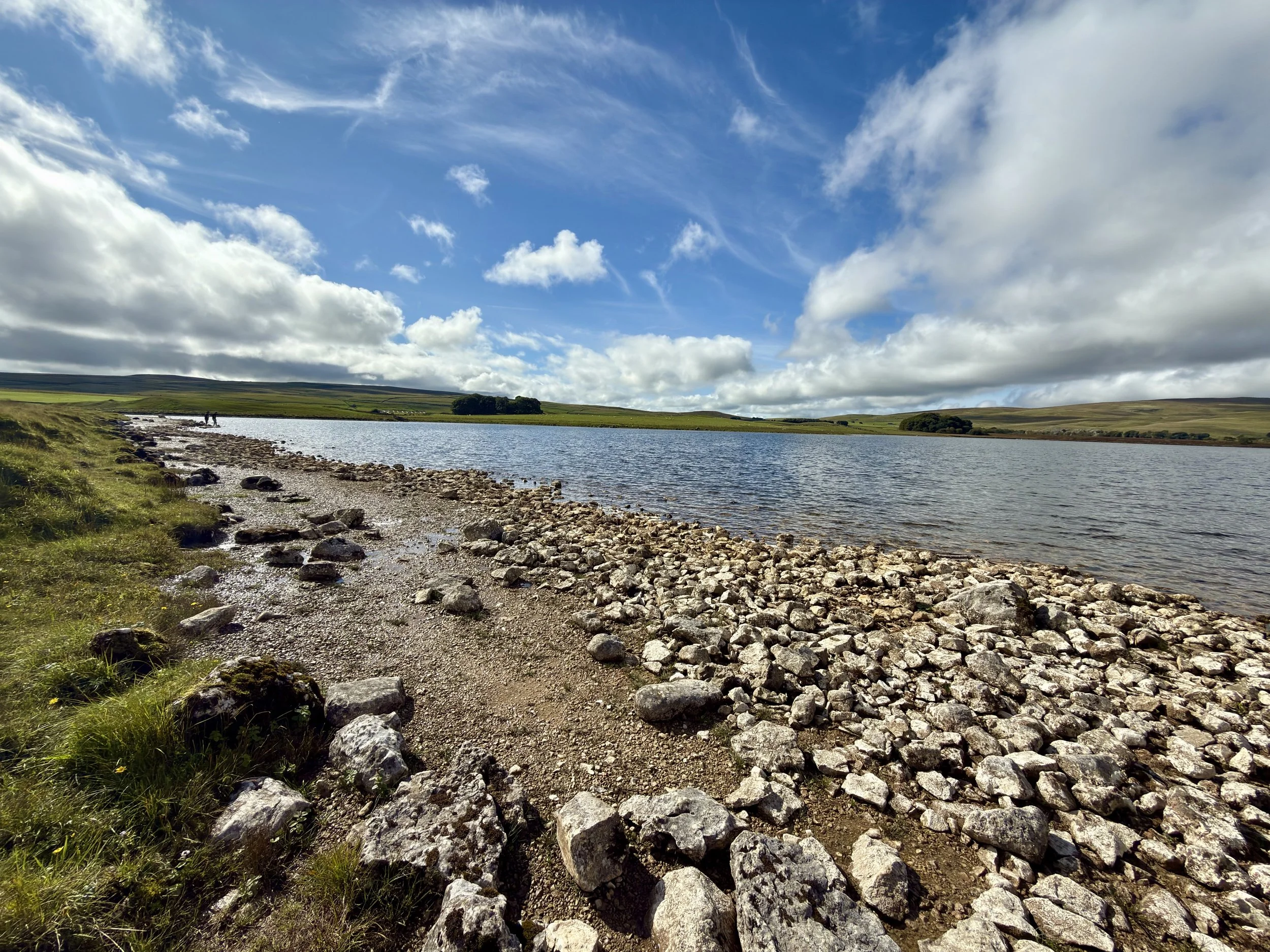
Malham Tarn in North Yorkshire is home to the Malham Sedge, one of Britain's rarest insects.
Why is species recovery support needed for this caddisfly?
Despite its importance, significant gaps remain in our understanding of the species' population size, ecology and long-term conservation needs. The project will bring together specialists from across the conservation sector to address these gaps and develop practical actions to support the species' recovery.
The FBA will lead work on the Malham Sedge, helping to establish a robust monitoring programme to better understand population trends, habitat use, and emergence patterns. The project will also investigate the feasibility of conservation breeding, assess the impacts of changing water levels on Malham Tarn's important stonewort beds, and identify potential sites that could support future population restoration.
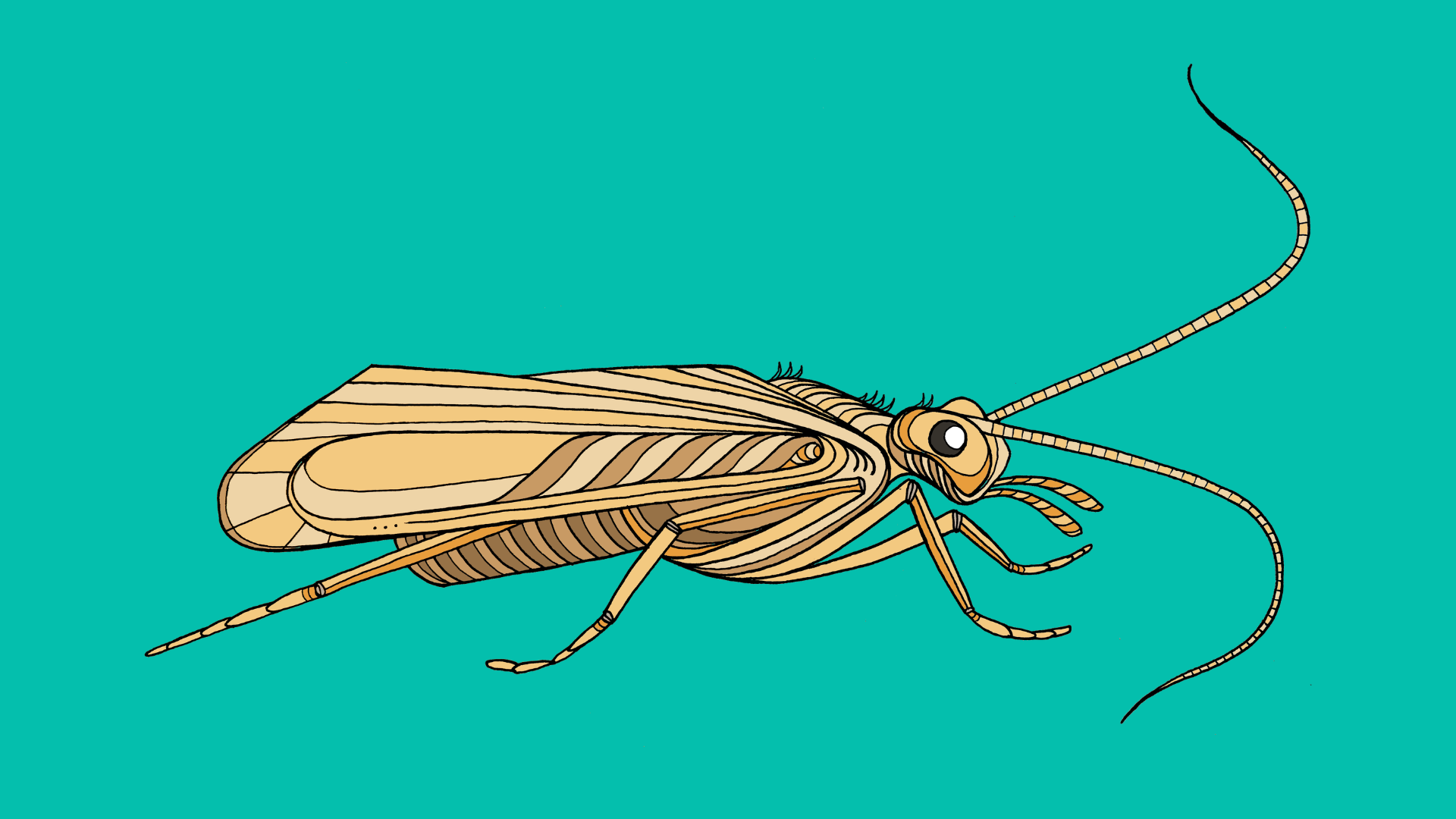
Illustration of the beautiful Malham Sedge, inspired by one of Sharon Flint’s photographs of this rare caddisfly.
“Despite being one of Britain’s rarest insects, there is still much we do not know about the Malham Sedge. Through this collaboration, we will be able to build a clearer picture of its ecology, assess the threats it faces, and identify practical measures that can help ensure this unique species remains part of the Yorkshire Dales landscape for generations to come.”
So what is known about the elusive Malham Sedge?
Much of what we currently know about the Malham Sedge comes from the dedication of local entomologists Sharon and Peter Flint, whose long-standing passion for Malham Tarn and its unique wildlife has helped transform our understanding of this remarkable species.
Through years of observation and study, they have uncovered important details about the caddisfly's life cycle, behaviour and habitat requirements, while also exploring the potential for conservation breeding. Sharon and Peter are now working alongside the project partners, bringing their invaluable expertise to a collaborative effort to better understand, protect and secure the future of this critically endangered species.
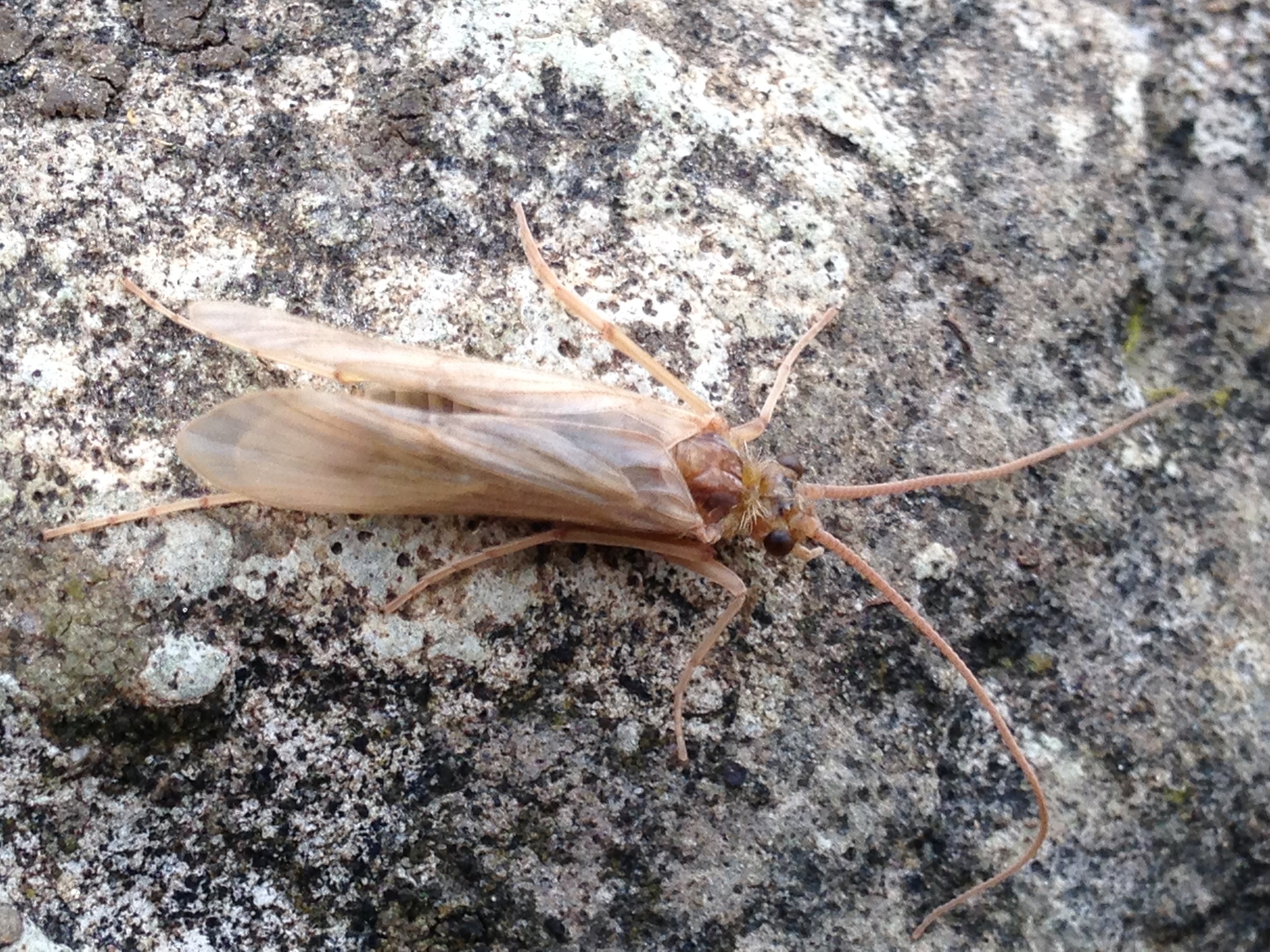
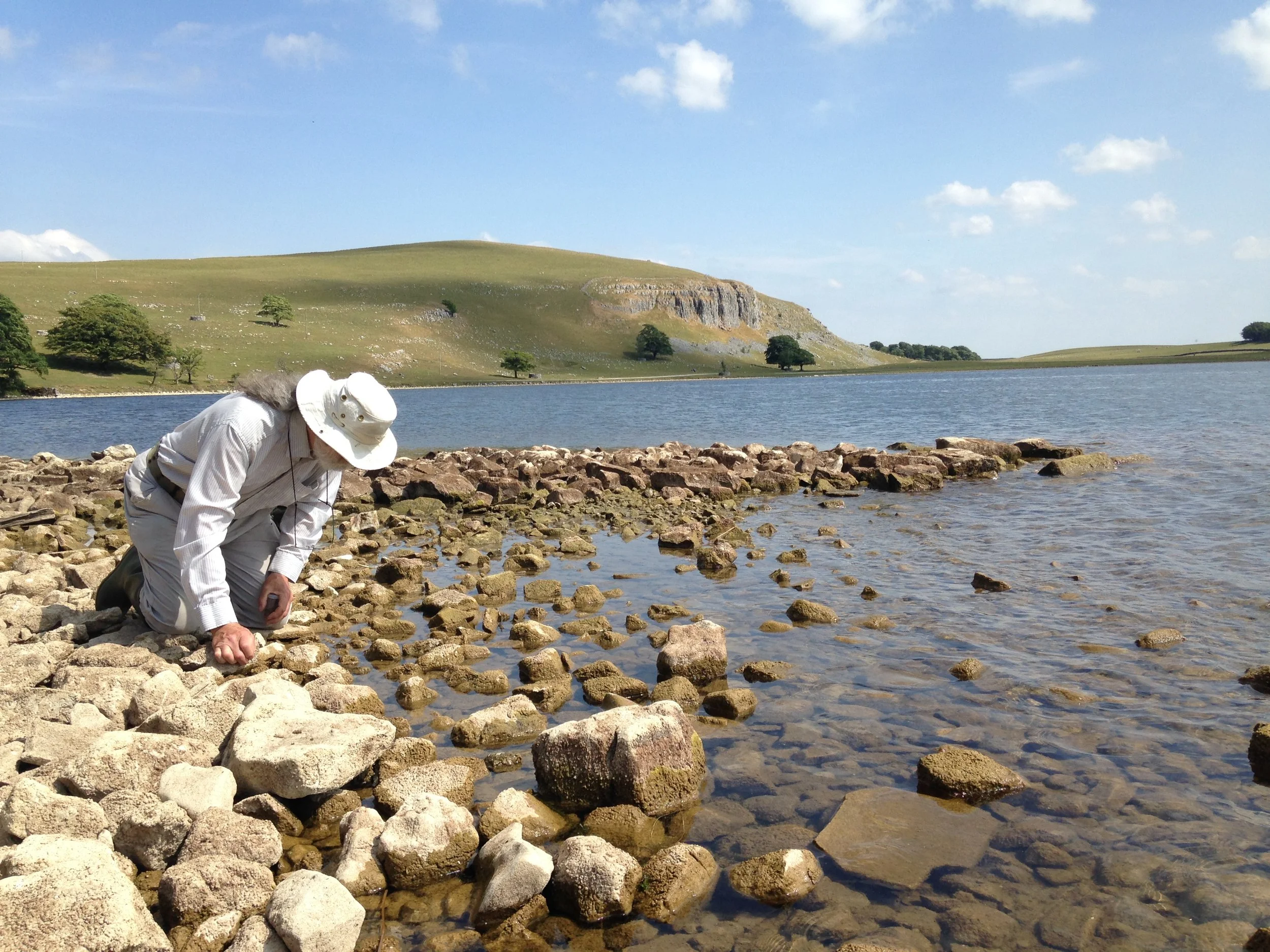
A Malham Sedge, Agrypneses crassicornis (left), and Peter Flint looking for caddis cast skins at Malham Tarn (right). Photo credit Sharon Flint.
Working in collaboration to help secure a future for this rare and endangered caddisfly
The Malham Sedge has already been recognised as a priority species within the Local Nature Recovery Strategy for the Yorkshire Dales and is named as a key species in Buglife's Important Invertebrate Area designation for Malham Tarn.
By improving our understanding of this remarkable caddisfly and the habitat it depends upon, the partnership aims to reduce its risk of extinction and lay the foundations for long-term recovery.
“This caddisfly one of the most threatened species in the country and so this project is of critical importance to its survival. The Species Recovery Trust is really excited to be working with the FBA to provide hope for the future of this rare insect.”
Malham Tarn: a dramatic upland limestone landscape
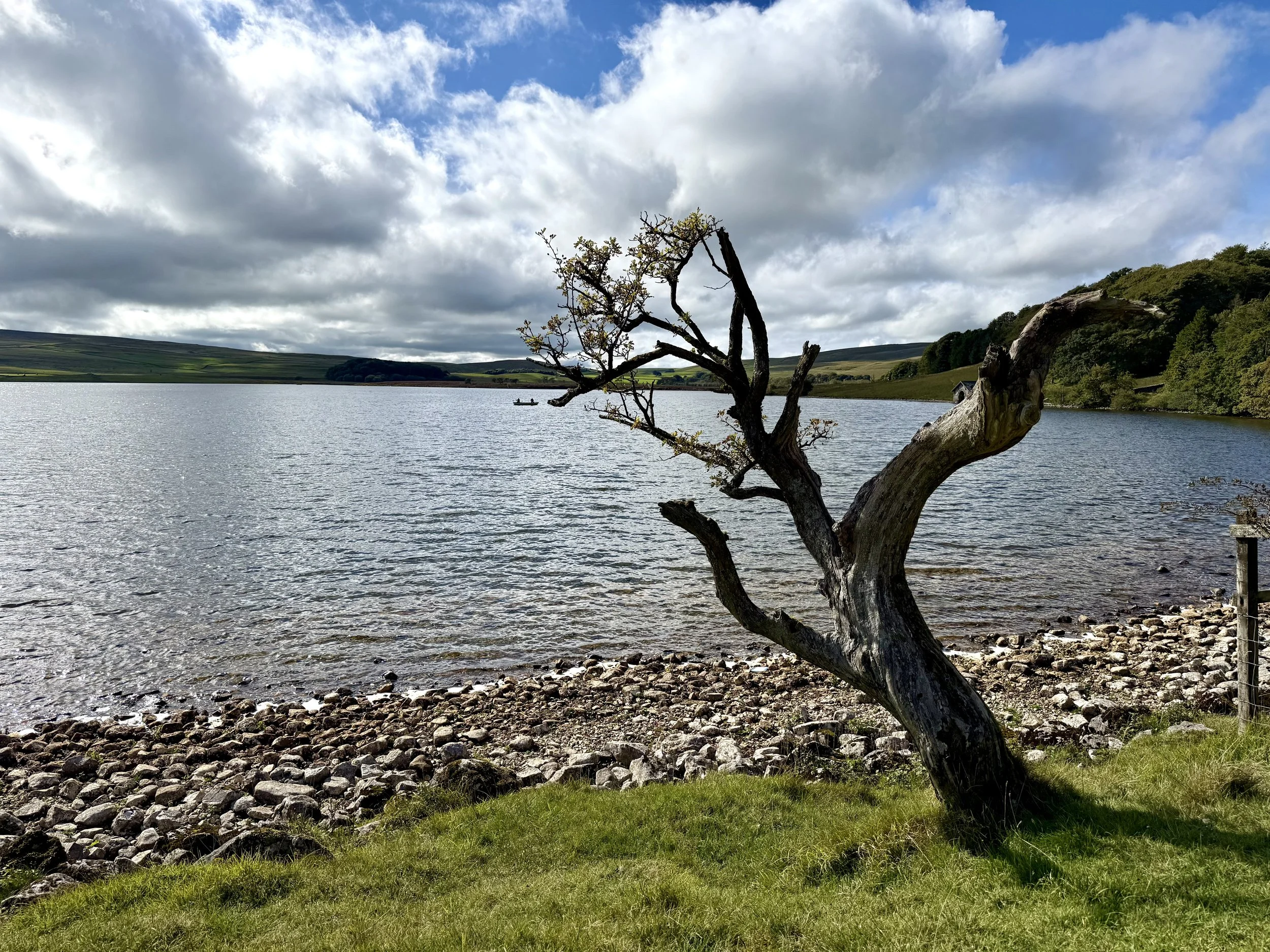
The National Nature Reserve of Malham Tarn Estate in the Yorkshire Dales, is managed by the National Trust.
Malham Tarn Important Invertebrate Area
The Malham Tarn Important Invertebrate Area (IIA) is centred on Malham Tarn in the Yorkshire Dales. Malham Tarn is a 60 hectare glacial marl lake which lies at an altitude of 377 metres above sea level. It is one of only eight upland alkaline lakes in Europe. The catchment of Malham Tarn extends for around 600 hectares to the north west of the lake. The inflowing stream in the north west corner of the lake flows through an area of wet woodland, fen and Tarn Moss, a raised bog. Malham Tarn and Tarn Moss are a National Nature Reserve (NNR) and are designated as a Ramsar Site. The IIA is also within the Craven Limestone Complex Special Area of Conservation (SAC) and Malham - Arncliffe Site of Special Scientific Interest (SSSI).
Interested in discovering more?
Read: Talking entomology and rare caddisflies with Sharon and Peter Flint - we had the pleasure of a Q & A with Sharon and Peter to find out more about their interest in insects, and enthusiasm for the study of Agrypnetes crassicornis in the Malham Tarn National Nature Reserve.
https://www.fba.org.uk/fba-voice/talking-entomology-and-rare-caddisflies-with-sharon-and-peter-flint
About the Natural England Species Recovery Programme
Natural England’s Species Recovery Programme (SRP), launched in 1991 and funded by Defra, is one of England’s longest-running conservation initiatives. It has helped recover over 70 endangered species, including the large blue butterfly, red kite, and pool frog. The programme delivers targeted conservation through partnerships with academics, NGOs, landowners, and local communities.
The Species Recovery Trust
The Species Recovery Trust is a charity devoted to saving some of Britain’s most endangered species, committed to preventing the loss of some of the rarest plant, insect and animal species in the UK. Their primary aim being to remove 50 species from the edge of extinction by 2050. Work involves producing dynamic conservation strategies informed by detailed scientific knowledge, and making sure they are carried out effectively throughout their conservation sites.
Buglife article: Sediment Secrets: How Ancient Mud Could Save a Species, December 2025.
Yorkshire Dales National Park: Malham Tarn National Nature Reserve (NNR), the source of the River Aire, near Malham.