23 November, 2026
The Freshwater Biological Association (FBA) has been busy over the last 18 months working on research for the Lake District Charr Recovery & Management (LD-CHARM) project. A new report of the findings from Phase 1 of the partnership project, ‘England’s Ice Age Survivor: Conserving Arctic charr in the Lake District’, is about to published.
The FBA is now moving into the second Phase of this important species recovery project for Arctic charr in the Lake District, and is thrilled to be welcoming Andrew Wolfenden as the Arctic Charr Project Manager. Andrew is the new lead for LD-CHARM, a programme of research funded by Natural England's Species Recovery Programme, aiming to identify and address the key threats to Arctic charr populations in England.
It was a great pleasure to catch up with Andrew as he embarks on his Arctic charr adventure at the FBA, to find out more about his background in conservation and enthusiasm for freshwater ecology.
Firstly please allow us to extend a very warm welcome to the freshwatery world of the FBA! To start could you share a little about your background and interest in freshwater conservation.
Thank you so much, I’m really excited to be joining the FBA team! Fish and water have been a huge part of my life for as long as I can remember. At the tender age of 16 (nearly 30 years ago!) I studied fishery management at Sparsholt College. Since then, I’ve been lucky enough to work on some amazing aquatic projects both in the UK and overseas. To now be working with one of our most iconic (and spectacular) species is a real honour.
You're joining the FBA as the new lead on the Lake District Charr Recovery & Management (LD-CHARM) project... do you have a particular interest in freshwater fish or is your scientific background more generally in species conservation and recovery?
I would say my main interest (or obsession as my wife would call it) is with freshwater fish. From photographing them to studying them, fish are a really important part of my life. My academic background however has followed a bit more of a wobbly route, my PhD was on bird song, and I have been a research fellow for a bird project in the Middle East and on a wild mouse project on a remote island in Scotland, so coming back to fish is a dream come true!
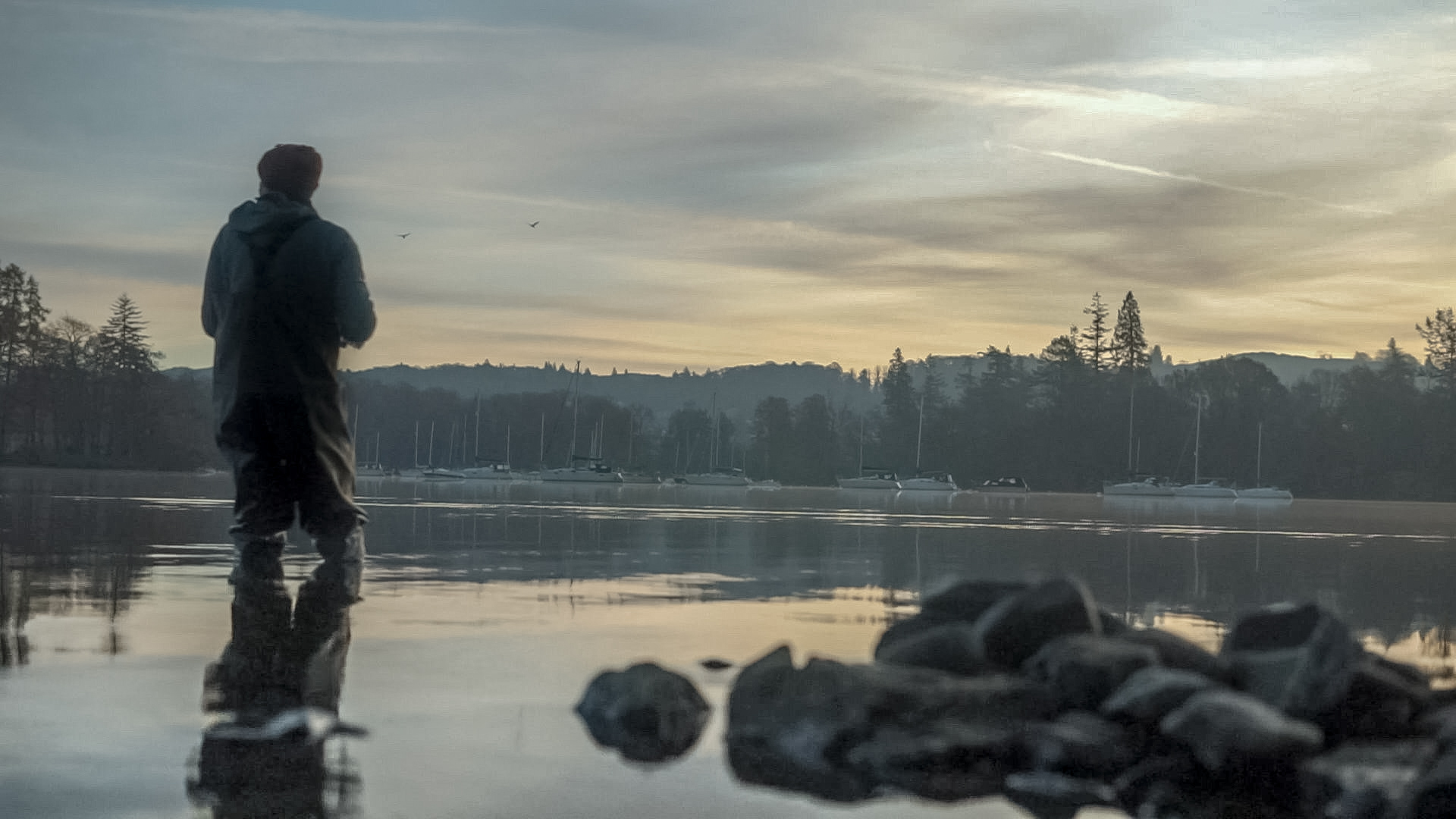
Andrew Wolfenden enjoying a Windermere sunrise whilst searching for signs of fish in the Lake District.
You previously working for an NGO on the River Mersey... how are you finding the transition to a lakeside location at the FBA Species Recovery Centre on the shores of Windermere, in the Lake District?
I’m really enjoying the transition. The Mersey Estuary will always hold a special place in my heart but to watch the sun rising over the mist covered fells as I'm driving to the office is pretty magical. The mountains and lakes are so spectacular and I’m really looking forward to seeing the lake through all of the seasons.
The LD-CHARM partnership is about to launch the findings of its Phase 1 research, now it is moving into Phase 2 do you have any specific ambitions for the FBA's species recovery programme for Arctic charr over the next few years?
The LD-CHARM project has a really comprehensive programme of works for the next three years. In addition to these planned work packages though, my main ambition is to try and identify how we can improve Arctic charr recruitment in our lakes. There are so many threats to Arctic charr eggs, alevin (fry) and parr. From poor water quality to introduced species, early life stages for this species in our lakes is really, really hard. As the Phase 1 report shows, most of the Arctic charr populations are unique to the lake they are found in. This means that the Arctic charr in Windermere are only found here. If we lose them… a population that has lived here for over 11,000 years will be lost forever. By exploring methods that will help increase the numbers of juvenile fish reaching adulthood we can hopefully secure a future for all of our Arctic charr populations.
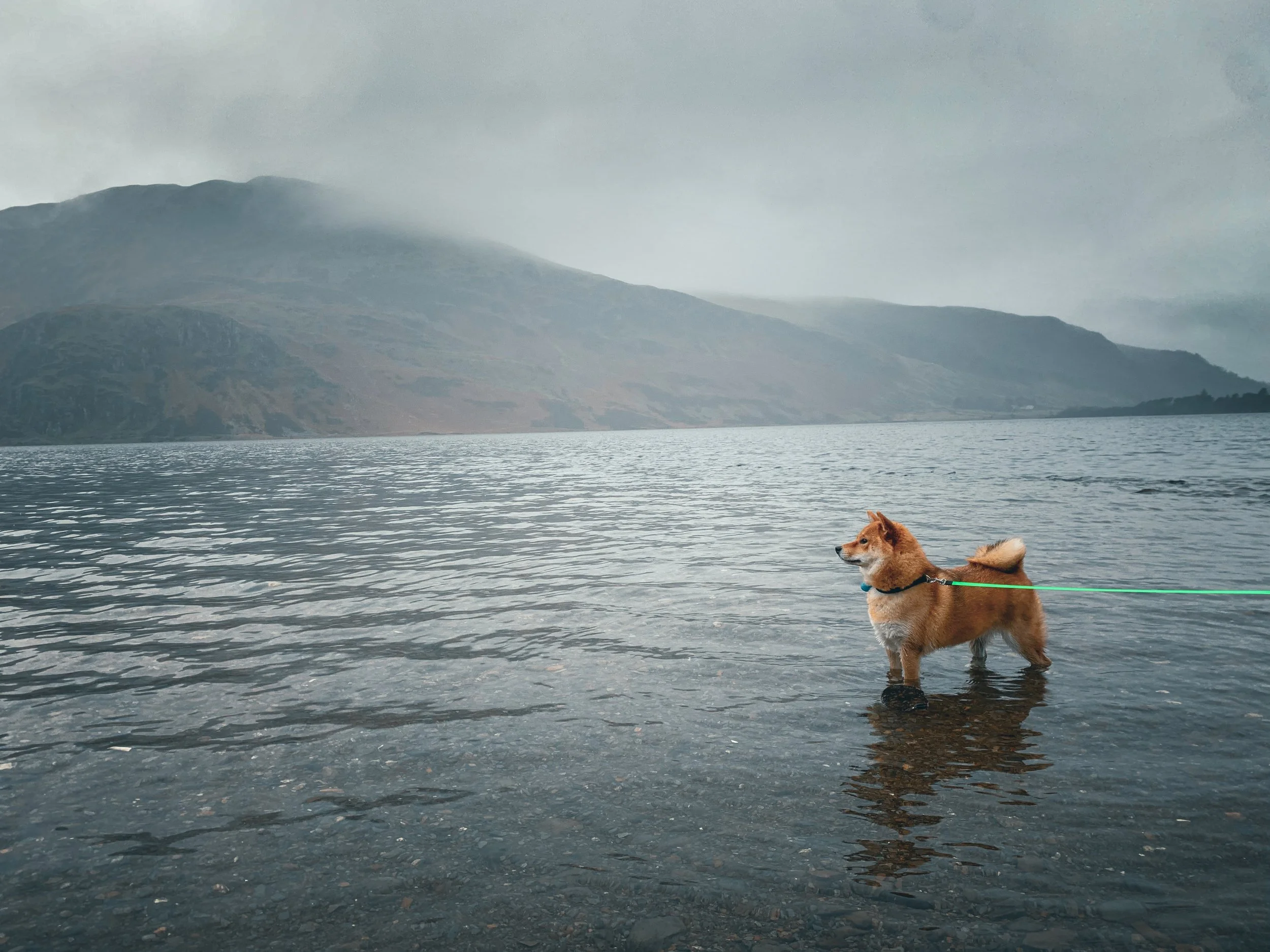
Looking for Arctic charr habitat in Ennerdale with Tanuki, photo by Andrew Wolfenden.
And beyond the LD-CHARM partnership and science-led action for Arctic charr conservation in the Lake District, do you have any hopes for freshwater ecosystems in Cumbria, across the UK and even globally?
This is such a big question! My hope is that we can ensure that all species that rely on our aquatic habitats receive the support they need to adapt to a changing world. I think the threats to our freshwater ecosystems are becoming much more visible and I really hope this drives change to how we currently manage them. I’m really hopeful for the future and I know that as long as we continue to work with people in the local and wider community we can make a difference and start to reverse some of the declines.
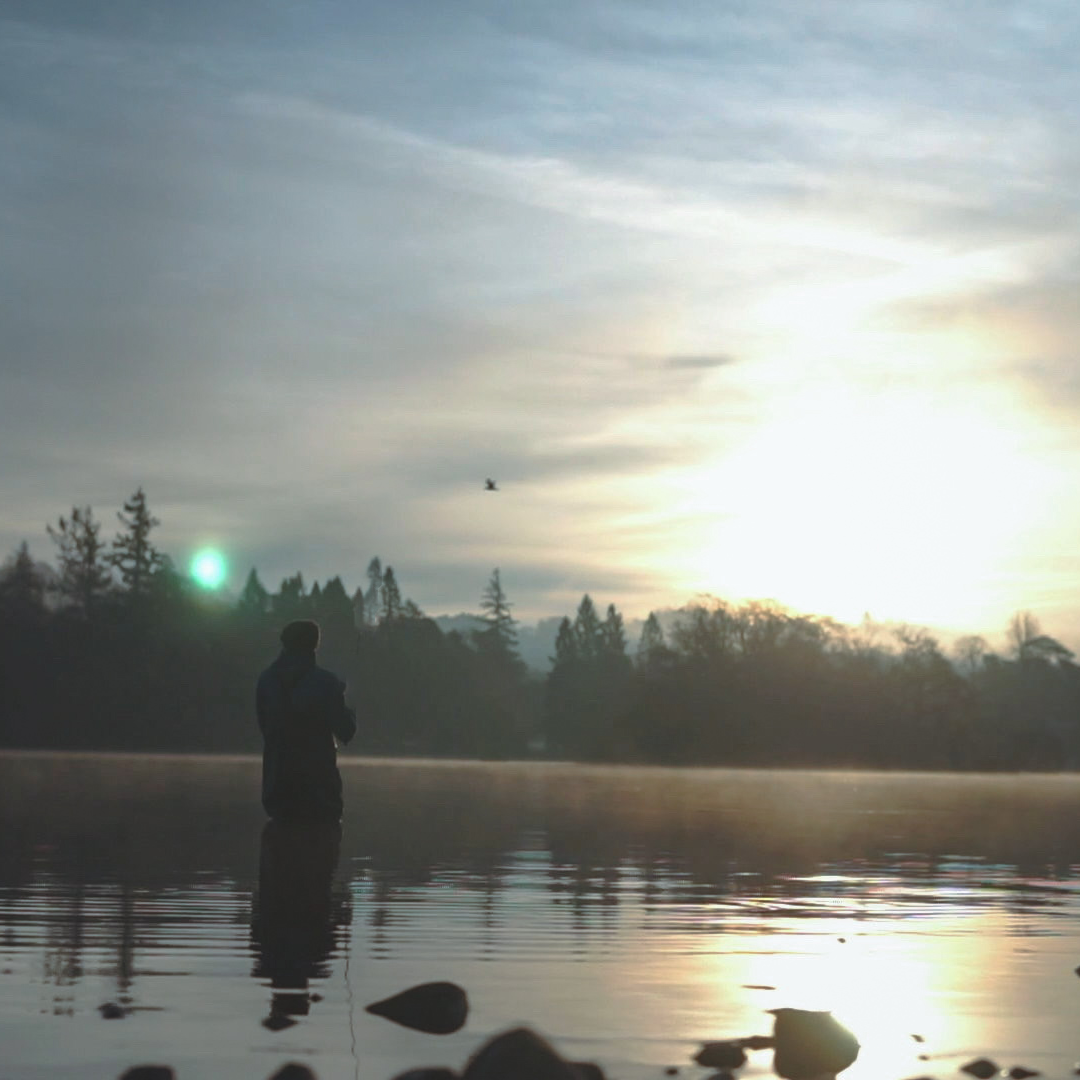
“My hope is that we can ensure that all species that rely on our aquatic habitats receive the support they need to adapt to a changing world. I think the threats to our freshwater ecosystems are becoming much more visible and I really hope this drives change to how we currently manage them. I’m really hopeful for the future and I know that as long as we continue to work with people in the local and wider community we can make a difference and start to reverse some of the declines.”
Finally, we at the FBA are a bit besotted by freshwater critters so we just have to ask, do you have a favourite fish or invertebrate, and why are you their top freshwater fan?
This is another really hard one! I feel like it changes all the time. I love a nine-spined stickleback, the lesser known cousin of the iconic three-spined. They’re the UK’s smallest freshwater fish and it took me an embarrassingly long time to find one and photograph it! When I finally did find one it was on a Saturday afternoon in a busy country park, the people having picnics around me must have thought I was a bit odd as I carefully took some pictures of it in my photo tank before releasing it!
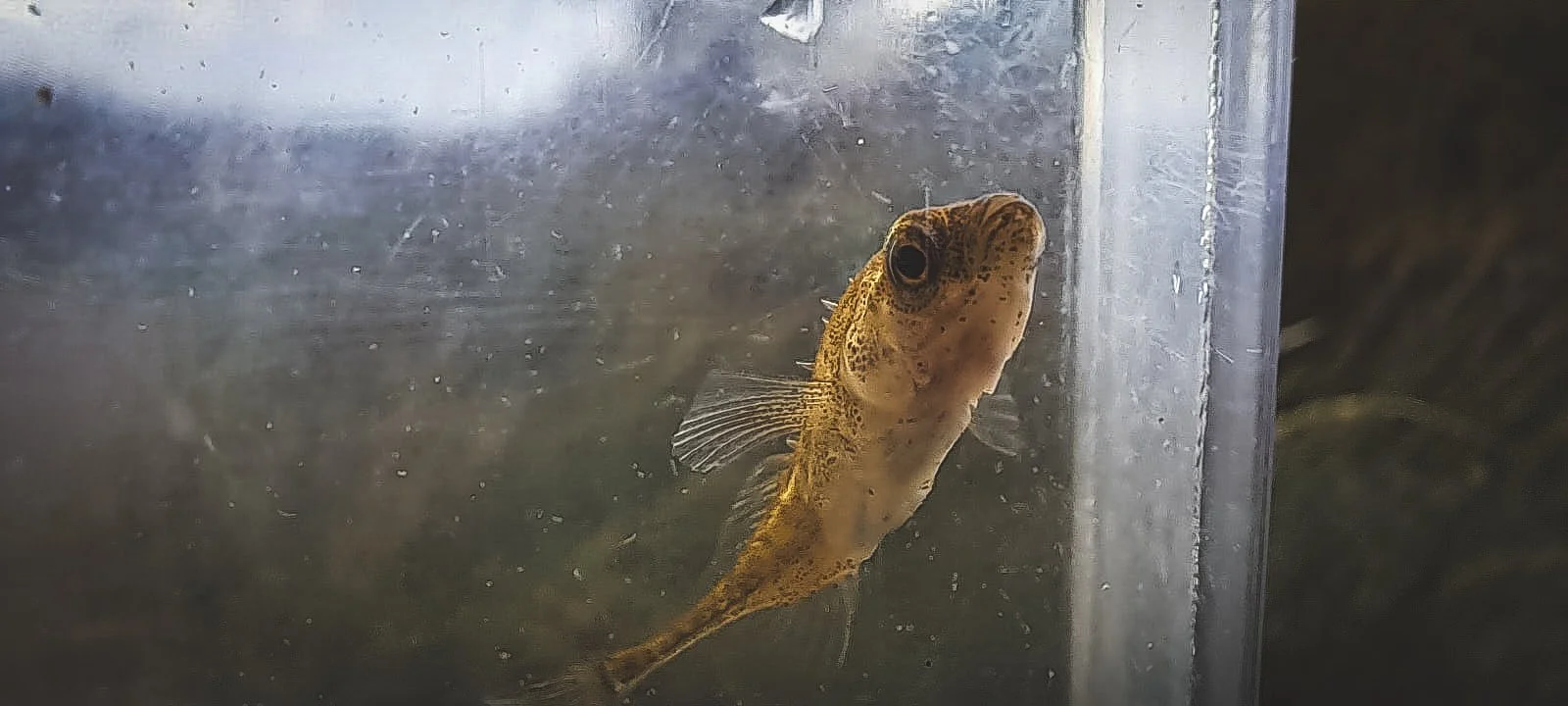
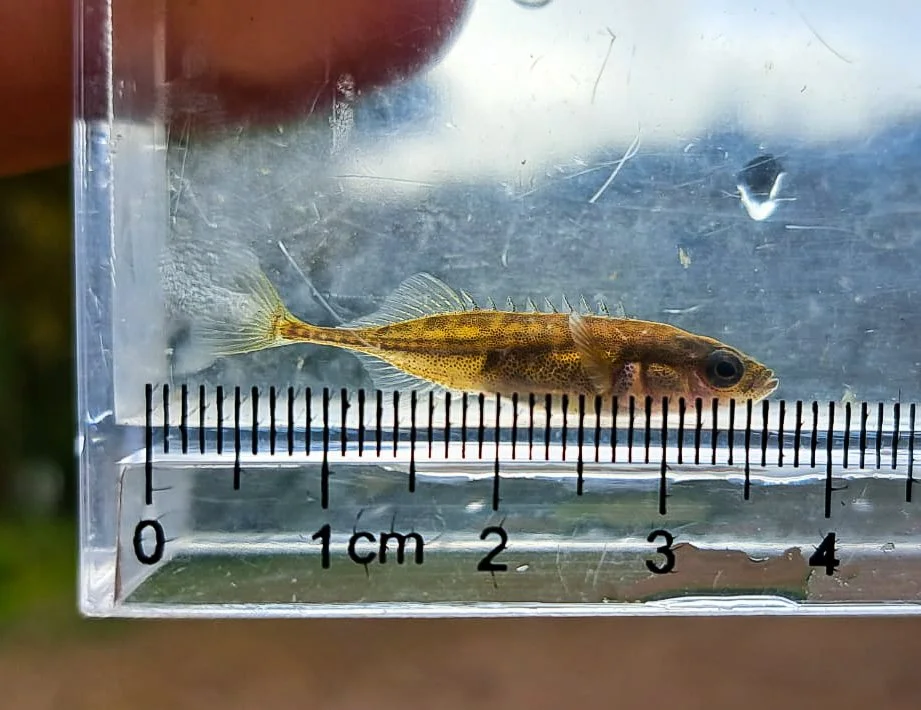
Meet the nine-spined stickleback, the UK’s smallest freshwater fish, photo taken by Andrew Wolfenden after two years of searching!
Interested in discovering more?
Discover more about the Lake District Charr Recovery and Management (LD-CHARM) project and partnership.
Read: Species on the edge: Arctic charr at the southern extent of its range, 13 May 2025. Here, Louise Lavictoire, the FBA’s Head of Science, and colleagues introduce Lake District Charr Recovery and Management (LD-CHARM), a new project that seeks to inform protection of threatened populations of the Arctic charr.
Read: Charming the Charr, July 2025. In this article Simon Johnson, Executive Director of the Freshwater Biological Association, talks about the LD-CHARM project and partnership, “a coalition of rare-fish ecologists, scientists and ‘crazies’ in the Lake District who are fighting to save one of our most special native fishes”. Reproduced with kind permission from the Wild Trout Trust, and first appeared in the Wild Trout Trust’s Salmo Trutta 2025.