A new strategic vision for the Lake District: in conversation with Cath Johnson from the National Park Authority
3 September, 2026
The FBA has a long scientific relationship with the Lake District. From the formation of the FBA in 1929, and our first secured research premises at Wray Castle, Ambleside in 1931, to the Species Recovery Centre that resides on the western shores of Windermere today, the FBA has been supporting freshwater research in the lakes and streams of Cumbria for almost a century.
With safeguarding of these vital and exceptional freshwater habitats at the core of our organisational mission, it was excellent to hear the announcement in June that the Lake District National Park Authority (LDNPA) has adopted a new, ambitious Partnership Plan 2026–2031.
We're delighted to have the opportunity to catch up with Cath Johnson, who is the Natural Environment Advisor at the LDNPA, to hear more about this new strategic vision, and what it means for freshwater ecosystems and nature in the Lake District National Park.
To start please could you share a little of your background in conservation, in particular freshwaters?
I've spent over 30 years working in the field of conservation, managing many habitats including protected wetland landscapes. I worked for the Broads Authority for 12 years, initially as a Fen Warden involved with the restoration of wetland habitats, and then as Trinity Broads Project Manager responsible for overseeing the biomanipulation of Ormesby Broad, which involved the removal of almost one million fish to manage water quality and reset populations of daphnia (water fleas). The project aimed to clear water of suspended algae, encourage the re-colonisation of aquatic plants and improve the overall the health of the Broad.
I have worked for the LDNPA since 2013, first as an Area Ranger and more recently as Natural Environment Advisor – part of this role involves supporting with the management of Bassenthwaite Lake.
The FBA is very happy to see that the Lake District National Park Partnership Plan 2026–2031 places freshwater ecosystems at the heart of its vision for nature recovery and climate resilience. Why are improvements to freshwater ecosystems on a catchment level so important for the Lake District?
Managing freshwater ecosystems at a catchment scale is important to the Lake District because the condition of lakes, tarns, rivers and wetlands is determined by what happens across the whole river catchment, not just within individual waterbodies. The Partnership Plan ambition is to clean water, alongside supporting nature recovery, climate resilience and sustainable farming to protect the Lake District's internationally important landscape and wildlife.

Bassenthwaite Lake National Nature Reserve, in the Lake District, Cumbria (credit Ade Gidney).
More about the Lake District National Park Partnership Plan 2026–2031 commitment to freshwaters
The Lake District National Park Partnership Plan 2026–2031 sets out an ambitious vision for freshwater, recognising clean and plentiful water as essential for both people and nature. Over the next five years, the Partnership aims to improve the condition of lakes, tarns, rivers, streams, springs and floodplains by reducing pollution and restoring natural processes and freshwater habitats.
The plan identifies sewage pollution, agricultural and road runoff, pollution from abandoned metal mines, excessive abstraction and climate change among the key pressures on freshwater ecosystems, highlighting the need for urgent investment and coordinated, catchment-scale management. Commitments include reducing pollution entering rivers and lakes, improving water-use efficiency, reversing historic river modifications such as channel straightening and weirs where appropriate, and restoring more natural river flows and processes.


Bassenthwaite Lake National Nature Reserve, in the Lake District, Cumbria (credit Ade Gidney).
The plan outlines targets that include increasing core nature areas from 15 percent to 30 percent, and increasing the number of waterbodies achieving good ecological status to 75 percent... what are the three big actions that you feel will help achieve this?
The three most important actions are: firstly, restoring habitats that improve natural catchment processes, such as peatlands, woodlands and wetlands; secondly, significantly reducing nutrient and sediment pollution; and thirdly, creating a connected Nature Recovery Network across the Lake District landscape, because these actions will deliver benefits across biodiversity, water quality, carbon storage and climate resilience simultaneously.
“I believe that the single most powerful contribution is for coordinated catchment-scale action by partners, rivers trusts, scientists, land managers, farmers, and local communities, working together to restore natural processes across entire catchments. This collective and cooperative action will improve water quality, expand nature-rich habitats and increase climate resilience for people and nature.”
Are there any ways that organisations and individuals, beyond the LDNPA, could support the rejuvenation of freshwaters and wider ecosystems in the Lake District?
I believe that the single most powerful contribution is for coordinated catchment-scale action by partners, rivers trusts, scientists, land managers, farmers, and local communities, working together to restore natural processes across entire catchments. This collective and cooperative action will improve water quality, expand nature-rich habitats and increase climate resilience for people and nature.
On a broader level... what would you like to see for freshwaters in the UK and globally in the future?
My hope is that every person living in, working in, and visiting the Lake District sees themselves as a steward of nature and water and understands that what happens on the land ultimately shapes the health of its waters. This outlook of stewardship for the interconnectedness of nature and freshwater can be applied beyond the Lakes to the UK and globally.
If you had a conservation magic wand and could grant one wish for freshwaters and nature, what would it be?
I would wish that every river, beck, tarn and lake in the Lake District are healthy enough to sustain abundant wildlife, and remain resilient to environmental change.
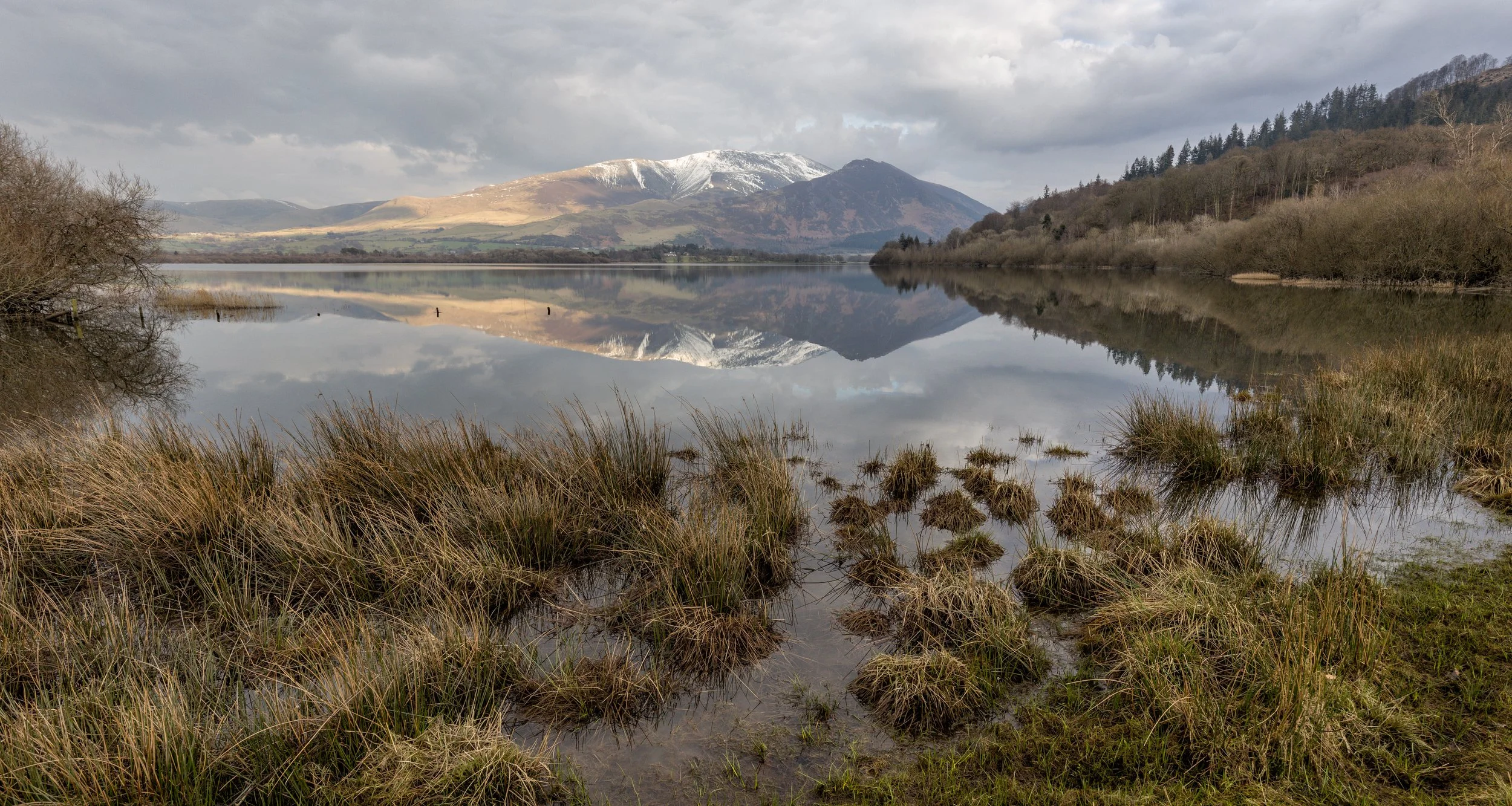
Bassenthwaite Lake National Nature Reserve, in the Lake District, Cumbria (credit Ade Gidney).
A tricky question this... but do you have a favourite freshwater spot in the Lakes that is a particularly sacred space for you?
Bassenthwaite Lake – owned and managed by the LDNPA. It is protected as a National Nature Reserve, Site of Special Scientific Interest, and part of a Special Area of Conservation. Bassenthwaite supports nationally and internationally important wildlife including Atlantic salmon and vendace.

The lake also provides a vital habitat for invertebrates and birds, such as little ringed plover, reed bunting and reed warblers. The ecosystem additionally supports important aquatic plants and lakeshore vegetation like thread rush and globe flowers.
If you're lucky you may observe the osprey hunting over the lake for fish. Up until 2001 there had been no record of nesting osprey in England since the 1830s, until a pair arrived in the Lake District and successfully started breeding near Bassenthwaite Lake.
Bassenthwaite has a raw beauty and is also a great place for our visitors and communities alike to enjoy quiet water based recreation.
Botanical illustration (above) of Juncus filiformis, called thread rush, by Johann Georg Sturm (Painter: Jacob Sturm) from Deutschlands Flora in Abbildungen, via Wikimedia Commons.
As you know we absolutely love freshwater critters here at the FBA, so we have to ask... do you have a favourite species that either resides in, or frequents, the beautiful Lake District?
I don’t have one favourite species. My favourite fish is perch, my favourite bird is the osprey and my favourite mammal overall has to be the Daubenton’s bat – they have unique adaptations that assist them to feed over water – historically they were called the ‘water bat’ because they primarily feed on insects from the water’s surface and use their tails or large feet to scoop up prey.