New investment and growing capacity for Arctic charr recovery in the Lake District
25 August, 2026
The Freshwater Biological Association (FBA) is delighted to be growing its team to support an ambitious new phase of work to secure the future of one of England’s most threatened freshwater fish.
Following the award of £690,000 from Natural England’s Species Recovery Programme (SRP), the FBA is soon to be strengthening its team to support delivery of the Lake District Charr Recovery & Management (LD-CHARM) project.
The investment marks a significant step forward for the FBA’s growing species recovery programme and will increase capacity to deliver the science and conservation action needed to help protect Arctic charr and the freshwater ecosystems on which they depend.
Building our capacity for freshwater conservation
Based on the western shore of Windermere, the FBA brings together freshwater science, conservation expertise and practical action. Our Species Recovery Centre is at the heart of this work, supporting pioneering conservation breeding for freshwater pearl mussels alongside research and conservation action for Arctic charr.
The new phase of LD-CHARM will build on this work, bringing together scientists, conservation organisations, government agencies and local expertise to develop a much clearer picture of the status of Arctic charr across the Lake District.
This includes Windermere, where the species has experienced significant declines, but also the other lakes that continue to support Arctic charr populations. Understanding how these populations are faring – and how they differ from one another – will be essential for developing effective conservation strategies.
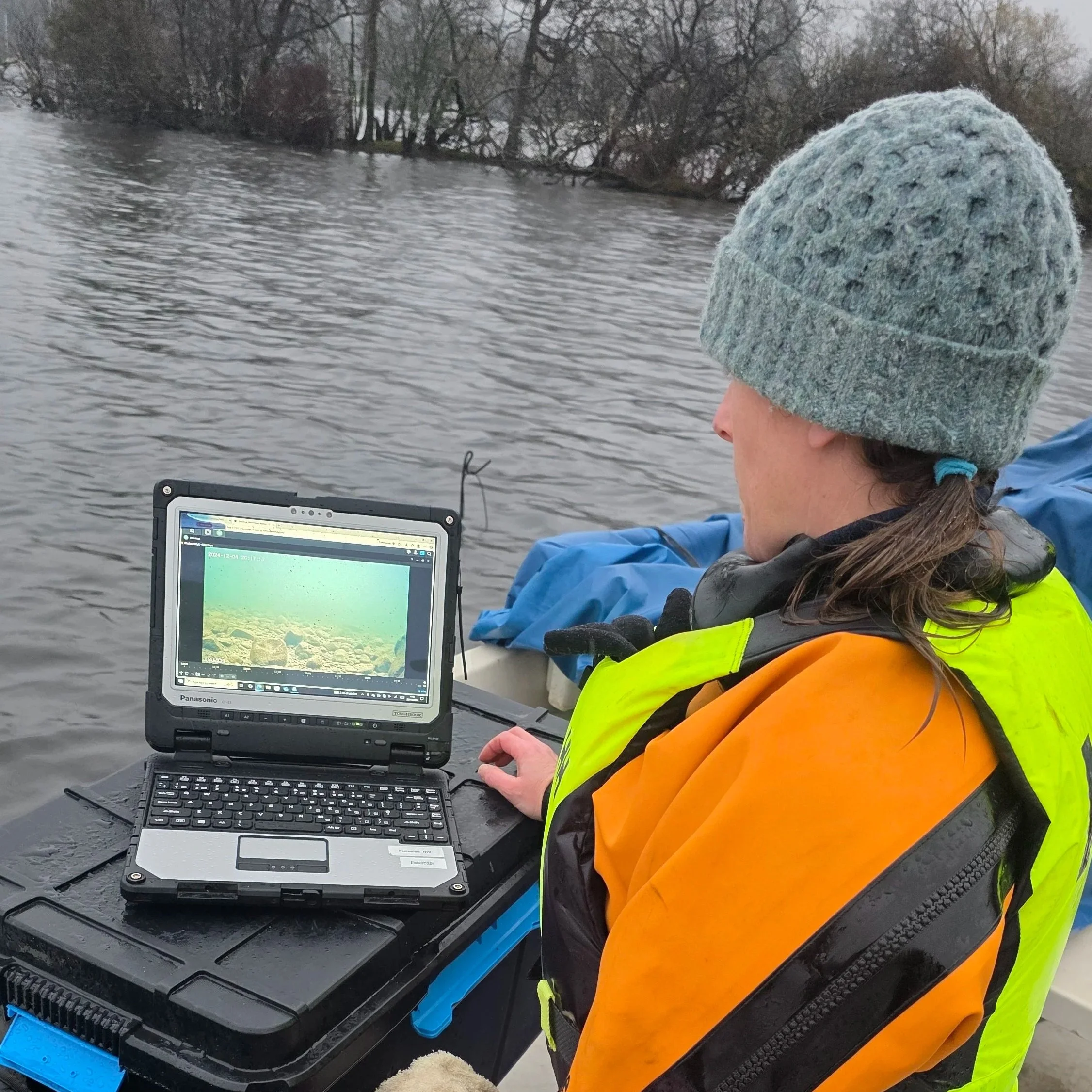
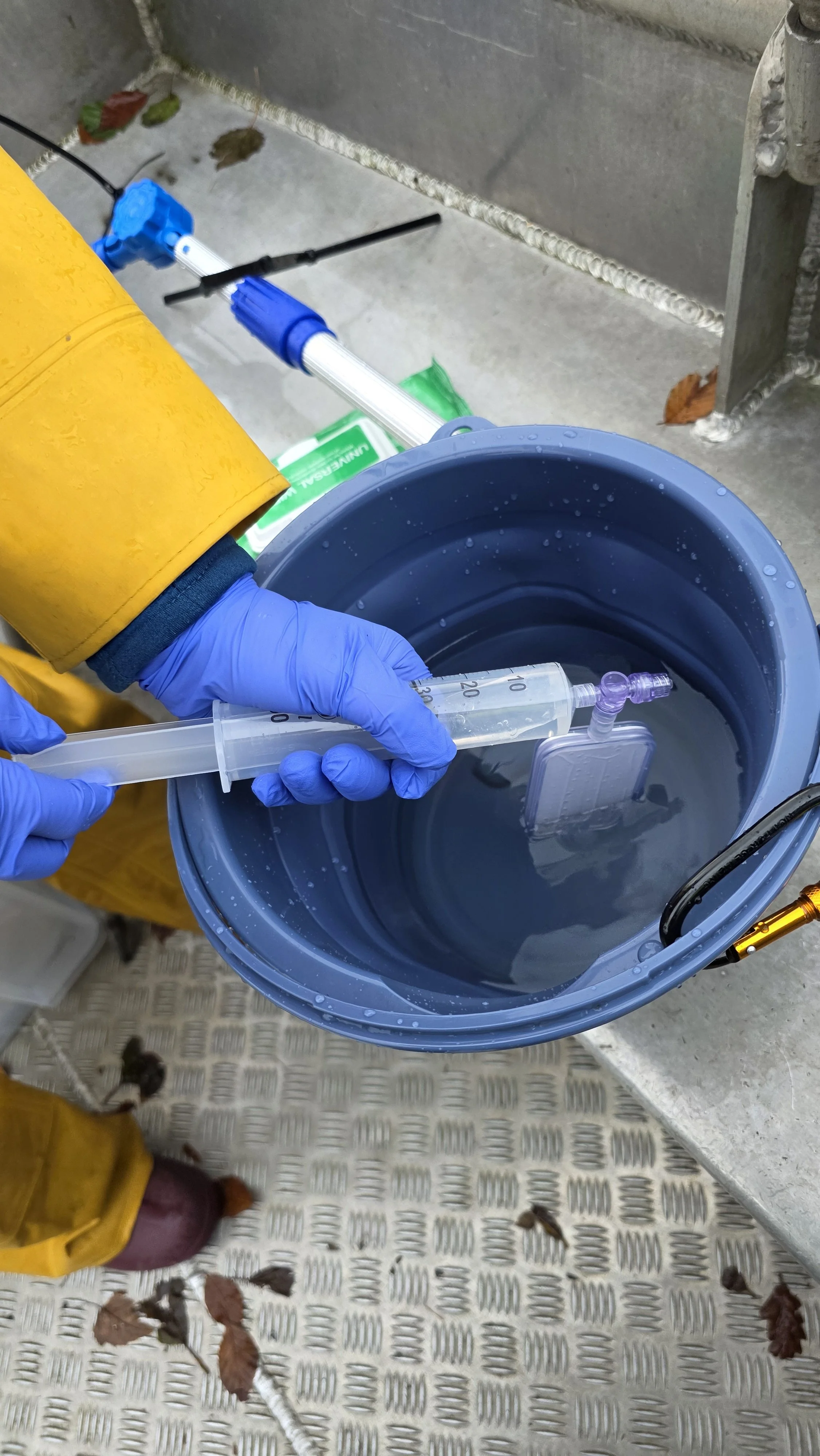
The LD-CHARM partnership using videography to observe Arctic charr spawning (left), and Arctic charr eDNA sampling on Windermere, in the Lake District.
“We are delighted to have been awarded this transformational grant from the Natural England Species Recovery Programme.
The LD-CHARM partnership is thrilled to continue delivering clear, evidence-based steps towards recovering Arctic charr populations in England. Local populations of little-known species like the Arctic charr are at risk of silently slipping into extinction. This investment will help us lay the foundations for meaningful conservation action for this Ice-age relic.”
A race against time for a unique freshwater fish
Arctic charr are cold-water fish living near the southern edge of their natural range in the Lake District. This makes them particularly vulnerable to rising water temperatures and other environmental pressures.
Across the Lake District, Arctic charr populations are facing a combination of challenges, including water pollution, declining spawning habitat, invasive non-native species, low oxygen conditions and climate change. The next three years of LD-CHARM will focus on filling some of the most important gaps in our knowledge, so that conservation action can be targeted where it is needed most.
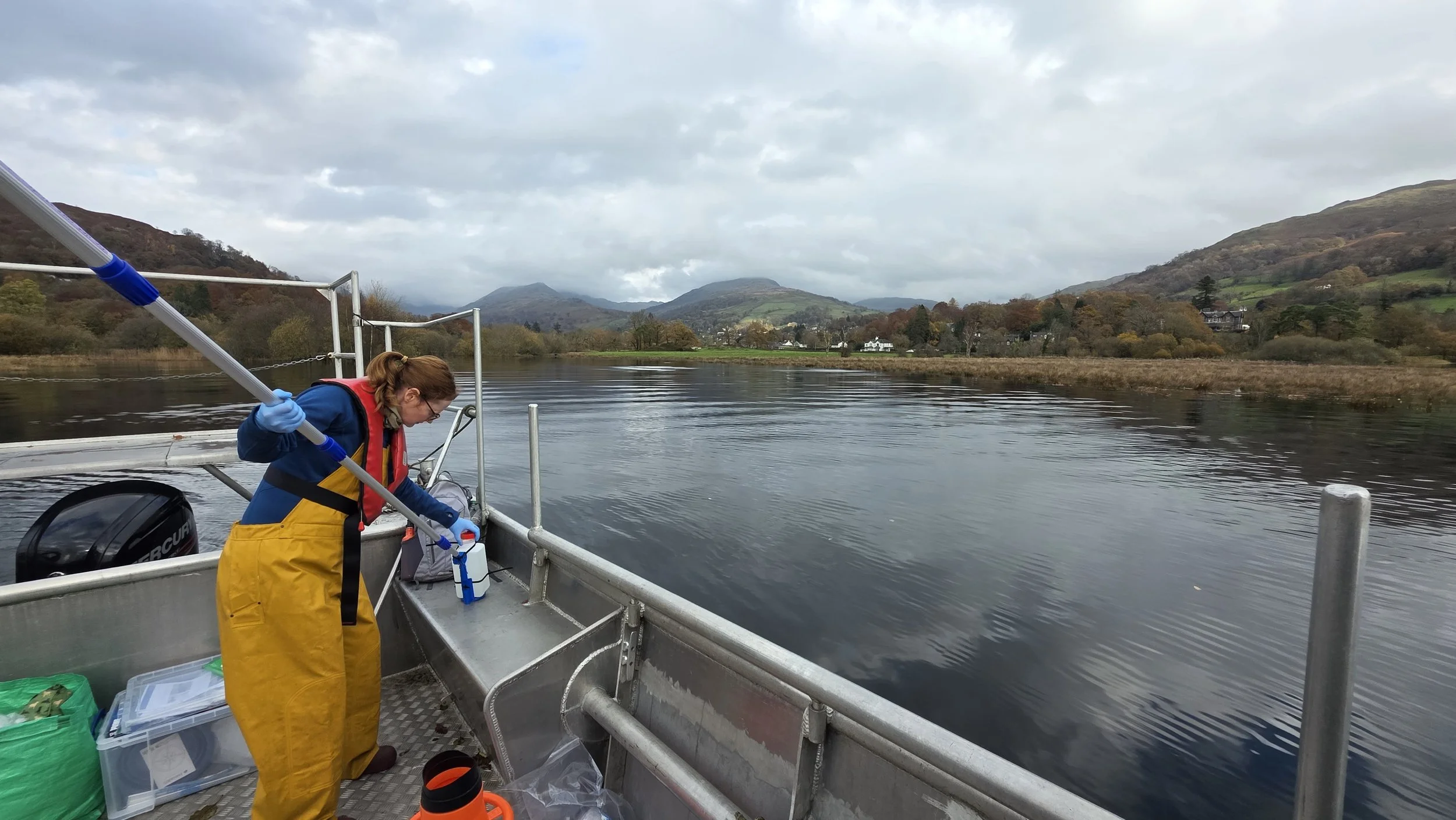
Arctic charr eDNA sampling on Windermere in the Lake District, Cumbria.
Applying groundbreaking science in the field
A major part of the LD-CHARM activity will be a comprehensive programme of field surveys across the Lake District’s Arctic charr lakes.
The project will bring together existing ecological, environmental and genetic information with new surveys to assess the status of populations and understand the pressures they face. Hydroacoustic surveys will help researchers investigate fish populations and locate potential spawning areas, while environmental DNA (eDNA) will provide a non-lethal way of detecting Arctic charr and assessing their distribution.
Habitat surveys will also investigate the condition and extent of spawning grounds. Arctic charr require clean, suitable substrates for spawning, and understanding whether historic spawning areas are still being used – and whether new areas are being used as conditions change – will be important for identifying opportunities for habitat restoration.
The work will extend beyond Windermere to build a more complete picture of Arctic charr populations across the Lake District. Comparing populations between lakes will help researchers understand where populations are most vulnerable and where conservation intervention could make the greatest difference.
“UKCEH is proud to be a partner on the second phase of the Lake District Arctic Charr Recovery and Management (LD-CHARM) Species Recovery Project, led by the Freshwater Biological Association and funded by Natural England.
It is a great privilege to be able to continue to contribute our expertise in both environmental DNA (eDNA) analyses and habitat quality assessment to understand the population status and pressures facing Arctic charr in the Cumbrian Lakes – the only region in England that supports populations of this iconic and endangered species.”
Understanding populations and their genetic diversity
Another important strand of LD-CHARM will investigate the genetic relationships between Arctic charr populations. Population genetics will help determine how many populations exist within the Lake District and assess their genetic health. This is particularly important for a species that may contain distinct populations adapted to the conditions of individual lakes or spawning areas.
By combining genetic information with ecological and habitat data, the project will help identify sub-populations most at need of intervention to safeguard distinct genetic lineages.
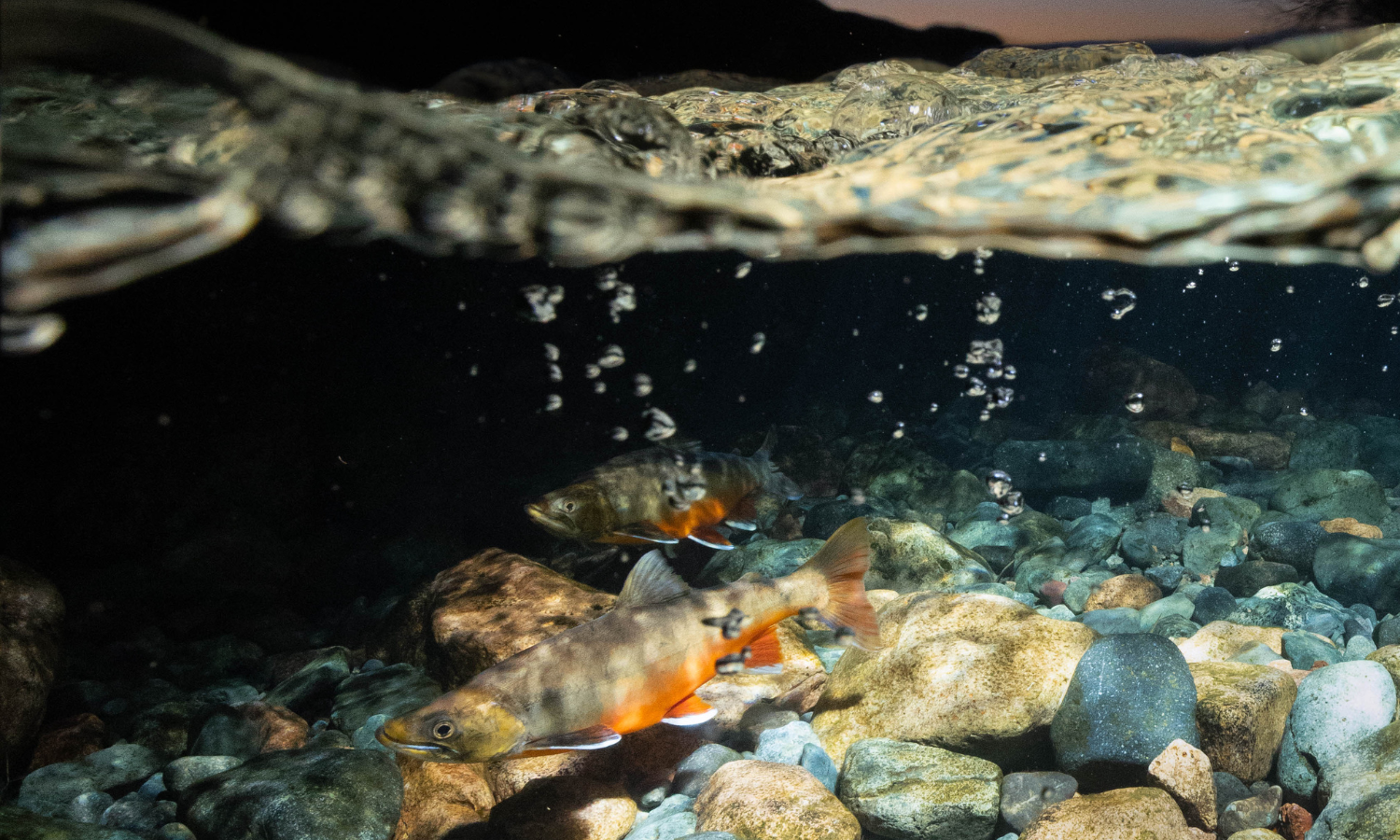
Arctic charr returning to spawning grounds at dusk, photo by Lindsay McCrae.
From evidence to conservation action
The ultimate aim of LD-CHARM is not simply to understand Arctic charr populations in the Lake District, but to use that knowledge to guide practical conservation.
Over the next three years, the partnership will bring together the results of field surveys, long-term datasets, genetic investigations and habitat assessments to identify the most important threats and develop priorities for recovery.
The project will contribute to the development of a Lake District Arctic Charr Conservation Plan and a roadmap for habitat restoration, helping to focus resources on populations and habitats most at risk.
“For decades Natural England’s vital species recovery work has revealed how even the rarest of the rare can be brought back from the brink. The red kite, lady’s slipper orchid, pool frog, beaver and large blue butterfly are among examples that demonstrate the many opportunities at hand and what can be achieved for nature and wider society.
We know that good science and effective partnerships can help restore species to favourable status, and this funding will enable us to support many initiatives to help halt and reverse the decline of our wonderful wildlife.”
Growing the FBA team
Delivering this ambitious programme requires people with the expertise and capacity to bring together a large and diverse partnership. The FBA is excited to soon be growing its team to support the delivery of LD-CHARM, including the appointment of an Arctic Charr Project Manager.
The role will coordinate the LD-CHARM partnership and the work funded through Natural England’s Species Recovery Programme, working closely with the FBA Species Recovery Manager and Head of Science.
This investment in people reflects the FBA’s growing role in species recovery and our commitment to turning high-quality freshwater science into meaningful conservation action.
With the support of Natural England and our LD-CHARM partners, the next three years will provide an important opportunity to understand and protect the Arctic charr populations of the Lake District – helping to give this remarkable Ice Age fish a future in England’s lakes.
The LD-CHARM partnership
LD-CHARM is a unique collaboration between the FBA, Natural England, UK Centre for Ecology & Hydrology, University of the Highlands and Islands (UHI Inverness), University of Glasgow, Environment Agency, Lake District National Park Authority, Institute for Fisheries Management and industry specialists, alongside invaluable contributions from local fishers and communities.
By combining state-of-the-art science, decades of data and expertise, and local knowledge, the partnership is uniquely positioned to deliver meaningful conservation outcomes for the Arctic charr.
About the Natural England Species Recovery Programme
Natural England’s Species Recovery Programme (SRP), launched in 1991 and funded by Defra, is one of England’s longest-running conservation initiatives. It has helped recover over 70 endangered species, including the large blue butterfly, red kite, and pool frog. The programme delivers targeted conservation through partnerships with academics, NGOs, landowners, and local communities.
Interested in discovering more?
Read: Species on the edge: Arctic charr at the southern extent of its range, 13 May, 2025.
Find out more about the Lake District - Charr Recovery & Management (LD-CHARM) Project.
Read the UKCEH article: Action to help save vulnerable Arctic charr in the Lake District.