Beyond the Sea: A love letter to freshwaters
17 June, 2026
We're skipping towards summer reading season, so for your literary pleasure we invite you to take a delightful dive into our latest book review from the FBA's new Species Recovery Manager – Dr Sarah Raubenheimer.
Do you love freshwater ecosystems but struggle to explain to friends and family why you find them so fascinating?
If so, I have the book for you.
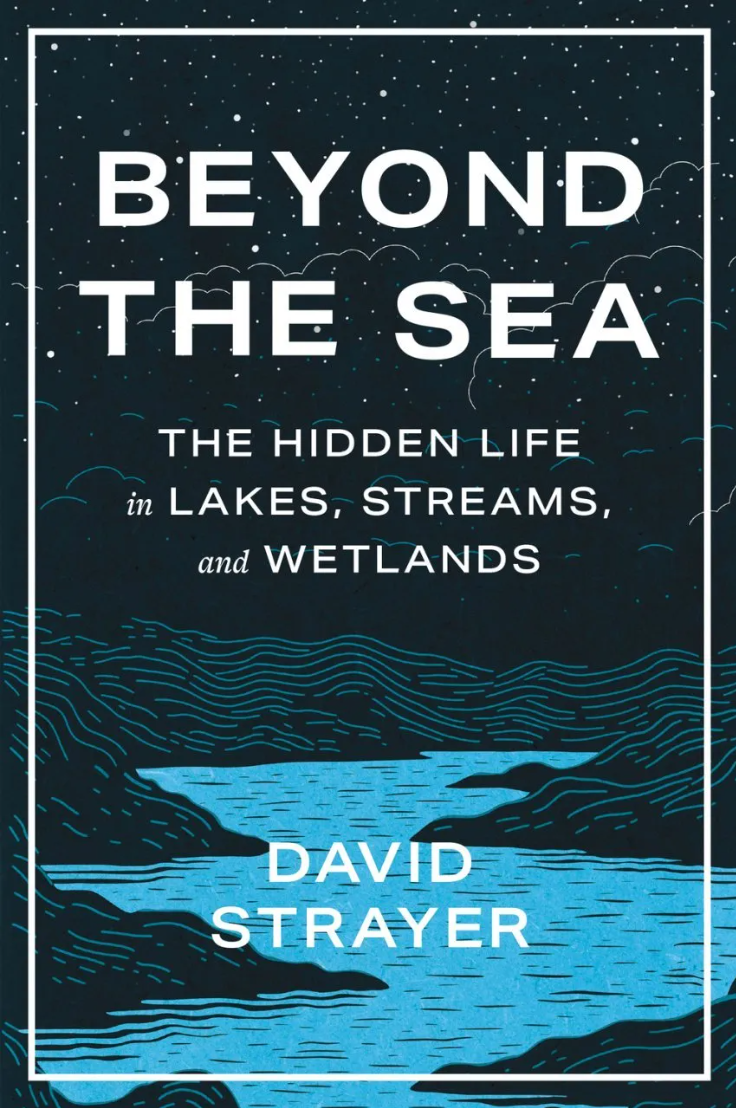
David Strayer's Beyond the Sea: The Hidden Life in Lakes, Streams, and Wetlands is a wonderfully engaging exploration of the freshwater world, packed with fascinating stories, surprising facts and memorable anecdotes. More importantly, it succeeds in something many of us in freshwater science spend a lot of time trying to do: helping people appreciate just how extraordinary these often-overlooked ecosystems really are.
Beyond the Sea: The Hidden Life in Lakes, Streams, and Wetlands by David Strayer.
I found Beyond the Sea refreshingly accessible. Rather than relying on dense scientific descriptions, Strayer uses storytelling to guide readers through the hidden world of lakes, rivers, wetlands and streams.
The result is a book that feels less like a textbook and more like a conversation with a knowledgeable friend who is determined to show you why freshwater ecosystems matter.
What Strayer does particularly well is communicate both the importance and vulnerability of freshwaters. Although they are often overlooked in comparison to rainforests or oceans, freshwater ecosystems support an astonishing diversity of life and provide services essential to both people and wildlife. Yet they are often overshadowed by more charismatic ecosystems in conservation discussions. As ecologists, we spend a great deal of time thinking about freshwater systems, but Beyond the Sea is a reminder that their importance and diversity are far from widely appreciated.
Although I am not new to freshwater ecology, reading Beyond the Sea while beginning my role with the Freshwater Biological Association felt particularly timely. Every chapter reinforced why organisations such as the FBA exist: to better understand, protect and restore freshwater ecosystems at a time when they face increasing pressures from pollution, habitat degradation, invasive species and climate change.
“What Strayer does particularly well is communicate both the importance and vulnerability of freshwaters. Although they are often overlooked in comparison to rainforests or oceans, freshwater ecosystems support an astonishing diversity of life and provide services essential to both people and wildlife.”

A modest part of the inland-water world: Webatuck Creek, New York, which supports an endangered mussel species. Credit: David Strayer.
One of the aspects I enjoyed most was the sheer variety of stories. Strayer takes readers from vast lakes and winding rivers to wetlands and subterranean waters that most of us rarely stop to consider.
Along the way, he introduces an array of remarkable organisms and ecological phenomena that repeatedly had me shouting out ‘Did you know…’ to my family – or falling down an entirely unnecessary but thoroughly enjoyable internet rabbit hole.
The book strikes an effective balance between wonder and concern. It celebrates the incredible diversity of freshwater life while never shying away from the challenges these ecosystems face. Importantly, however, it never feels pessimistic. Instead, Strayer presents a compelling case for why freshwater conservation matters and why these environments are worth fighting for.

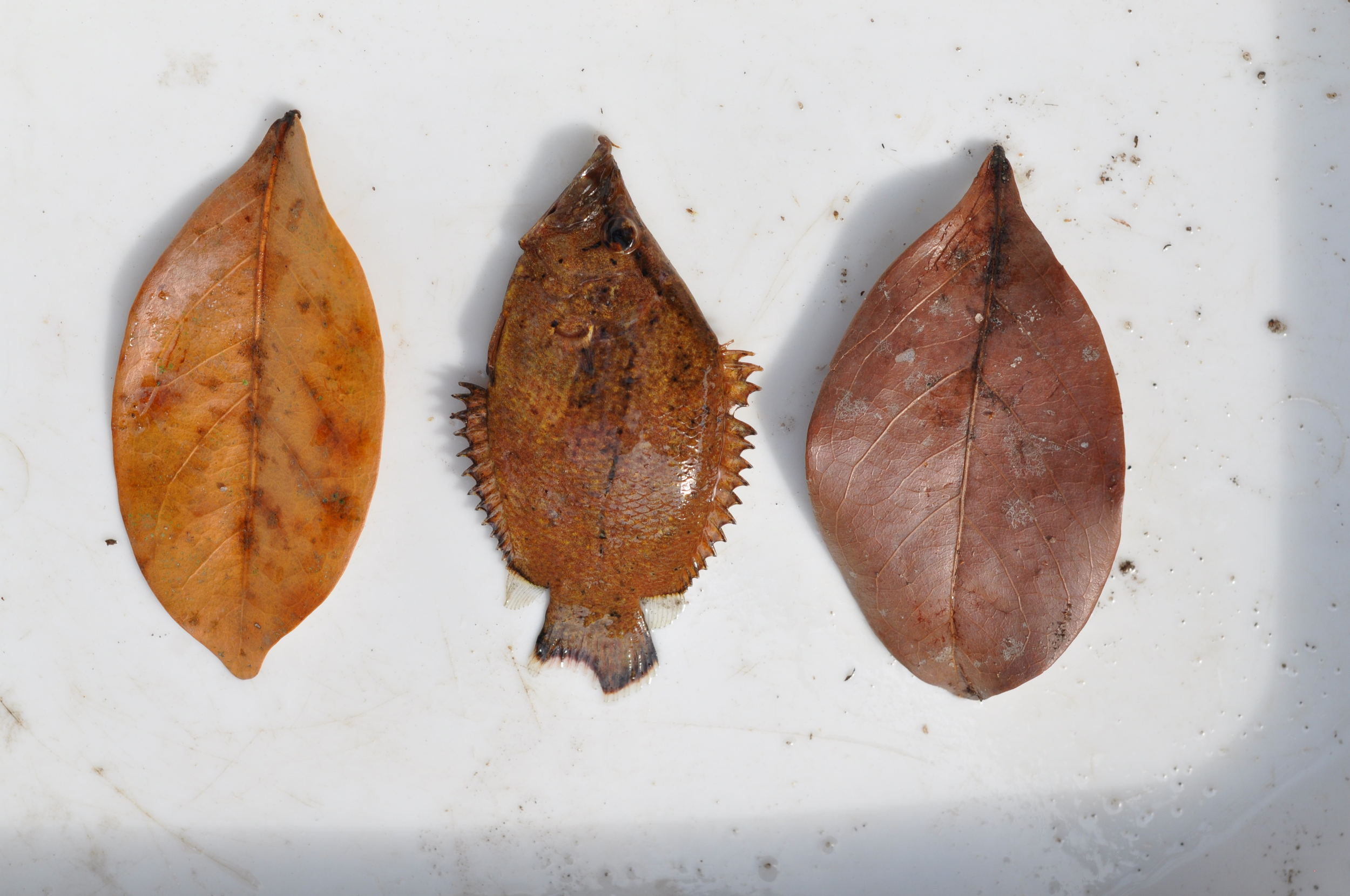
Images from Beyond the Sea: (Left) Tree-shaped river drainage patterns in Tibet, as viewed from space. The white is snow cover, which has melted in the valleys. Courtesy NASA/JPL-Caltech. (Right) The Amazon leaffish, which mimics a dead leaf, with a couple of real dead leaves for comparison. Photo by Mark Sabaj, Academy of Natural Sciences of Drexel University and iXingu Project (NSF DEB 1257813).
Perhaps the greatest compliment I can give Beyond the Sea is that it made me look differently at waters I thought I already knew well.
As scientists and practitioners, we can sometimes become accustomed to the systems we work in every day. A stream becomes a monitoring site. A lake becomes a dataset. A freshwater pearl mussel becomes a survey target. This book is a reminder that these places remain extraordinary, often in ways that are hidden just beneath the surface.
Whether you work in freshwater science, have a general interest in the natural world, or simply enjoy well-written popular science, I would wholeheartedly recommend Beyond the Sea. It is informative without being overwhelming, scientifically rigorous without being inaccessible, and full of the kind of stories that stay with you long after you've closed the book.
And if, after reading it, you find yourself lingering a little longer beside a river, pond or lake, wondering what lies beneath the surface, then I suspect David Strayer would consider his job done.
“I’m hoping that the stories and pictures in this book will show people that inland waters and the species they contain are infinitely varied and fascinating, but have been badly imperiled by human carelessness. We need to take better advantage of the many opportunities to better manage these ecosystems to meet human needs and also sustain aquatic life.”